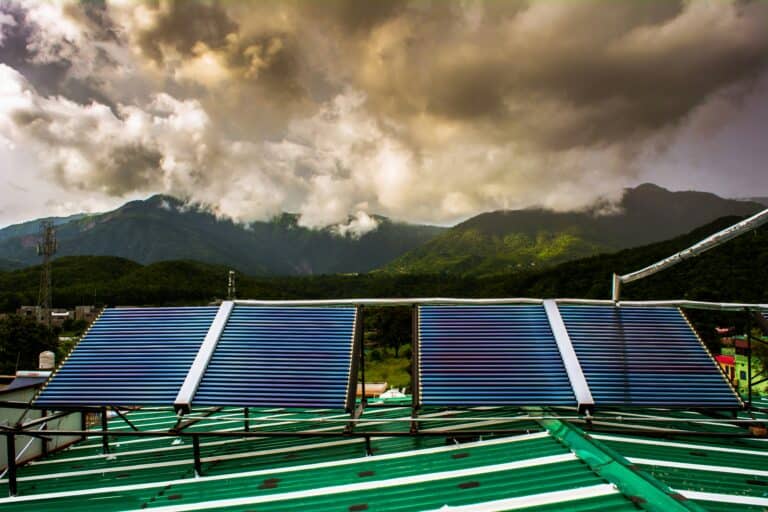
A standing seam metal roof is the one roof type where solar can be mounted without drilling anything, because clamps grip the raised seam and the seam carries the load. That makes metal the easiest roof to put an array on and the one where the wrong hardware choice is most obvious.
The best metal roof solar mounts and seam clamps are chosen by seam profile first, since a clamp is machined for a specific seam shape and a near fit is not a fit. Exposed-fastener and corrugated roofs are a different problem, and they do need penetrations.
Non-penetrating is the headline, though it only applies to standing seam. Our roundup of mounting kits covers the brackets that bolt on above whichever attachment you use.
The Short Version
Identify the seam profile, then buy the clamp made for it. Set-screw clamps suit most residential standing seam and need a torque wrench rather than enthusiasm. On corrugated or exposed-fastener metal you are back to penetrating mounts with proper gasketed hardware.
Key Points
- Standing seam allows clamped, non-penetrating attachment. Other metal profiles do not.
- Clamps are profile-specific, so measuring the seam comes before ordering.
- Set-screw clamps rely on torque, and torque is a specification rather than a feel.
- Panel gauge matters, because thin metal deforms under a clamp meant for thicker.
- Bonding and grounding still apply even with no holes in the roof.
- Metal roofs get slippery and hot, which changes how the work gets done safely.
How We Picked
We sorted these by which roof profile they attach to, because that is the only question that determines whether a given clamp is usable at all.
Then we weighted whether the hardware avoids penetration, since that is the entire advantage metal roofs offer and some products give it up unnecessarily.
We have not installed these or measured their load capacity, so nothing here is a result from our own work. Manufacturers publish load ratings tied to specific seam profiles and panel gauges, and those documents govern rather than this page.
1. A Set-Screw Standing Seam Clamp, Best Overall
Why It Stands Out
These grip the seam with hardened set screws and carry a published load rating, with no hole anywhere in the roof. For a standing seam roof it is the correct answer and not merely a convenient one.
They also come in profiles for the common seam shapes, so most residential metal roofs have a matching part.
Worth Knowing
Set screws dimple the seam material, which is intended, and over-tightening deforms it instead. The torque figure is the whole specification.
Thin-gauge panels reduce the rating considerably, so the clamp choice and the roof gauge have to be considered together. Torque tools for solar terminals cover getting that right.
This suits any standing seam roof with a matching profile. Skip it on exposed-fastener metal. Best for: mounting an array with no roof penetrations at all.
2. A Profile-Specific Seam Clamp Set, Best Fit
Why It Stands Out
Clamps machined for one named seam shape fit without compromise, which matters because a universal clamp on an unusual profile contacts in fewer places. Contact area is load capacity.
Profile-specific parts also seat consistently, so every attachment on the roof behaves the same.
Worth Knowing
You have to identify the profile correctly, and that means measuring the seam height and shape rather than guessing from a photograph. Getting it wrong means returning the whole order.
These are also less useful if you later work on a different roof, since they fit one shape.
This suits a roof whose profile you can identify confidently. Skip it if you are unsure what you have. Best for: maximum contact and the highest rating on a known seam.
3. A Rail-Free Clamp and Mid-Clamp System, Best Simplicity
Why It Stands Out
Mounting panel clamps straight onto seam clamps removes the rails entirely, which cuts weight, cost and the number of parts on the roof. On a seam spacing that lines up with panel width it is elegant.
Fewer components also means less to corrode and less to come loose.
Worth Knowing
This only works when seam spacing matches the panel mounting holes, and seams come at whatever spacing the roof was built to. Check before committing.
Rail-free systems also leave less adjustment, so layout errors are harder to fix afterwards.
This suits roofs where seam spacing cooperates. Skip it where spacing is awkward. Best for: the simplest array with the fewest parts.
4. A Corrugated Metal Mount With Gasket, Best for Exposed-Fastener Roofs
Why It Stands Out
Corrugated and ribbed metal has no seam to clamp, so attachment goes through the high rib with a bonded gasket washer. Fastening at the rib crown keeps the hole out of the water channel.
These mounts are inexpensive and widely available for agricultural and outbuilding roofs.
Worth Knowing
This is a penetrating mount, so the non-penetrating advantage is gone and the sealing washer is now a maintenance item. Fastening into the flat instead of the rib puts a hole where water runs.
The purlin underneath also has to be found, since the metal skin itself holds nothing.
This suits barns, sheds and ribbed metal roofs. Skip it if you actually have standing seam. Best for: ribbed metal where clamping is not possible.
5. Bonding Clips and Grounding Hardware, Best Electrical Layer
Why It Stands Out
Clamped mounting still has to be electrically bonded, and bonding hardware that bites through anodizing makes the connection without a separate wire at every joint. It is the quiet half of a compliant install.
Doing it with purpose-made clips is faster and more consistent than improvising with lugs.
Worth Knowing
Bonding is checked at inspection, and an array that is mechanically perfect can still fail on it. It is also the part people assume the clamps handle automatically.
Metal roofs add their own considerations here. Solar panel grounding equipment covers the components, and what permits you need covers where it gets checked.
This suits every install regardless of roof type. Skip nothing here. Best for: the electrical bonding a clamped array still needs.
6. A Seam Gauge and Torque Wrench, Best Preparation
Why It Stands Out
Two cheap items remove the two ways this goes wrong: ordering the wrong clamp and tightening it incorrectly. Measuring the seam takes a minute and ordering again takes a week.
A torque wrench also gives you a consistent result across every clamp on the roof.
Worth Knowing
Set screws have a narrow window between gripping properly and deforming the seam, and no amount of care substitutes for a measured figure. This is not a place for a feel.
Photographs of your seam alongside a ruler are also what a supplier will ask for when confirming the profile.
This suits anyone ordering clamps for the first time. Skip it only if a professional is specifying the hardware. Best for: ordering the right part and tightening it correctly.
Metal Roof Mounts at a Glance
| Option | Roof Profile | Penetrates | Main Catch |
|---|---|---|---|
| Set-screw seam clamp | Standing seam | No | Torque spec is critical |
| Profile-specific clamp | One named seam | No | Must identify the profile |
| Rail-free clamp system | Standing seam | No | Needs cooperative seam spacing |
| Corrugated gasket mount | Ribbed, exposed fastener | Yes | Gasket becomes a maintenance item |
| Bonding clips | Any | No | Checked at inspection |
| Seam gauge and torque wrench | Any | No | Easy to skip and regret |
What to Look For
The seam profile, measured
Seam height, width and shape together decide which clamps fit. This is the first measurement and everything else follows from it.
A published load rating for your gauge
Ratings are stated against specific panel thicknesses, and a thinner roof gets a lower number. A clamp with no published rating has nothing behind it at inspection.
Material compatibility with the roof
Aluminum clamps on a steel roof, or stainless hardware against aluminum, both raise corrosion questions. Matching what the clamp manufacturer specifies avoids a slow problem.
Whether bonding is integrated
Some clamps are listed for electrical bonding and some are purely mechanical. Knowing which you bought decides how much separate grounding hardware you need.
Clamped Against Penetrating
Clamped keeps the roof intact
No holes means no flashing, no sealant and nothing in the water path to age. It is why standing seam is the preferred roof for solar among people who install it.
Penetrating is the fallback, not the default
On ribbed metal, tile or shingle you are into gasketed or flashed hardware and the waterproofing becomes part of the design. Those are real approaches, just not free ones, and whether solar panels cause roof leaks covers the consequences.
What Trips People Up
Calling any metal roof standing seam
Exposed-fastener ribbed panels look similar from the ground and clamp to nothing. If you can see screw heads across the field of the roof, it is not standing seam.
Buying universal clamps for an unusual seam
A universal clamp spans a range of profiles and contacts less of an odd one. Less contact is less capacity, which is exactly what you do not want in uplift.
Tightening by feel
Set screws want a specific torque and a roof full of guesses is a roof full of variable attachments. One wrench fixes this permanently.
Underestimating the roof itself
Metal gets extremely hot in sun and extremely slippery when damp, and panels dent under knees. Working on one is its own skill, and shutting an array down safely for roof work covers the electrical half of going up there.
Where This Sits in the Decision
Roof type decides more than brand
Shingle, tile, ribbed metal and standing seam each have their own attachment family, and whether you can put solar on a tile roof covers the hardest of them.
Ground mounting sidesteps all of it
If the roof is awkward and you have land, the roof stops being part of the problem. Ground mount against roof mount compares them.
Tilt is a separate choice
Clamps generally mount flush to the roof plane, so changing the angle means adding tilt hardware on top. Solar panel tilt mounts cover that.
Penetration count stays relevant
Even with clamps you still need attachment spacing inside the rail span. How many roof penetrations solar needs works through the arithmetic for roofs that do get drilled.
Recommended Reading
Worth reading next: mounting solar panels on an RV roof, which is the other metal roof most people deal with.
Metal Roof Solar Mount FAQ
What are the best metal roof solar mounts and seam clamps
A set-screw standing seam clamp matched to your seam profile is the default, with profile-specific versions giving the best contact and rating. Rail-free systems suit cooperative seam spacing, and ribbed metal needs gasketed penetrating mounts instead.
Can you mount solar on metal without drilling
On standing seam, yes, because clamps grip the raised seam and the seam carries the load into the structure. On exposed-fastener or corrugated metal there is no seam to grip, so attachment penetrates the panel at the rib.
How do I identify my seam profile
Measure the seam height and width and note the shape of the fold, then match that against the clamp manufacturer’s profile chart. Suppliers generally ask for a photograph with a ruler against the seam.
Will clamps damage the seam
Set screws are designed to dimple the seam material, which is normal and accounted for in the rating. Over-tightening deforms the seam instead, which is why the torque figure matters more than it sounds.
Does the roof gauge matter
Yes. Thinner panels give a lower load rating for the same clamp, and some clamps are not rated for the thinnest residential gauges at all. Check the rating against your actual roof rather than the headline figure.
Do I still need grounding with no penetrations
Yes, electrical bonding and grounding are unaffected by how the array is held down. Some clamps are listed for bonding and others are mechanical only, which changes how much separate hardware you need.
Is a metal roof better for solar
Standing seam is the easiest roof to mount on, since there is no waterproofing to design and nothing in the water path to age. Ribbed metal is no easier than shingle and arguably fussier.
Can I do this myself
The clamping itself is straightforward with the right part and a torque wrench, though metal roofs are hot, slippery and dentable. The electrical interconnection still involves permitting and inspection in most places.