Panels lose a small amount of output every year by design, and manufacturers publish that rate in the warranty. A panel producing slightly less after eight years is behaving normally. A panel producing noticeably less than the ones beside it is not.
That comparison is the useful test, because absolute output varies with sun, season, and temperature while the difference between panels in the same array does not. Our note on solar panel efficiency covers the baseline. Our note on best solar panel ground screws and anchors covers that in more detail.
A Safety Note
Solar panels produce dangerous voltage whenever light hits them, and there is no off switch. Visual inspection from the ground is safe. Anything involving roof access, disconnecting wiring, or opening a combiner box is work for a qualified installer or licensed electrician.
Quick Answer
Look for visible damage, discoloration, delamination, and hot spots, then compare one panel’s output against its neighbors. A single panel underperforming the rest is the clearest signal.
Normal Degradation
Manufacturers specify an annual degradation rate and guarantee a minimum output at the end of a warranty term. Those figures are on the datasheet, and comparing measured output against them tells you whether a panel is inside spec.
Degradation is gradual and affects the whole array roughly equally, since every panel is aging under identical conditions of sun, heat, and weather.
That is the distinguishing feature. Uniform, slow decline across every panel is aging. One panel falling behind the others is a fault.
Our note on solar charge controllers covers finding those numbers.
Visible Signs
Cracks in the glass
Usually from impact. A cracked panel may keep producing and moisture ingress follows, which causes progressive failure.
Discoloration or browning
Yellowing or browning of the encapsulant behind the glass indicates material breakdown, and it reduces the light reaching the cells.
Delamination
Layers separating, often visible as bubbling or a cloudy patch. It admits moisture and generally worsens.
Snail trails
Fine dark lines across cells, associated with microcracks. They are a symptom rather than the fault itself. Our roundup of cleaning brushes covers ruling out dirt first.
Hot Spots
A hot spot is a cell or region running hotter than the rest of the panel, caused by shading, a defective cell, or a failed connection. The affected area consumes power rather than producing it.
Hot spots damage the panel over time and are a fire risk in severe cases, which puts them in a different category from cosmetic issues.
A thermal camera shows them clearly, which is exactly what professional inspection services use. A visible burn mark or a discolored patch on the back sheet is the version you can spot without one.
Persistent shading from a new tree branch or a vent installed later produces the same effect, which is why the cause matters as much as the finding.
Output Comparison Is the Real Test
If your system monitors panels individually, through microinverters or optimizers, the comparison is already available. One panel consistently below the rest under the same conditions is the fault.
With string inverters you see the string total rather than individual panels, which makes a single failing panel harder to isolate. A sudden drop in string output with no weather explanation is the signal.
Compare across time as well as across panels. The same month last year, similar weather, the same time of day, and a meaningful drop between them points at something that has genuinely changed rather than at normal variation.
Our roundup of monitoring and production meters covers getting that data.
What Looks Like Failure and Is Not
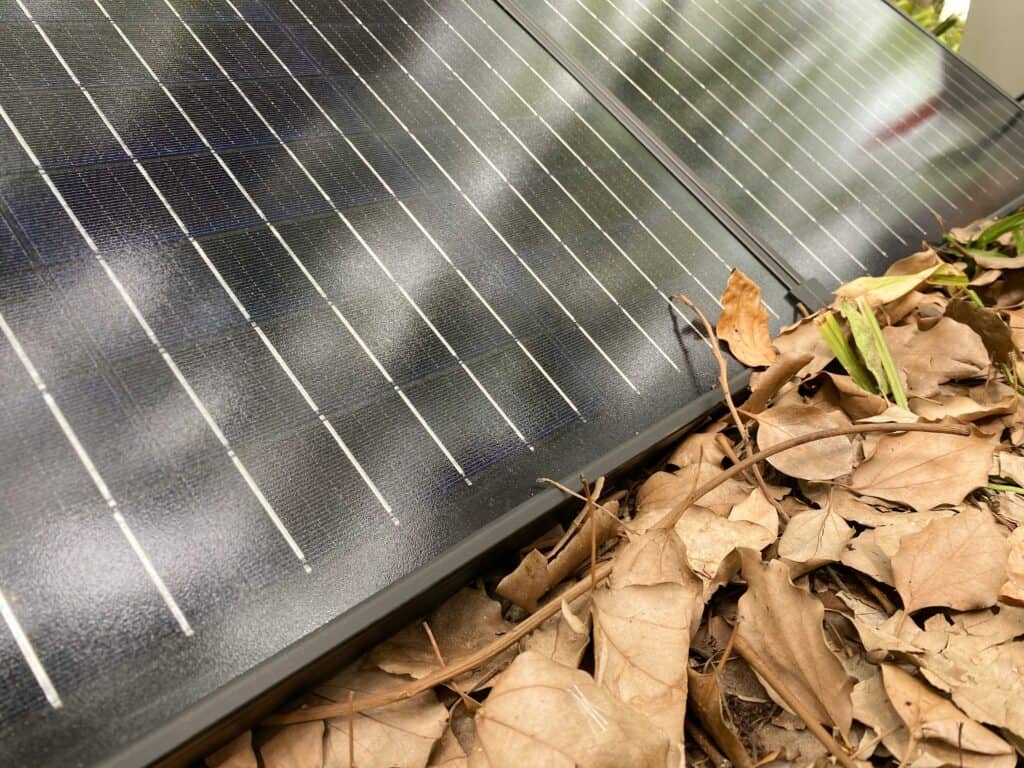
Dirt is by far the most common. A dusty or pollen-covered panel underproduces measurably and then recovers entirely after a clean.
Shading from growth is the second. Trees grow, and a panel fine for six years can be shaded by August of the seventh.
Heat reduces output, so summer production per hour of available sun is lower than spring even though the total daily output is higher. That confuses people comparing months.
Inverter and charge controller faults present as lost production while every single panel is perfectly fine. Diagnosing the panel before checking the inverter is a common wasted afternoon. Our note on why an inverter keeps shutting off covers that side.
How Panels Actually Fail
Failures fall into a few recognizable modes, and knowing which you are looking at determines whether anything can be done about it.
Junction box failures are among the most common. The box on the back houses the bypass diodes and the output connections, and heat, moisture ingress, or a manufacturing fault can take it out. A panel producing nothing at all with intact glass is frequently a junction box problem.
Bypass diode failure is subtler. Diodes let current route around shaded cell groups, and when one fails short it permanently bypasses part of the panel, costing a fixed share of output whether anything is shaded or not. That shows as a step drop that never recovers.
Cell microcracks come from handling, transport, or thermal stress and are invisible to the eye. They tend to worsen slowly, which produces a gradual decline steeper than normal degradation.
Moisture ingress through a cracked seal or a damaged back sheet is the slowest and most certain. Once water is inside, corrosion progresses and the panel does not recover. Our note on how shade affects panels covers the mechanism diodes exist to handle.
Age and Expectations
Panels are generally expected to last decades, and plenty of installations from the 1980s are still producing usefully. Failure inside the first few years is uncommon and usually a manufacturing defect.
What changes with age is that the failure modes shift. Early failures are defects; late failures are cumulative environmental damage, seal degradation, and connection corrosion.
A panel that has passed a decade without issue is unlikely to fail abruptly. Gradual decline is the expected pattern, and anything abrupt at that age points at a connection or the junction box rather than the cells.
Rule those four out before suspecting the panel, since all of them are cheaper and faster to check than anything involving the array itself.
When It Is a Warranty Claim
Panels carry two warranties: a product warranty covering defects and workmanship, and a performance warranty guaranteeing minimum output over a much longer term.
A panel falling below its guaranteed output curve is a performance claim. Physical defects like delamination or a failed junction box are product claims.
Claims generally need documented evidence, meaning production data, photographs, and often an inspection report. Keeping monitoring records matters for exactly this reason.
Our note on how to choose a charge controller goes through the distinction.
Failing Solar Panel FAQ
How do I know if a panel is failing rather than aging?
Aging affects the whole array roughly equally and slowly. One panel producing noticeably less than its neighbors under identical conditions is a fault, and that comparison is more reliable than any absolute figure.
What does a failing panel look like?
Cracked glass, browning or yellowing behind the glass, bubbling or cloudy patches from delamination, burn marks on the back sheet, and fine dark snail trails across cells.
What is a hot spot?
A cell or area running hotter than the rest because it is consuming power rather than producing it, caused by shading, a defective cell, or a failed connection. Severe cases are a fire risk.
Can I test panels myself?
Visual inspection from the ground is safe and useful. Panels produce dangerous voltage in any light with no off switch, so roof access, disconnecting wiring, and opening enclosures belong with a qualified installer.
My output dropped. Is a panel broken?
Check dirt, new shading, and the inverter first. All three cause lost production with healthy panels, and inverter faults in particular get misdiagnosed as panel failure.
How much output should a panel lose per year?
Manufacturers publish an annual degradation rate and a guaranteed minimum output at the end of the warranty term. Compare your panel against those specific figures rather than a general rule.
Do cracked panels need replacing immediately?
A cracked panel often keeps producing, and moisture gets in through the crack and causes progressive failure. It is worth assessing rather than ignoring, and it may be a product warranty claim.
What do I need for a warranty claim?
Production data showing the shortfall, photographs of any visible defect, and frequently an inspection report. Keeping monitoring records from the start is what makes a claim straightforward later.
Recommended Reading
See our note on choosing solar panels.