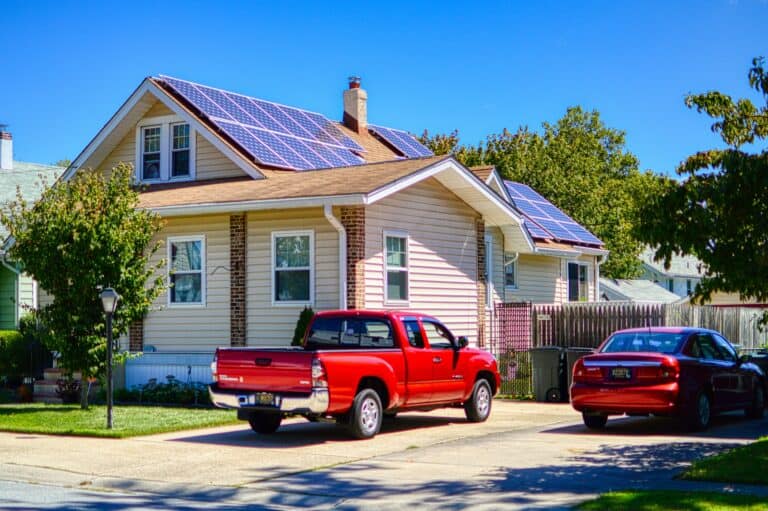

Owned systems generally do, and leased systems generally do not, which is the single most important distinction in the whole question. Whether solar panels increase home value turns on who owns the equipment, because a buyer purchasing a house with owned panels acquires an asset, while one buying a house with a lease inherits a contract.
That difference is why two houses with identical arrays can appraise and sell very differently. Our guide to running solar in a rental covers the other case where the occupant does not own the equipment.
| Ownership | Typical effect at resale |
|---|---|
| Owned outright, paid off | Adds value, treated as an improvement |
| Owned with a loan balance | Value added, offset by the debt to settle |
| Leased | Usually neutral to negative, buyer must assume terms |
| Power purchase agreement | Similar to a lease, depends on rate and term |
| Old or underperforming array | Can reduce appeal regardless of ownership |
| Owned with documentation | Strongest position, easiest to appraise |
A Quick Note
This is general information, not financial, tax or real estate advice. Local markets, appraisal practice and lease terms vary widely. Anyone selling or buying a house with a solar system should get advice specific to that property and that contract.
Quick Answer
An owned, paid-off system is generally treated as a home improvement that adds value, and Lawrence Berkeley National Laboratory has studied premiums paid for homes with host-owned solar. A leased system is a transferable obligation rather than an asset, and it can slow a sale or reduce what a buyer will pay. Documentation and system age both affect how it appraises.
Why Ownership Is the Whole Question
An owned array is a fixture. It came with the house, it produces electricity the new owner does not have to buy, and there is nothing to keep paying for.
A leased array is equipment belonging to someone else, sitting on the roof, with payments attached. The buyer is agreeing to a contract rather than receiving a benefit.
Appraisers treat those differently, and so do buyers. The array can look identical from the street and mean opposite things financially.
This is why the first question anyone selling should be able to answer in one sentence is who owns the system. Our guide to whether you can take solar panels with you when you move covers the other route people ask about.
What Adds Value and What Does Not
A paid-off owned system
The strongest case. No payments, no transfer, and a documented reduction in the running cost of the house.
An owned system with a loan
Value is still added, but the loan has to be settled at closing or otherwise resolved. Net benefit depends on the remaining balance.
A lease or power purchase agreement
Neutral at best. The buyer has to qualify and agree to assume it, which narrows your buyer pool.
An aging array
Panels near the end of their service life, or an inverter due for replacement, read as a future cost. Our guide to how long solar panels last covers the timeline.
How an Appraiser Sees It
Appraisal of a solar array depends on comparable sales in the area and on whether the appraiser has the information needed to value it.
That information is specific: system size, age, ownership status, production history and warranty coverage. Without it, an array tends to be discounted or ignored.
Production history is the part sellers most often cannot produce. Monitoring data across several years turns a claim into evidence.
Our guide to reading a solar monitor covers where that data lives, and our guide to what a solar panel warranty covers covers what transfers with the house.
What Buyers Actually React To
A low electricity bill is concrete and persuasive. Buyers understand a monthly number far more readily than a system specification.
Roof age is the common objection. Panels on a roof that needs replacing soon imply removal and reinstallation costs.
Unclear paperwork causes more problems than any technical issue. A buyer who cannot tell what they are inheriting assumes the worst.
Aesthetics matter to some buyers and not others, and ground-mounted arrays raise different questions from roof ones. Our guide to whether an HOA can stop you installing solar covers the community side.
What the 2026 Credit Change Means for Resale
Section 25D ended for expenditures made after December 31, 2025, so a buyer cannot install their own system and claim a federal residential credit the way they could before.
That arguably makes an existing owned array more attractive rather than less, since replicating it now costs more in net terms.
It also means a seller can no longer point at a credit the buyer might claim. Our guide to net metering and state solar incentives covers the programs that did not change.
State programs and net metering grandfathering are the transferable pieces worth documenting, since an existing favorable net metering arrangement can be worth more than the hardware.
Where a Battery Fits
A battery is valued separately from the array, and it follows the same ownership rule. Owned storage is a fixture, leased storage is a contract.
Buyers react to it differently from panels, because the benefit is outage protection rather than a lower bill. That appeals strongly to some buyers and not at all to others.
Battery age matters more than panel age, since storage has a shorter service life than the array it sits alongside. A battery nearing replacement reads as a cost rather than a feature.
Our guide to knowing when a solar battery needs replacing covers the signs a buyer’s inspector may raise.
Preparing a Solar Home for Sale
- Establish ownership in writing. Deed, invoice, loan payoff statement or lease agreement, whichever applies.
- Pull the production history. Several years of monitoring data, exported and printable.
- Gather the electricity bills. Before and after installation is the most persuasive comparison.
- Confirm warranty transferability. Some transfer automatically, some require notification.
- Document the net metering arrangement. Terms and any grandfathered period.
- Settle a loan balance if you can. A paid-off system is a simpler sale than a financed one.
- Start the lease transfer process early. Provider approval takes time and can hold up closing.
- Brief your agent properly. An agent who cannot explain the system cannot sell it.
Our guide to whether solar is worth it if you move in five years covers the decision before you install.
Sources
- Lawrence Berkeley National Laboratory, research on home sale premiums for host-owned photovoltaic systems
- Internal Revenue Service, guidance on the Residential Clean Energy Credit
Frequently Asked Questions
Do solar panels increase home value?
An owned, paid-off system generally does, and Lawrence Berkeley National Laboratory has studied the premiums buyers pay for homes with host-owned solar. A leased system usually does not, because the buyer inherits a contract with payments rather than an asset.
Why do leased systems behave differently?
Because the equipment belongs to someone else. The buyer has to qualify for and agree to assume the lease, which narrows your buyer pool and adds a step to closing. Appraisers treat it as an obligation rather than an improvement.
What does an appraiser need from me?
System size, age, ownership status, production history and warranty coverage. Without those, an array tends to be discounted or left out of the valuation entirely. Several years of monitoring data is the piece sellers most often cannot produce.
Does roof age matter?
A great deal. Panels on a roof that will need replacing soon imply removal and reinstallation costs on top of the roofing work. Buyers price that in, and it is one of the most common objections raised.
Did the 2026 credit change affect resale value?
Indirectly, and arguably in favor of existing arrays. Since a buyer can no longer install their own system and claim a federal residential credit, replicating an existing owned array costs more in net terms than it did before.
Is a ground mount valued the same as a roof mount?
Not always. A ground mount occupies land, which some buyers value differently, and it raises separate questions about the mounting structure and the trenched wiring run. Documentation matters just as much either way.
Should I pay off a solar loan before selling?
It simplifies the sale considerably, since the buyer receives an unencumbered asset rather than a balance to resolve at closing. Whether it is financially worthwhile depends on the loan terms, which is a question for your own advisor.
What if the system is underperforming?
Fix or diagnose it before listing. An array producing less than it should is a liability in a buyer’s mind, and production data will show it. Shading, soiling, a failed optimizer and inverter faults are the usual causes worth ruling out first.