
A solar panel and a battery cannot simply be wired together and left alone, and the part that sits between them is the solar charge controller. The best solar charge controllers regulate the power flowing from panels into a battery bank, preventing overcharging, managing voltage, and, in better units, squeezing more usable energy out of the same panels. The right controller matches your panel array and battery, uses the right regulation technology for your setup, and has the capacity to handle your system’s current.
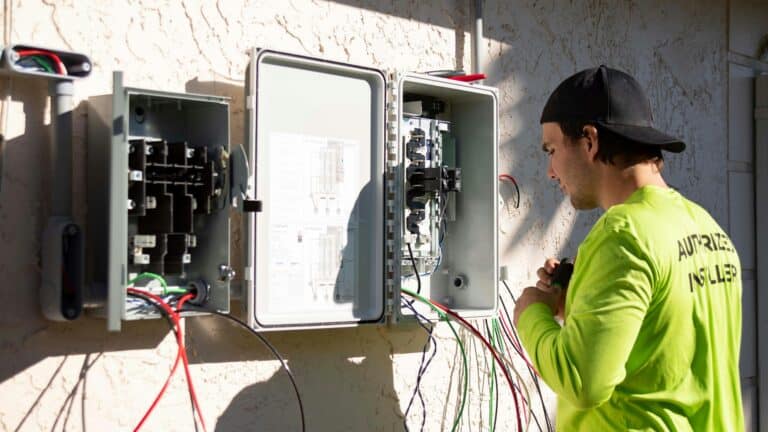
A note before the picks: this article is informational, not an installation guide. Solar electrical work involves real hazards, including shock and fire risk, and wiring panels, controllers, and batteries must be done correctly and to code. This article covers which charge controller to consider and why. It does not provide wiring instructions. Have any solar electrical installation designed and carried out by a licensed electrician or qualified solar professional.
Charge controllers fall into two main technology types. PWM (pulse width modulation) controllers are simpler and less expensive. MPPT (maximum power point tracking) controllers are more sophisticated and generally extract more energy from an array, at a higher price. Match the controller to your system rather than buying on price alone.
Below are five solar charge controller picks covering both technologies and a range of system sizes and prices. Each is a named, widely available model, and the notes reflect published specifications and consistent user feedback rather than hands-on testing.
Why a Solar Charge Controller Matters
In any solar setup that charges a battery, the charge controller does essential work. Solar panels produce variable power as sunlight changes through the day, and a battery needs that power delivered in a controlled way. Connecting panels directly to a battery without regulation risks overcharging the battery, which shortens its life or damages it. The charge controller is the regulating component that makes battery-based solar safe and sustainable.
A controller also protects the battery in other ways. Quality controllers manage charging stages, prevent the battery from overcharging, and often guard against reverse current at night, when current could otherwise drain from the battery back toward the panels. These protections are central to getting a long, healthy life from a battery bank.
Beyond protection, a controller affects how much energy you actually capture. This is where the PWM and MPPT distinction matters: an MPPT controller actively works to extract more usable energy from the same panels than a PWM controller does, particularly in certain conditions. The controller is not just a safety device; in the case of MPPT, it is also a performance component.
What to Look for in a Solar Charge Controller
Five factors separate a well-matched charge controller from one that underperforms or cannot handle your system. Consider each before buying.
PWM vs. MPPT
PWM controllers are simpler and cheaper and work well in smaller, voltage-matched systems. MPPT controllers are more sophisticated, generally extract more energy from an array, and handle a wider range of panel and battery voltage combinations, at a higher cost. The right type depends on system size, budget, and how panel and battery voltages are matched.
Current Rating (Amps)
Charge controllers are rated for a maximum current, in amps. The controller must be rated to handle the current your panel array produces. A controller with too low an amp rating for your array is undersized and unsafe. Match the amp rating to your array with appropriate headroom, following the controller’s specifications. To check an array against a controller before buying, our panel string calculator works out the valid configurations.
System Voltage Compatibility
Controllers are designed to work with particular battery system voltages, such as 12V and 24V, with some supporting higher voltages. Confirm the controller is compatible with your battery bank’s voltage. MPPT controllers generally handle a wider range of input-to-output voltage relationships than PWM units.
Battery Chemistry Support
Different battery types, including various lithium chemistries and lead-acid types, require different charging profiles. Many modern controllers support multiple chemistries and let you select the correct profile. Confirm the controller properly supports your specific battery type, since correct charging matters for battery health.
Monitoring and Build Quality
Controllers vary in monitoring, from a basic display to detailed data and app connectivity. They also vary in build quality and reputation for reliability. Consider how much monitoring you want and choose a controller from a brand with a solid track record, since this is a component you want to be dependable. For remote monitoring specifically, our Bluetooth charge controller picks go further.
Best Solar Charge Controllers in 2026: Our Top 5 Picks
Five solar charge controllers covering PWM and MPPT technology, and a range of system sizes and prices. Each is a named, widely available model.
1. Victron SmartSolar MPPT 100/30, Best Overall
Best Overall | Price: ~$160
The Victron SmartSolar MPPT 100/30 is our overall pick because it pairs respected MPPT performance with strong monitoring and Victron’s well-regarded reliability, at a price that suits a wide range of mid-size systems. Victron is a name many solar users trust, and the SmartSolar line is among the most widely recommended MPPT controllers for home and off-grid setups.
The MPPT technology is the core of its value. As an MPPT controller, it actively works to draw more usable energy from a panel array than a simpler PWM unit would, and it handles a wider range of panel and battery voltage combinations. The 30-amp rating suits many small to mid-size arrays, and Victron also makes the SmartSolar line in other amp ratings for larger or smaller systems.
The SmartSolar includes built-in Bluetooth, so its performance data and settings can be viewed and adjusted through Victron’s app, providing useful monitoring without a separate display purchase. It supports common battery chemistries with selectable charging profiles. For a homeowner or off-grid user wanting a capable, well-supported MPPT controller for a mid-size system, the SmartSolar MPPT 100/30 is the sensible default choice.
Key Features
- MPPT technology for strong energy harvest
- 30-amp rating for small to mid-size arrays
- Built-in Bluetooth app monitoring
- Supports common battery chemistries
- Victron’s reliability reputation
- Best Solar Pool Heaters
- Best Solar Pond Aerators
PROS:
- Respected MPPT performance
- App monitoring built in, no extra display needed
- Well-regarded, widely trusted brand
- Available in other amp ratings for scaling
- Supports multiple battery chemistries
CONS:
- Costs more than a PWM controller
- 30-amp rating must match your array size
- More controller than a tiny system needs
- Requires a correct setup for your battery
Best for: Small to mid-size solar systems wanting capable MPPT performance with built-in monitoring from a trusted brand.
2. Renogy Rover 40A MPPT, Best for Mid-Size Off-Grid Systems
Best for Mid-Size Off-Grid Systems | Price: ~$140
The Renogy Rover 40A MPPT suits people building a mid-size off-grid or backup system who want MPPT performance with room to grow. Renogy is one of the most recognized brands in the DIY and off-grid solar space, and the Rover line is a common choice for cabins, larger RV setups, and home off-grid arrays.
The 40-amp rating is the practical draw here. It gives the controller capacity for a mid-size array, more headroom than a 30-amp unit, which suits a system that is already moderately sized or that the owner expects to expand. As an MPPT controller, the Rover works to extract more energy from the array than a PWM unit and handles a range of panel and battery voltage combinations.
The Rover supports multiple battery chemistries with selectable profiles and includes a display for monitoring, with optional accessories for additional data and connectivity. Renogy’s wide presence in the off-grid market means the controller fits naturally into systems built largely from Renogy components. For a mid-size off-grid or backup build, the Rover 40A is a capable, well-matched MPPT option.
Key Features
- MPPT technology
- 40-amp rating for mid-size arrays
- Supports multiple battery chemistries
- Built-in display, optional monitoring accessories
- Widely used in DIY off-grid systems
PROS:
- 40-amp capacity with room to grow
- MPPT energy harvest
- Recognized off-grid solar brand
- Supports multiple battery chemistries
- Fits naturally with Renogy-based systems
CONS:
- More capacity than a small system needs
- Costs more than a PWM controller
- Some monitoring features need add-on accessories
- Requires correct configuration for your battery
Best for: Mid-size off-grid or backup systems, cabin and larger RV builds, and owners who expect to expand their array.
3. EPEVER PWM Charge Controller, Best Budget PWM Option
Best Budget PWM Option | Price: ~$30
An EPEVER PWM charge controller is a sensible choice for a small, budget-conscious solar setup where MPPT’s extra cost is not justified. PWM controllers are simpler and far less expensive than MPPT units, and for small systems where the panel and battery voltages are well matched, a PWM controller does the essential job of safe battery charging at a low price.
The value is in matching the tool to the task. A small system, a modest panel or two charging a 12V battery, does not necessarily need MPPT’s energy-harvesting sophistication. A PWM controller regulates the charge, protects the battery from overcharging, and keeps the small system working, all at a fraction of an MPPT controller’s cost. EPEVER is a widely available brand in the budget controller space.
The trade-offs are real and tied to the technology. A PWM controller generally extracts less energy from an array than an MPPT controller in the same conditions, and PWM is best suited to smaller, voltage-matched systems rather than large or mismatched ones. For a small, simple, budget setup, a PWM controller delivers the core function affordably. For a larger system, the MPPT picks are worth the step up.
Key Features
- PWM regulation technology
- Suited to small, voltage-matched systems
- Protects the battery from overcharging
- Low cost
- Widely available brand
PROS:
You can see where controllers sit in the failure order before deciding.
- Lowest cost for a charge controller
- Does the essential battery-protection job
- Simple and suitable for small systems
- Widely available
- Sensible where MPPT is not justified
CONS:
- Extracts less energy than MPPT
- Best for small, voltage-matched systems only
- Not suited to large or mismatched arrays
- Minimal monitoring
Best for: Small budget solar setups, simple voltage-matched 12V systems, and situations where MPPT’s cost is not justified.
4. Victron SmartSolar MPPT 150/60, Best for Larger Arrays
Best for Larger Arrays | Price: ~$430
The Victron SmartSolar MPPT 150/60 is built for larger solar arrays that need more capacity than a 30 or 40-amp controller provides. As systems grow, with more panels and larger battery banks, the charge controller has to handle more current and often higher array voltages, and a higher-rated MPPT controller becomes necessary. Larger arrays change the calculation, covered in our MPPT controllers for large arrays. Controller headroom decides whether an array can grow, and our note on adding panels to an existing system covers the limits.
The higher ratings are the point. With a 60-amp rating and support for higher input voltage, this controller handles a larger array than the mid-size units, making it suited to a substantial home off-grid system or a larger backup build. As an MPPT controller, it works to extract maximum usable energy from that larger array, where the energy-harvesting advantage adds up across more panels.
It carries the same Victron strengths as the smaller SmartSolar: built-in Bluetooth app monitoring, support for common battery chemistries, and Victron’s reliability reputation. The trade-off is straightforward: a higher-capacity controller costs considerably more, and this is more controller than a small or mid-size system needs. For a genuinely larger array, the SmartSolar MPPT 150/60 provides the capacity and performance the system requires.
Key Features
- MPPT technology for larger arrays
- 60-amp rating and higher input voltage support
- Built-in Bluetooth app monitoring
- Supports common battery chemistries
- Victron’s reliability reputation
PROS:
- Handles larger arrays and battery banks
- Strong MPPT energy harvest at scale
- App monitoring is built in
- Trusted, well-supported brand
- Higher input voltage capacity
CONS:
- Considerably more expensive than mid-size units
- More capacity than small or mid systems need
- A larger system requires careful design
- Requires a correct setup for your battery bank
Best for: Larger home off-grid systems, substantial backup builds, and arrays that exceed the capacity of 30 to 40-amp controllers.
5. Renogy Wanderer PWM 30A, Best Compact PWM Controller
Best Compact PWM Controller | Price: ~$25
The Renogy Wanderer PWM 30A is a compact, low-cost PWM controller for small systems, popular in RV, van, and small cabin setups. It covers the same essential PWM role as other budget controllers, regulating charge and protecting the battery, in a compact unit from a well-known off-grid brand.
The appeal is a simple, affordable controller for a small system. For an RV or van solar setup, or a small cabin array charging a 12V battery, the Wanderer provides PWM charge regulation and battery overcharge protection without the cost of an MPPT unit. Its compact size suits the tight installations common in vehicle-based systems, and Renogy’s brand presence means it integrates easily with Renogy panels and kits.
The trade-offs are the standard PWM ones: a PWM controller generally harvests less energy than an MPPT controller, and it is best suited to small, voltage-matched systems. The Wanderer is not the controller for a large array. For a small RV, van, or cabin system where simplicity and low cost matter, the Wanderer PWM 30A is a practical, compact choice. For larger systems or maximum energy harvest, the MPPT picks are the better path.
Key Features
- PWM regulation technology
- Compact size for tight installations
- 30-amp rating for small systems
- Battery overcharge protection
- Popular in RV, van, and cabin setups
PROS:
- Low cost
- Compact for vehicle-based systems
- Does the essential PWM job
- Recognized off-grid brand
- Integrates with Renogy kits
CONS:
- Harvests less energy than MPPT
- Best for small, voltage-matched systems
- Not for large arrays
- Minimal monitoring
Best for: Small RV, van, and cabin solar systems wanting a compact, affordable PWM controller.
Quick Comparison
| Controller | Best For | Type | Rating | Price |
|---|---|---|---|---|
| Victron SmartSolar MPPT 100/30 | Overall use | MPPT | 30A | ~$160 |
| Renogy Rover 40A MPPT | Mid-size off-grid | MPPT | 40A | ~$140 |
| EPEVER PWM Controller | Budget PWM | PWM | Varies | ~$30 |
| Victron SmartSolar MPPT 150/60 | Larger arrays | MPPT | 60A | ~$430 |
| Renogy Wanderer PWM 30A | Compact PWM | PWM | 30A | ~$25 |
Prices are estimates and shift with sales and seasonal promotions. Confirm the current price on the product listing before buying.
How to Choose a Solar Charge Controller
Decide between PWM and MPPT first. PWM controllers are simpler and cheaper and suit small, voltage-matched systems. MPPT controllers cost more but generally extract more energy and handle a wider range of voltage combinations, suiting larger systems. Your system size and budget point you toward one or the other.
Match the current rating to your array. The controller must be rated for the current your panels produce, with appropriate headroom. An undersized controller cannot safely handle the array. Work from your array’s specifications, and follow the controller manufacturer’s guidance on sizing.
Confirm voltage and battery compatibility. Check that the controller supports your battery bank’s system voltage and properly supports your battery’s chemistry, with the correct charging profile. Correct charging matters for battery life, so this compatibility is not an optional detail.
Have the system designed and installed professionally. Charge controller selection is one part of a solar electrical system, and the wiring of panels, controller, and battery carries genuine shock and fire risk. Choosing the right controller is a decision you can research; installing it safely and to code is work for a licensed electrician or qualified solar professional. Do not treat product selection as a substitute for professional installation.
Our Take on Solar Charge Controllers
The Victron SmartSolar MPPT 100/30 is our overall pick because it combines respected MPPT performance, built-in app monitoring, and Victron’s reliability at a price that fits many small to mid-size systems. For most people building a battery-based solar system of that size, it is the sensible, capable choice.
The other picks fit specific systems. The Renogy Rover 40A suits mid-size off-grid builds with room to grow. The EPEVER PWM controller covers small, voltage-matched systems on a budget. The Victron SmartSolar MPPT 150/60 provides the capacity that larger arrays require. The Renogy Wanderer PWM 30A is a compact, affordable choice for small RV, van, and cabin setups.
Whatever you choose, match the technology, current rating, and voltage compatibility to your specific system. And remember the safety point: selecting a charge controller is research you can do, but wiring panels, controllers, and batteries involves real electrical hazards and must be designed and installed by a licensed electrician or qualified solar professional, correctly and to code. The right controller, properly installed, protects your battery and gets the most from your panels for years.
Frequently Asked Questions
What are the best solar charge controllers?
Strong choices include the Victron SmartSolar MPPT 100/30 for overall use, the Renogy Rover 40A MPPT for mid-size off-grid systems, an EPEVER PWM controller for budget setups, the Victron SmartSolar MPPT 150/60 for larger arrays, and the Renogy Wanderer PWM 30A as a compact PWM option. The best one depends on your system size, battery, and budget.
What does a solar charge controller do?
A solar charge controller regulates the power flowing from solar panels into a battery. It prevents the battery from overcharging, manages the charging process, and often protects against reverse current at night. In any solar setup that charges a battery, the charge controller is the component that makes battery charging safe and protects the battery’s health and lifespan.
What is the difference between PWM and MPPT charge controllers?
PWM controllers are simpler and less expensive, and suit small systems where panel and battery voltages are well matched. MPPT controllers are more sophisticated, generally extract more usable energy from an array, and handle a wider range of voltage combinations, at a higher cost. PWM suits small budget systems; MPPT suits larger systems and situations where energy harvest matters.
What size charge controller do I need?
The controller must be rated for the current, in amps, that your solar array produces, with appropriate headroom, and it must support your battery bank’s system voltage. A controller with too low an amp rating is undersized and unsafe. Work from your array’s specifications and the controller manufacturer’s sizing guidance, and have the system design checked by a professional.
Can I connect solar panels to a battery without a charge controller?
For battery-based solar systems, a charge controller is needed to regulate charging and protect the battery. Connecting panels directly to a battery without regulation risks overcharging, which can shorten the battery’s life or damage it. The charge controller is an essential component for safe, sustainable battery charging in a solar system.
Is an MPPT charge controller worth the extra cost?
An MPPT controller is generally worth it for larger systems and situations where maximizing energy harvest matters, since it extracts more usable energy from an array than a PWM controller and handles a wider voltage range. For a small, simple, voltage-matched system, a less expensive PWM controller may be sufficient. The value depends on your system size and goals.
Do charge controllers work with lithium batteries?
Many modern charge controllers support lithium battery chemistries as well as lead-acid chemistries, often with selectable charging profiles for each. Because different battery chemistries need different charging, it is important to confirm that a controller properly supports your specific battery type and to set the correct profile. Correct charging is important for battery health and lifespan.
Can I install a solar charge controller myself?
Selecting the right charge controller is research a homeowner can do, but wiring solar panels, the controller, and batteries together is electrical work that carries a genuine risk of electric shock and fire. Solar electrical installation should be designed and carried out by a licensed electrician or qualified solar professional, correctly and to code. This article covers product selection, not installation.
Recommended Reading
- MPPT vs PWM Charge Controller
- Best Solar Panel Kits
- How Solar Panels Charge Batteries
- How Many Watt Hours Do You Need
- how to pick a charge controller
Pump controllers do a similar job with dry-run protection added. Well pump controllers and what they protect against covers the difference.