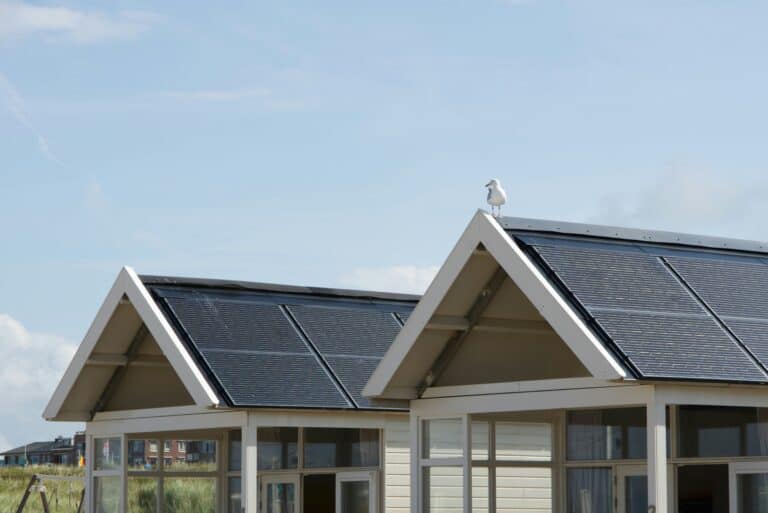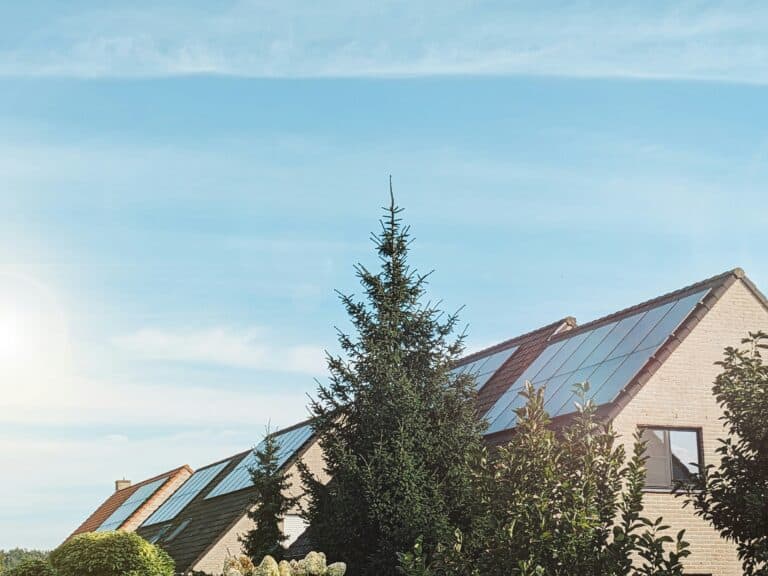
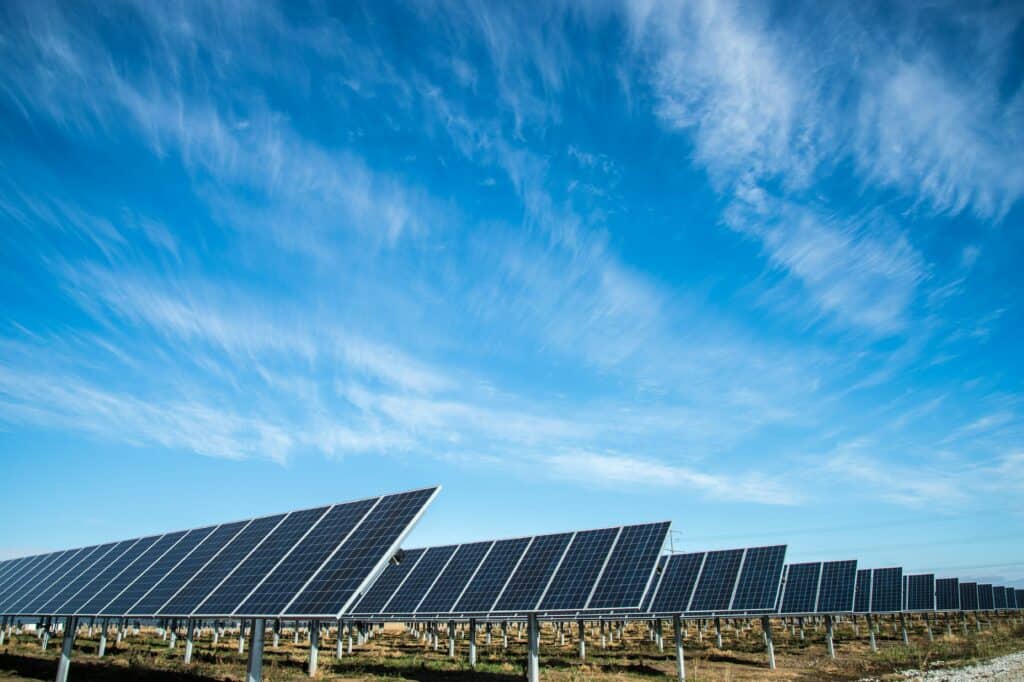
You can install identical solar panels on two adjacent houses and produce dramatically different amounts of electricity from them, just by orienting one set differently from the other. Direction matters. Tilt angle matters. Time of day matters in ways that interact with orientation. Even small misalignments compound over a year into meaningful production differences. See also our guide on why panels underproduce.
The reality of solar panel orientation is more nuanced than the “face them south” rule that gets repeated in beginner materials. The right orientation depends on your latitude, what time of day you most need the power, what your roof or ground space allows, and what tradeoffs you’re willing to make between absolute maximum production and other goals. This guide walks through how orientation actually affects output, what the typical penalties are for various deviations, and how to make the practical decisions that come up in real installations.
Key Takeaways
- For Northern Hemisphere installations, south-facing panels at a tilt roughly equal to your latitude produce the most annual energy.
- East or west-facing panels lose roughly fifteen to twenty percent annual production compared to south-facing, meaningful but often acceptable for fitting available roof space
- Tilt angle matters less than people assume; flat to vertical can work for specific applications, with the optimal varying by latitude and seasonal use pattern.
- Shading is more damaging than orientation; a small shaded area can disable a much larger panel area, depending on the inverter setup.
What Solar Panels Actually Want
A solar panel generates the most power when sunlight hits it perpendicular to the panel surface. As the angle of incidence deviates from perpendicular, output drops following roughly a cosine relationship. Hit a panel from straight on at noon, and you get full output. Hit it at a slant in early morning or late afternoon, and you get less, in proportion to the angle.
The sun’s position changes constantly: throughout the day (rising in the east, peaking around solar noon, setting in the west) and throughout the year (higher in summer, lower in winter for Northern Hemisphere observers). A fixed panel can’t be perpendicular to the sun all the time; it can only be optimized for some compromise position.
The compromise that maximizes annual energy production for a fixed-tilt fixed-azimuth panel in the Northern Hemisphere is roughly:
Face it south (or close to south). Tilt it at an angle roughly equal to your latitude. This gives the sun the best average angle on the panel over the course of the year.
That said, “maximum annual production” isn’t always the right goal, and the rule has plenty of useful deviations.
Azimuth: Which Direction the Panel Faces
Azimuth is the compass direction the panel faces. The benchmark for Northern Hemisphere installations is true south (not magnetic south; the difference matters in some regions). Finding that bearing on site is its own problem, and what direction solar panels should face covers the compass correction.
What deviation costs you, approximately:
True south: Full potential production. The benchmark.
15 degrees off south (e.g., south-southwest or south-southeast): Very small penalty, typically just a few percent of annual production.
30 degrees off south: Slightly larger but still modest penalty, somewhere in the high single digits to low double digits.
45 degrees off south (e.g., southwest or southeast): Notable penalty, generally in the low double digits.
Due east or due west (90 degrees off south): Significant penalty, typically in the mid-teens to low twenties as a percentage.
North-facing: Major loss. Panels facing significantly north of east-west produce very little compared to south-facing.
The numbers vary by latitude, time of year being measured, and panel tilt, but these are reasonable approximations for typical residential applications in the continental US.
What this means in practice: if your roof is oriented southwest, you can install panels and lose only a modest amount of production compared to true south. If you have only east-west facing roof surfaces, you lose more, but the system can still be worth it depending on local electricity costs and incentives.
Tilt: How Steep the Panel Sits
Tilt is the vertical angle of the panel from horizontal. Flat panels (0 degrees) face straight up. Vertical panels (90 degrees) sit upright like a wall.
For maximum annual production in the Northern Hemisphere, a tilt approximately equal to your latitude is the textbook answer. At 40 degrees latitude, that’s roughly 40 degrees tilt. At 30 degrees latitude (much of the southern US), that’s roughly 30 degrees tilt.
But the optimal tilt depends on what season you’re prioritizing:
Annual production optimum: Tilt roughly equals latitude.
Summer optimum: Flatter tilt, roughly latitude minus 15 degrees. The sun is high in summer; flatter panels catch more of it.
Winter optimum: Steeper tilt, roughly latitude plus 15 degrees. The sun is low in winter; steeper panels catch more of it.
For grid-tied systems where you’re producing power year-round and selling excess, the annual production optimum is usually the right target. For off-grid systems where winter production is the critical constraint (because that’s when you have the least margin), a steeper tilt may make sense to boost the constrained season.
Notably, the penalty for tilt deviations is generally smaller than the penalty for azimuth deviations, especially in the middle latitudes. A panel that’s a bit off optimal tilt loses less than the equivalent angular deviation in azimuth would cost.
Roof Pitch vs Ideal Tilt
Most residential rooftop solar is mounted flush to the roof, which means the panel tilt equals the roof pitch. Common residential roof pitches range from very low (3:12 pitch, around 14 degrees) to steep (12:12 pitch, 45 degrees), with most in the 4:12 to 6:12 range (about 18 to 27 degrees).
For most of the continental US (latitudes roughly 25 to 49 degrees), the roof pitch on a typical residential home is somewhat shallower than the optimal panel tilt. The production penalty for being a few degrees off is generally small (low single digits), and the cost and visual benefit of flush-mount installation usually outweigh the loss.
For roofs significantly off optimal (very flat roofs, or buildings at high latitudes with relatively shallow roofs), tilt-mounted racks can recover production. Tilt mounts add cost, complexity, and wind loading, so they need to be justified by the production gain. For ground-mount installations, you have full freedom to choose tilt and should generally target the latitude-based optimum or the application-specific optimum.
Our companion article on why rated power and real output differ covers the broader topic of why real-world output diverges from nameplate ratings, of which orientation is one factor.
Time-of-Day Effects
Azimuth doesn’t just affect annual production totals; it affects when the production happens during the day.
South-facing panels produce a relatively symmetric curve peaking around solar noon. East-facing panels produce most of their power in the morning, with limited afternoon production. West-facing panels do the opposite, with stronger afternoon production.
This timing matters for several reasons:
Net metering economics. If your utility credits exports at the retail rate and you mostly consume in the mornings, east-facing might align production with self-consumption. If you mostly consume in the afternoons and evenings, west-facing aligns better. Different utilities have different export crediting rules, which affect the value of when you produce.
Time-of-use rate plans. Some utilities charge significantly more for evening peak hours. West-facing solar can be valuable in these plans because it shifts production into the high-rate window.
Off-grid systems. Off-grid storage charging benefits from extended production hours. East-and west-facing arrays can spread production across a longer day, smoothing battery charging.
Battery-coupled systems. If you have storage, the timing of production matters less because storage captures excess for later use. With storage, you can prioritize total production regardless of timing.
For grid-tied homeowners without storage on net metering, total annual production is usually the right metric, which favors south-facing. As rate plans and metering arrangements get more sophisticated, time-of-day considerations matter more.
📑 Recommended Read: For portable solar setups where you can choose orientation each time, panel selection matters as much as positioning. Check out our full breakdown of the Best Solar Panels for Portable Power Stations to find options that perform well across the variety of orientations portable use creates.
Shading: Bigger Than Orientation
If you have to pick the highest-priority orientation issue, it’s shading, not azimuth or tilt. Even small areas of shade can disproportionately reduce panel output, especially with traditional string inverter setups.
You can see how a shaded panel drags down the rest of the string before deciding.
Why shading hurts so much: in a series-connected string of cells (which is what a solar panel internally is, and what a string of panels in series amounts to), the lowest-producing element constrains the whole string. A single shaded cell can reduce a whole panel’s output substantially. A single shaded panel can reduce a whole string’s output.
Mitigation strategies:
Avoid shading at design time. A site survey should identify trees, structures, and other obstacles that cast shadows on the array during productive hours. If trees can be trimmed, that’s often the right move. If structures shade significantly, the array layout should avoid those areas.
Use module-level electronics (microinverters or optimizers). These allow each panel to operate independently of the others, so a shaded panel doesn’t drag down the unshaded panels in the string. For sites with partial shading, this is often worth the additional cost.
Plan for vegetation growth. Trees grow. A site that’s unshaded today may be significantly shaded in five to ten years. Either plan to manage the vegetation or design the array accordingly.
A perfectly south-facing system with morning tree shade can produce less than an east-facing system with no shading. Site assessment matters before orientation theory.
Practical Decision Points
“My roof faces southeast. Should I install solar there or wait until I have a south-facing option?” Generally install. The penalty for southeast vs true south is modest, and the production over the years of operation more than justifies the small loss compared to waiting.
“My only available roof faces west. Is it worth it?” Often yes, especially in regions with time-of-use rates that reward afternoon production. The mid-teens-percent loss compared to south-facing is real, but the system can still pencil out, particularly in regions with high electricity costs.
“I have a south-facing roof, but also east and west. Which should I use?” Use the south-facing first if the budget is limited and you want maximum production. If you have a budget and want to maximize total system size, east + west combined often produces more total annual energy than south alone for the same total panel count, and spreads production through the day.
“Should I install tilt mounts on my flat roof?” Depends on the latitude and your priorities. In the southern US, flat-mounted panels lose modest production compared to tilted ones. Tilt mounts add cost and complexity. The production gain often justifies tilt mounts at higher latitudes more than at lower ones.
“My roof pitch is 5:12 (about 22 degrees), and I’m at 33 degrees latitude. Big problem?” Small problem. The deviation from optimal tilt is around 11 degrees; the production penalty is in the low single digits. Flush mount is the right call in this scenario.
“My roof has multiple orientations. Mix or pick one?” Modern installations frequently mix orientations. Module-level electronics make this much more practical than it used to be. Each subarray operates at its own optimum.
Tracking Systems: When Does the Effort Pay?
Solar trackers physically move panels to follow the sun, recovering some of the loss from fixed-orientation installation. Single-axis trackers rotate east-to-west following the daily sun arc. Dual-axis trackers also adjust the vertical angle following the seasonal sun arc.
Single-axis tracking can increase annual production substantially compared to fixed tilt. Dual-axis tracking adds further, but with diminishing returns.
The economic case for tracking has weakened over the years as panel prices have dropped. It’s often cheaper now to install more fixed panels and capture more sun by adding capacity than to invest in tracking. Tracking systems also have moving parts, which means more maintenance and more potential failure points.
Tracking still makes sense in specific applications: large utility-scale installations where every percent of production matters, ground-mount systems with abundant space, and applications in regions with very high electricity costs. For most residential rooftop installations, fixed-tilt is more cost-effective.
Latitude Effects
The optimal tilt and the magnitude of orientation effects vary by latitude.
Low latitudes (tropics, southern US south of about 30 degrees): The sun is high overhead more of the year. Tilt matters less. Flat mounting (or close to it) is reasonable. Azimuth effects are smaller because the sun moves more directly overhead.
Middle latitudes (most of the continental US): Tilt matters more. Steeper roofs handle solar better. South-facing benefit is meaningful but not enormous.
High latitudes (Canada, northern US, northern Europe): Tilt matters substantially. The sun moves through a more horizontal arc. Steeper tilts capture more of the lower-angle sun, especially in winter. South-facing is critical because the sun never gets very high overhead.
For Arizona (around 33 degrees latitude), tilt is a moderate factor. Most residential roof pitches in Arizona are close enough to optimal that flush-mount is fine. Azimuth is the bigger consideration; south-facing is meaningfully better than other orientations.
Snow and Climate Factors
In snowy climates, panel tilt affects snow shedding. Steeper panels shed snow more readily; flatter panels can accumulate and produce essentially nothing during snow-covered periods. For winter-critical production in snowy regions, a steeper tilt has the dual benefit of better winter sun angle and faster snow clearing.
In hot climates, panel temperature affects efficiency. Higher operating temperatures reduce output by a small but consistent percentage. Adequate ventilation under panels (which flush-mount roof installations may limit) and ground-mount installations with airflow on both sides produce slightly more than densely-packed roof installations.
For the broader topic of temperature effects on solar systems, see how cold affects solar batteries.
Common Mistakes and How to Avoid Them
Obsessing over the last few degrees of azimuth or tilt. The marginal gains from getting orientation exactly right are smaller than people assume. A few degrees off costs a few percent. Don’t redesign the installation over minor deviations.
Ignoring shading while optimizing orientation. Shading effects dwarf orientation effects. A perfectly oriented but partially shaded array can produce less than a suboptimally oriented but fully sunny one.
Picking azimuth based on the magnetic compass without correction. True south and magnetic south differ by varying amounts depending on location. For installations where azimuth precision matters, use true south, which requires applying magnetic declination correction.
Designing for summer when winter is the constraint. Off-grid systems often have plenty of summer production and not enough winter production. Sizing for the constrained season rather than the average matters more.
Assuming flat is bad. Flat installation does cost some production, but it’s not nearly as bad as some discussions suggest. In low-latitude regions, especially, flat mounting can be a reasonable choice.
Skipping a real site survey. The actual obstacles (trees, neighbors’ buildings, chimneys, dormers) matter more than theory. A proper site survey catches issues that affect real production.
Mount all panels in a single string when partial shading is expected. Use module-level electronics if shading varies across the array. The cost premium often pays back through preserved production.
Frequently Asked Questions
What’s the absolute best orientation for solar panels? For maximum annual production in the Northern Hemisphere: true south, tilted at an angle roughly equal to your latitude, with no shading. This is the textbook answer. Real installations deviate from this for various practical reasons.
How much production do I lose by facing east or west instead of south? Typically, in the mid-teens to low twenties percent range as an annual penalty compared to the south, depending on latitude. Significant but often acceptable if the alternative is no solar at all.
Is it worth tilting panels on a flat roof? Often yes at higher latitudes, less clearly so at lower latitudes. The cost-benefit depends on your latitude, the cost of tilt mounts, and how much roof space you have.
Does facing slightly west give better afternoon production? Yes, with a tradeoff against morning production. Total annual production is somewhat lower than south-facing, but if your rate structure rewards afternoon production, the economics can favor west.
How does cloud cover affect orientation choice? Cloud cover affects all orientations similarly. It doesn’t change the relative comparison between orientations, just reduces the production of all of them proportionally.
What about bifacial panels? Bifacial panels collect light on both sides and can benefit from reflected light (albedo) from the ground beneath. They’re most effective in elevated ground-mount installations over reflective surfaces. For roof-mount applications, the bifacial benefit is limited.
Do I need to adjust panel orientation seasonally? For fixed installations, no, the cost of seasonal adjustment isn’t usually worth the production gain. Ground-mount systems with simple seasonal tilt adjustment can recover some production, but require the user to remember and do it.
What’s the simplest rule for orientation? Face south, tilt at your latitude, avoid shade. Everything else is refinement on this baseline.
Recommended Reading
- Best 100 Watt Solar Panels
- Best Foldable Solar Panels Camping
- Best RV Solar Panels
- how much shade affects output
- how panels perform without full sun
- choosing solar panels
Angle decides how much of the available light you capture. Tilt mounts and wind load covers setting it.