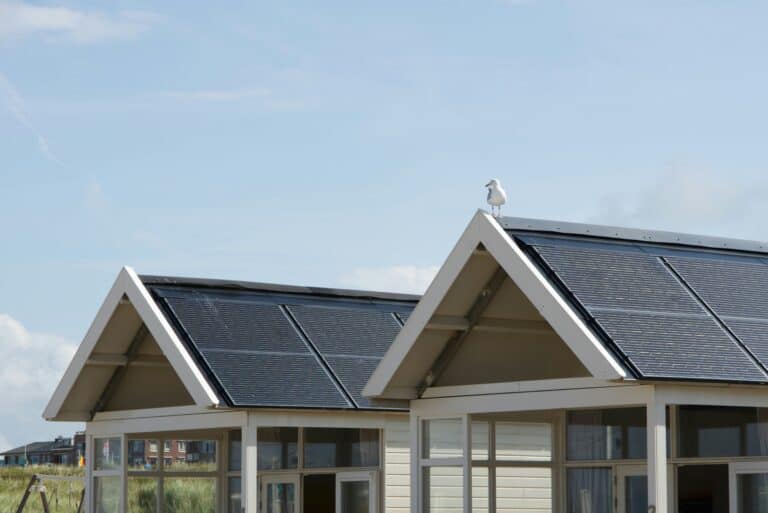

You pull into a quiet boondocking spot miles from any hookup, and the question is simple: will your batteries last the weekend? The best RV solar panels keep your house batteries topped off from the sun alone, so you run lights, a fridge, and a fan without firing up a noisy generator. The right panel matches your roof space and power needs, holds up to road vibration and weather, and pairs cleanly with your charge controller and batteries. Related reading: our guide to solar panel cleaning brushes.
Quick verdict:
- Best overall: Renogy 200W 12V Monocrystalline, the default RV panel for good reason.
- Best budget: Rich Solar 200W, strong output for less money.
- Best for modular arrays: Newpowa 200W, a clean building block for bigger setups.
- Best high-output: BougeRV 200W Bifacial, capturing light from both sides.
- Best Bifacial Solar Panels
How We Picked the Best RV Solar Panels
We focused on the traits that decide real-world RV charging: rated wattage and efficiency, build quality against vibration and weather, weight and roof footprint, warranty, and how cleanly each panel pairs with common controllers and batteries. We leaned on the well-documented efficiency and durability standards that organizations like the National Renewable Energy Laboratory track for photovoltaic modules. The notes below come from published specifications and consistent owner reports, since the focus here is research rather than hands-on testing of every panel.
| Your situation | Renogy 200W | Rich Solar 200W | HQST 200W | Newpowa 200W | BougeRV Bifacial |
|---|---|---|---|---|---|
| Reliable all-around RV roof | Best fit | Workable | Workable | Workable | Workable |
| Tight budget | Workable | Best fit | Best fit | Workable | Skip |
| Building a larger array | Workable | Workable | Best fit | Best fit | Workable |
| Maximum output per panel | Workable | Skip | Skip | Skip | Best fit |
| Best warranty support | Best fit | Workable | Workable | Skip | Workable |
Solar panel prices shift with sales, tariffs, and stock, so confirm the current cost before you buy.
1. Renogy 200W 12V Monocrystalline: Best Overall
Why It Stands Out
The Renogy 200W is the panel nearly every RV solar guide recommends first. It pairs strong monocrystalline efficiency with a long warranty and a fair price, which is a rare combination. A large dealer network and deep community documentation make it easy to wire and troubleshoot.
Worth Knowing
At a standard rigid size and weight, it suits flat or gently sloped RV roofs with room to mount. It pairs best with an MPPT charge controller to capture its full output. The build quality holds up well to road vibration and weather over time.
It suits the RV owner who wants a proven, well-supported panel that simply works. Skip it only if you need a flexible panel for a curved roof or the absolute lowest price. For most rigs, it is the easiest panel here to recommend. The depth of online build guides alone saves first-timers hours of guesswork.
Its reputation as the default RV panel is earned through years of reliable use.
2. Rich Solar 200W: Best Budget
Why It Stands Out
The Rich Solar 200W delivers comparable output to pricier panels at a lower cost. It uses efficient monocrystalline cells and a sturdy frame built for roof mounting. For budget-minded builds, it stretches your dollar further per watt.
Worth Knowing
Rich Solar has a smaller dealer network and less community documentation than Renogy. The panel performs reliably, but you may lean more on the manufacturer for support. It pairs well with an MPPT controller like any quality panel.
It suits the RV owner watching the budget who still wants dependable rooftop output. Skip it if you want the broadest support network or warranty depth. For value per watt, it is a standout pick. It is a common choice for owners wiring a two-panel array on a budget.
The savings add up quickly when you are wiring two or more panels.
3. HQST 200W 12V Monocrystalline: Best Value Alternative
Why It Stands Out
The HQST 200W is a popular value alternative with a strong following among DIY RV builders. Its multi-busbar cell design improves current collection and real-world output. The price sits in budget territory while the performance stays competitive.
Worth Knowing
Like other budget panels, it benefits from a quality MPPT controller and proper wiring. The frame and build are solid for rooftop mounting. Support and documentation are decent, though not at Renogy’s level.
It suits the hands-on builder piecing together a fixed 200W or larger array. Skip it if you want the most polished support experience. For DIY value, it is a reliable choice. The multi-busbar cells help it hold output well in real-world roof conditions.
It is a frequent pick for builders comparing panels strictly on cost per watt.
4. Newpowa 200W: Best for Modular Arrays
Why It Stands Out
The Newpowa 200W is a clean, no-frills building block for a larger rooftop array. Its consistent sizing and reliable output make wiring multiple panels straightforward. The price is competitive for builders adding wattage in stages. Panel choice comes after the sizing, and our RV sizing guide starts from daily watt hours.
Worth Knowing
It is a bare panel, so plan to supply your own controller, wiring, and mounting hardware. The monocrystalline cells deliver dependable output for the price. Warranty terms are more basic than some premium brands.
It suits the builder assembling a multi-panel array and comfortable sourcing parts. Skip it if you want an all-in-one kit or premium warranty. For modular roof builds, it is a sensible foundation. Buying matched panels now makes adding more later far simpler.
Matching panels across an array keeps wiring and output predictable.
5. BougeRV 200W Bifacial: Best High-Output
Why It Stands Out
The BougeRV 200W Bifacial captures light from both the front and the rear of the panel. That bifacial design can boost output when light reflects off a roof or the ground. It is a strong pick when you want maximum power from limited roof space.
Worth Knowing
The rear-side gain depends on reflected light, so it shines most over bright surfaces. It carries efficient cells and a durable build for rooftop use. The premium over a standard panel buys that extra output potential.
It suits the RV owner who wants the most watts per panel and has reflective surroundings. Skip it if your roof gets little reflected light or your budget is tight. For high output in a tight footprint, it stands out. A light roof or white surface below the panel helps the rear cells contribute.
The bifacial gain is real but varies with how much light bounces back up.
6. Renogy 100W 12V: Best for Phased Builds
Why It Stands Out
The Renogy 100W is the same trusted line in a smaller, lighter package. A compact 100W module is easier to route around vents and roof racks than a large slab. It lets you start small and add panels later as your needs grow.
Worth Knowing
The lower wattage suits modest needs or incremental builds rather than heavy power draws. It carries the same Renogy support and reliability as the larger panels. Two 100W panels can offer more mounting flexibility than one 200W slab.
It suits the RV owner building solar in phases or working around a cluttered roof. Skip it if you need maximum wattage in one panel. For flexible, incremental builds, it is a smart starting point. Many full-time setups began as a single 100W panel and grew from there.
Starting with one panel lets you learn your real power use before expanding.
How to Choose RV Solar Panels
A few decisions shape which panel fits your rig and power needs. Work through these before buying.
Wattage and Your Power Needs
Add up your daily power use to size your array, then add margin for cloudy days. A weekend camper needs far less than a full-timer running a residential fridge. Our guide on how many watt-hours you need walks through the math.
Rigid vs Flexible
Rigid panels last longer, run cooler, and cost less per watt, suiting flat RV roofs. Flexible panels conform to curved roofs and weigh less but run hotter. See our guide to the best flexible solar panels if your roof curves.
Monocrystalline vs Polycrystalline
Monocrystalline panels are more efficient and space-saving, which matters on a limited roof. Polycrystalline costs a little less but needs more area for the same output. Our monocrystalline vs polycrystalline guide covers the trade-offs.
Roof Space, Weight, and Mounting
Measure your usable roof area and account for vents, fans, and AC units. Heavier panels add roof load, while mounting hardware secures them against wind and vibration. Plan the layout before you buy to avoid surprises.
Wiring Multiple Panels: Series vs Parallel
Once you run more than one panel, how you wire them affects voltage, current, and shade tolerance. The basics are worth understanding before you buy.
Series Wiring
Wiring panels in series adds their voltages while keeping current the same. Higher voltage means thinner wire runs and works well with MPPT controllers. The drawback is that shading one panel can drag down the whole string.
Parallel Wiring
Wiring in parallel adds current while keeping voltage the same. This handles partial shade better, since a shaded panel affects only its own output. The trade-off is thicker cable to carry the higher current.
Matching Your Controller
Your charge controller’s voltage and current limits decide which approach fits. MPPT controllers handle higher-voltage series strings efficiently. Plan the wiring around your controller and battery bank from the start.
Rigid vs Flexible RV Panels
The biggest decision after wattage is panel type. Here is how the two compare for RVs.
When Rigid Wins
Rigid panels suit large, flat-roofed RVs like Class A motorhomes and fifth wheels. They last longer, run cooler on tilted mounts, and cost less per watt. For most traditional RV roofs, rigid is the durable, economical choice.
When Flexible Wins
Flexible panels fit curved roofs on vans and teardrop trailers where rigid panels cannot mount. They weigh far less and allow low-profile, no-drill installs. The trade-off is more heat and a shorter lifespan, so plan for airflow where possible.
Common RV Solar Panel Mistakes to Avoid
A few errors leave RV owners with an underperforming array. Each is easy to avoid.
Undersizing the Array
Buying too little wattage leaves you short on cloudy days and during heavy use. Size your array to your real daily power needs with margin. It is easier to plan capacity up front than to rewire later.
Pairing With the Wrong Controller
A quality panel paired with a cheap PWM controller leaves output on the table. An MPPT controller captures more power, especially in cooler or variable light. Match the controller to your panel voltage and array size.
Ignoring Shading and Placement
Even partial shade from a vent or AC unit can cut a panel’s output sharply. Plan your layout to minimize shadows across the day. Panel orientation and tilt also affect how much you harvest.
Skipping Proper Fusing and Wiring
Undersized wire and missing fuses are safety and performance risks. Use correctly sized cable and protect circuits with the right fuses or breakers. Following recognized electrical practices keeps the system safe.
Frequently Asked Questions
What are the best RV solar panels in 2026?
The Renogy 200W 12V Monocrystalline is the best overall pick for most RV owners, balancing efficiency, a long warranty, and strong support. For a budget, the Rich Solar 200W delivers similar output for less. Builders assembling larger arrays often choose HQST or Newpowa panels.
How many watts of solar do I need for my RV?
It depends on your daily power use, with weekend campers often fine on 200 to 400 watts and full-timers needing much more. Add up your appliances and add margin for cloudy days. Sizing the array to real usage prevents coming up short.
Do I need an MPPT or PWM charge controller?
An MPPT controller captures more output from your panels, especially in cooler temperatures and variable light, making it the better choice for most setups. PWM controllers cost less but are less efficient. Match the controller to your panel voltage and array size.
Are flexible or rigid panels better for an RV?
Rigid panels last longer, run cooler, and cost less per watt, suiting flat RV roofs. Flexible panels fit curved roofs and weigh less but run hotter and wear faster. Many RVers combine both to use all their roof space.
Can I add more panels later?
Yes, many RVers build solar in phases, starting with one or two panels and expanding as needs grow. Plan your controller and wiring to handle the future array size. Matching panel types and ratings keeps the expanded system balanced.
Will RV solar charge my batteries on cloudy days?
Panels still produce some power in cloudy conditions, though output drops significantly. Sizing your array with margin and pairing it with adequate battery storage helps you ride through gray days. A generator backup covers extended bad weather.
How long do RV solar panels last?
Quality monocrystalline panels often carry warranties of 20 years or more and can produce usefully for decades. Rigid panels generally outlast flexible ones thanks to cooler operation and sturdier construction. Proper mounting and wiring extend overall system life.
Where can I learn more about solar panel performance?
The National Renewable Energy Laboratory and the U.S. Department of Energy’s Solar Energy Technologies Office publish research on photovoltaic efficiency and performance.
Recommended read: Complete your RV system with our guides to the best solar charge controllers, best 12V batteries for solar, and best mounting kits. For other panel types, see the best solar panel kits.
Charging and inverting can share one unit. Inverter chargers for RV systems covers sizing both sides.
Recommended Reading
See our note on choosing solar panels.