
Solar lights are sold on brightness and decided by charging. A light rated for a thousand lumens that never fills its battery is dimmer in practice than a modest one mounted where the sun reaches it.
Panel size, battery capacity, and where the panel sits determine whether a light runs all evening. Brightness only matters once those three are handled. Our roundup of solar flood lights covers the high-output end. Our note on best solar post cap lights covers that in more detail.
Quick Answer
Match the light to the job first, then check that the panel can be positioned in sun. Remote-panel designs solve the most common failure, which is needing light somewhere shaded.
Types by Job
| Type | Job | Watch out for |
|---|---|---|
| Path and driveway | Marking a route | Low output, stake stability |
| Flood | Lighting an area | Needs a large panel |
| Motion sensor | Security, arrival | Detection angle over brightness |
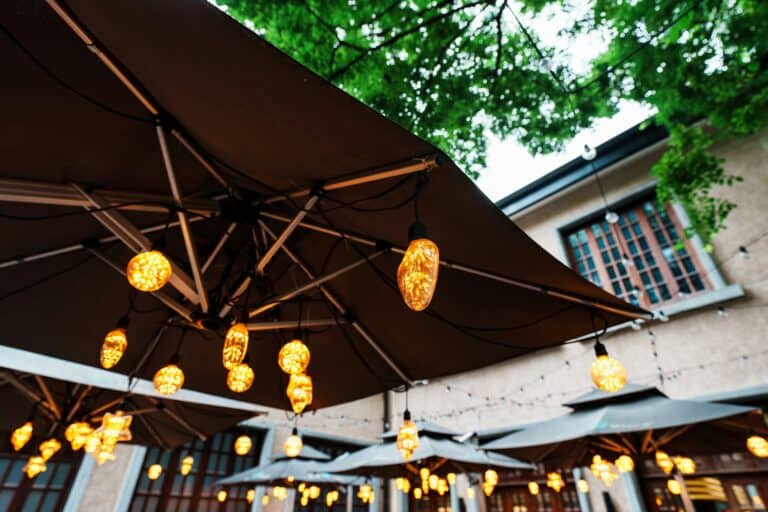
| String and patio | Ambient | Runtime, not brightness |
| Shed and outbuilding | Interior task light | Panel must go outside |
| Step and wall | Surfaces and edges | Short detection range |
The Panel Decides Everything
A solar light is a battery with a charger attached, and the charger is the constraint rather than the light.
Panel size relative to what the light draws is the single best predictor of whether a set runs all evening. A panel the size of a coin cannot fill a battery large enough for a long night, whatever the packaging claims.
Angle matters as much as area. A panel lying flat collects considerably less than one tilted toward the sun, and most integrated designs are flat because it is cheaper to make.
Dirt compounds it, and a season of dust on a small panel costs proportionally more than the same layer on a rooftop array. Our note on cleaning solar panels covers upkeep.
Integrated or Remote Panel
Integrated
Panel built into the fixture. Simplest to mount, nothing to route, and the light has to go where the sun is.
Remote on a lead
Panel separate, connected by cable. Solves the central problem of needing light in a shaded spot.
Lead length varies
A short cable puts you back where you started, so check the stated length rather than assuming.
Hybrid solar and USB
Charges from mains when sun is short, which reintroduces the wiring solar was avoiding. Our roundup of solar motion sensor lights covers those designs.
How These Actually Charge
Understanding the charging path explains most complaints about solar lighting.
A small panel produces a modest current in full sun and considerably less in anything short of it. Overcast conditions can cut output to a fraction rather than reducing it slightly.
That current has to fill a battery large enough to run the light through the darkest part of the year, which is when charging is worst and running hours are longest.
Manufacturers size to summer conditions, because that is when the product tests well, so winter performance is where the gap between claim and reality shows.
Anyone judging a light on its first summer will be surprised by December, and that is a design assumption rather than a defect. Our note on whether solar panels work in winter covers the seasonal drop.
Battery Capacity and Chemistry
Capacity determines runtime once the panel has done its job, and it is frequently omitted from listings entirely.
Absence of a stated figure is informative on its own, since manufacturers publish numbers they are proud of.
Lithium cells hold more per unit size and tolerate cold better than the older nickel chemistries still used in budget lights.
Replaceable cells extend a light’s useful life considerably, because the battery fails long before the housing or the LEDs do. Our note on why solar batteries degrade covers degradation.
Capacity also decides how a light behaves after a run of dull days, since a larger battery carries a reserve through weather that a small one cannot.
Brightness Is the Last Consideration
Lumens describe output at full power, which a solar light only reaches on a full charge and on its brightest setting.
Most quoted runtimes are measured at the lowest setting, so the two headline numbers on a package rarely apply at the same time.
Higher brightness also drains faster, which means a bright light with a small panel is worse than a modest one that lasts.
Matching brightness to the job avoids the problem entirely. Path lights need very little; a driveway needs considerably more. Our roundup of solar path lights covers the low end. Our note on why are my solar lights not working covers that in more detail.
Reading the two headline numbers together, rather than separately, is what separates a light that performs as advertised from one that only does so in a laboratory.
Weather Ratings and Build
Look for a specific IP rating rather than the word weatherproof, since a number tells you what the fixture actually survives.
The panel housing is where water gets in on cheap products, and a failure there ends the light regardless of how good the LEDs are.
UV degrades plastic over seasons, so lenses cloud and cable insulation goes brittle on units left in direct sun year-round.
Cold reduces battery capacity, which is why a light that ran four hours in summer may manage two in midwinter. Our note on what drains a solar battery covers the seasonal drop.
Build quality matters more on solar lights than on wired ones, because every component lives outdoors permanently rather than being protected inside a fixture.
Where They Will Actually Go
Working out placement before buying prevents the most common disappointment, which is a light that cannot charge where it needs to be.
South-facing surfaces collect most through the day in the northern hemisphere, and anything under eaves, trees, or a covered porch collects very little.
Nearby artificial light is the overlooked one. A panel that sees a porch light or a streetlight may never register full darkness, so the light either fails to switch on or runs when it should be charging.
Mounting height matters for motion units specifically, where higher widens coverage and reduces reliable detection at the distance you care about. Our note on whether panels need direct sunlight covers charging conditions.
Modes and Controls
Dusk-to-dawn
Runs all night at a set level, which needs the largest panel and battery to sustain through winter.
Motion only
Most efficient, since the light draws nothing between triggers.
Dim until triggered
The middle ground, and it costs considerably more runtime than motion alone.
An on-off switch
Lights that only respond to a light sensor cannot be saved for evenings you are outside.
Common Mistakes to Avoid
Buying on lumens
Charging decides real output. A bright light that never fills its battery underperforms a modest one that does.
Mounting the panel where the light looks best
The place needing light is usually the place with least sun, which is the argument for a remote panel.
Ignoring nearby artificial light
A panel that never sees full darkness confuses the sensor that decides when to switch on.
Leaving them out through a dark winter
Repeated deep discharge over months shortens battery life permanently. Our roundup of shed lighting kits covers seasonal use.
Choosing Solar Lights FAQ
What matters most when choosing solar lights?
Whether the panel can be positioned in sun. Panel size, battery capacity, and placement decide real output, and brightness only matters once those are handled.
Are brighter solar lights better?
Not if the panel cannot keep up. Higher brightness drains faster, and quoted runtime is usually measured at the lowest setting.
Do I need a remote panel?
If the spot needing light is shaded, yes. That is the most common failure with integrated designs and the easiest one to avoid at purchase.
How long should they last?
The battery fails first, typically after a couple of seasons on budget units. Replaceable cells extend a light’s life considerably.
What IP rating do I need?
A specific number rather than the word weatherproof. The panel housing is where water gets in on cheap products.
Why does mine come on during the day?
Usually a panel that never sees full darkness, from a nearby porch light or streetlight, which confuses the sensor deciding when to switch on.
Do they work in winter?
Less well. Shorter days mean less charging, longer nights mean more running, and cold reduces battery capacity on top of both.
Which type should I buy?
Match it to the job. Path lights mark a route, floods light an area, motion units handle arrivals, and string lights are ambient rather than functional.
For the wider picture, see our guide to how to choose a solar battery.