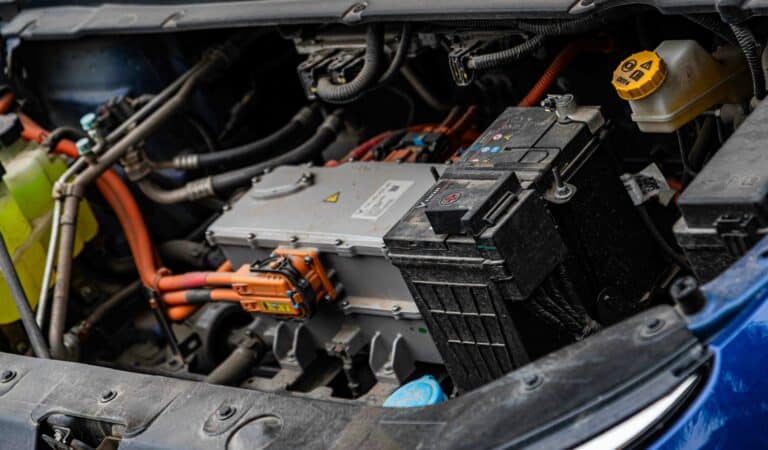

The rating on a solar battery is not what you get out of it. Chemistry decides how much of the rated capacity is actually usable, how many times you can use it before it fades, and how it behaves when the weather is not mild. Two banks with identical numbers on the label can differ by a factor of two in real delivered energy over their lives. That gap is the entire subject of this page.
Key Takeaways
- Rated capacity and usable capacity are different numbers.
- Depth of discharge is chemistry-dependent and it changes the size you need.
- Cycle life matters more than capacity for anything used daily.
- System voltage constrains everything else you buy.
- Temperature affects real capacity at both extremes.
Usable Capacity Is the Real Number
The first thing to internalise, because it invalidates label comparisons.
Every battery has a depth of discharge beyond which you are damaging it rather than using it. Lead acid chemistries want a shallow cycle, which means a substantial fraction of the rated capacity is not available for routine use. LiFePO4 tolerates deep discharge, so far more of the label is genuinely yours. A starter battery is the common shortcut, and our guide on using a car battery for solar covers why it fails within months.
The practical consequence is that a lead acid bank has to be considerably larger than a lithium one to deliver the same usable energy, which erases much of the price advantage that made it attractive.
It also changes the physical size and weight of the installation, which is not a trivial consideration when a bank has to live somewhere and be supported by something.
LiFePO4 vs lead acid covers this comparison in detail, and it is the single most consequential decision in the category.
Cycle Life Is the Long Game
The specification that decides cost per unit of energy delivered, which is the only cost that matters.
A cycle is a discharge and recharge. Every chemistry has a rough number of them before capacity degrades meaningfully, and the ranges are not close: LiFePO4 is rated for many times the cycles of lead acid, and meaningfully more than older lithium-ion.
The way to compare honestly is cost divided by total energy the bank will deliver across its life, rather than cost divided by capacity today. That calculation reorders the category and it is not the one the price tag encourages.
For a system cycled daily, that difference is the whole economics. A cheaper bank replaced three times is not cheaper. For a system that sits as backup and cycles rarely, the calculation changes and a cheaper chemistry becomes defensible.
LiFePO4 vs lithium-ion covers the lithium comparison, and why batteries degrade covers what is actually happening as they age.
Voltage Constrains Everything Downstream
A decision made early that is expensive to revisit.
Higher system voltage means lower current for the same power, which means thinner cable, smaller losses, and less heat. Small systems live comfortably at 12 volts. Larger ones move to 24 or 48 because moving serious power at 12 volts means moving serious current, and copper is not free.
The constraint is that the whole system has to agree. Your charge controller, your inverter, and your bank all speak the same voltage, so changing your mind later means replacing several components rather than one.
12V batteries covers the small end, 24V the middle, and 48V the larger systems where it stops being optional.
Capacity in Amp-Hours Versus Watt-Hours
A source of confusion worth clearing up, because the category quotes both.
Amp-hours are only meaningful alongside a voltage. A 100Ah battery at 12 volts stores roughly 1,200 watt-hours; the same 100Ah at 24 volts stores roughly twice that. Comparing amp-hour figures across different voltages is comparing nothing.
Watt-hours is the number that survives translation, which is why system sizing is done in watt-hours and why it is worth converting before comparing anything.
100Ah LiFePO4 batteries and 200Ah cover the two common sizes, and how many watt-hours you need covers working out the target.
Temperature Is Not a Detail
Both ends of the range affect what a bank actually delivers, and the effects are different.
Cold reduces available capacity and, more importantly, charging in freezing conditions can damage lithium cells unless the battery has protection or heating built in. That is a specification to check rather than assume.
Heat is the other end and it is the quieter problem: it does not usually stop the battery working, it shortens its life. A bank that lives somewhere hot degrades faster than the same bank in a mild garage, and nothing announces this while it is happening.
Batteries in cold weather covers the freezing end, and battery boxes cover enclosure, which is part of managing both.
You can check what a bank arrangement delivers before buying before deciding.
Form Factor: Individual Cells or Server Rack
A practical split that determines how the system grows.
Individual batteries wired into a bank are flexible and mean more connections, more cable, and more places for something to be wrong. Server rack units package the same idea with the interconnection handled, which suits larger permanent installations and costs flexibility.
Each connection in a bank is a place for resistance, heat, and eventually failure, which is the honest argument against assembling from individual cells when the count gets high. It is also why cable and lug quality stops being a detail at scale.
The decision usually follows scale and permanence rather than preference. Server rack batteries covers that route, and battery cables and lugs and busbars cover what a self-assembled bank requires.
What Tells You It Is Working
Worth planning for at purchase rather than afterward.
State of charge is not observable by looking. Voltage is a poor proxy, particularly with LiFePO4, whose voltage stays nearly flat across most of its usable range and then falls off a cliff. Which means a voltmeter tells you almost nothing until it is too late to be useful.
This catches people out precisely because the bank seems fine right up until it is not, and by then the useful moment to act has passed.
A shunt-based monitor counts energy in and out and is the only way to know where a bank actually stands. Battery monitors covers the options, and it is worth budgeting for rather than adding later after a surprise.
Recommended Reading
See LiFePO4 vs lead acid, sizing an off-grid system, and why batteries degrade. It also helps to understand whether you can retrofit storage. For more, see the way solar storage works.
Solar Battery FAQ
What is usable capacity?
The portion of the rated capacity you can actually use without damaging the battery. Lead acid wants shallow cycles, so much of the label is off limits. LiFePO4 tolerates deep discharge, so more of it is genuinely available. This is why label comparisons mislead.
Is LiFePO4 worth the price over lead acid?
For anything cycled regularly, usually. You need a considerably larger lead acid bank to deliver the same usable energy, which erases much of the price gap, and the cycle life difference means a cheaper bank replaced repeatedly is not cheaper.
What voltage should my system be?
Higher voltage means lower current, thinner cable, and fewer losses. Small systems sit at 12V; larger ones move to 24V or 48V. Decide early, because your controller, inverter, and bank all have to agree and changing later replaces several components.
Are amp-hours or watt-hours the right measure?
Watt-hours, because amp-hours only mean something alongside a voltage. A 100Ah bank at 24V stores about twice the energy of 100Ah at 12V, so comparing amp-hours across voltages compares nothing.
Can I charge a lithium battery in freezing weather?
Not safely unless it has built-in protection or heating, and charging below freezing can cause real damage. It is a specification to check rather than assume, and it is one of the few places where an error is not recoverable.
Does heat damage solar batteries?
It shortens their life rather than stopping them working, which makes it the quieter problem. A bank in a hot location degrades faster than the same bank somewhere mild, and nothing announces it while it happens.
How do I know how much charge is left?
A shunt-based monitor, not a voltmeter. LiFePO4 voltage stays nearly flat across most of its usable range and then drops sharply, so voltage tells you almost nothing until it is too late to act on.
Individual batteries or a server rack unit?
Individual batteries are flexible and mean more connections and more to get wrong. Server rack units handle the interconnection for you and suit larger permanent systems. The decision usually follows scale rather than preference.
Recommended Reading
- 300Ah LiFePO4 options
- battery shunts and current sensors
- whether you need a battery monitor
- battery isolators for solar
- battery management systems for solar
- battery terminal covers and protectors
- charge controllers for lithium batteries
- solar battery chargers
- solar battery heaters for cold climates
- solar battery temperature sensors
- how deep should you discharge a solar battery
- how do you know when a solar battery needs replacing
- how long does it take to charge a solar battery
- how many batteries for off grid
- what drains a solar battery
Related: solar batteries need ventilation.
Related: you mix battery brands in a bank.
A fridge is the load that usually sizes an off-grid bank. Daily amp hours and insulation quality covers what to budget for.