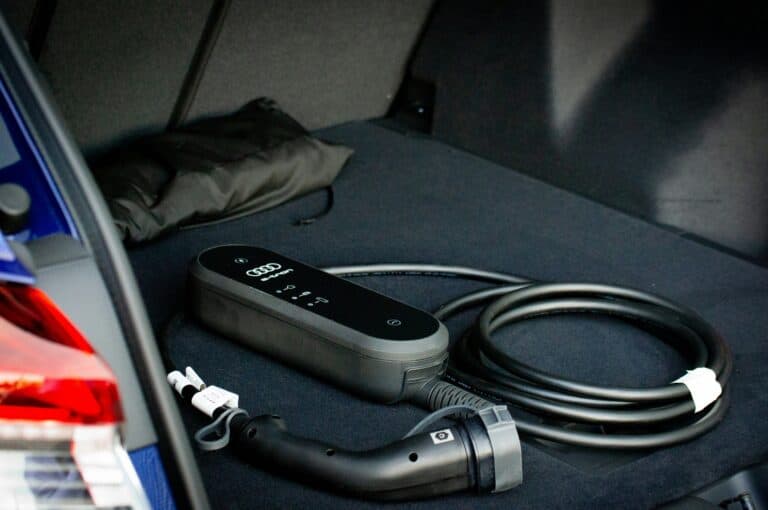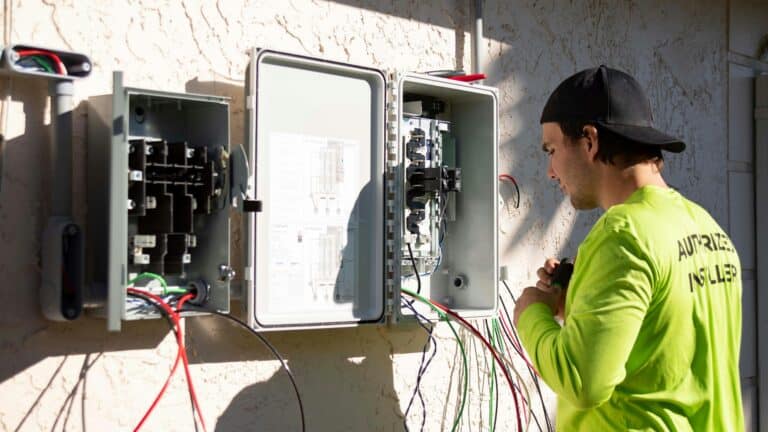

The outlet matters more than the charger. Most buyers shopping for portable EV chargers start with amperage, but the receptacle already sets the ceiling, and a 240V dryer outlet is rarely the NEMA 14-50 that product listings assume. A 32A unit with a NEMA 14-50 plug fits the widest range of homes, garages and RV pedestals, which is why it stays the default recommendation.
From there the picture splits by situation. Renters and travelers do better with a dual-voltage unit that also handles 120V, while anyone juggling several outlet types wants a proper adapter set and the discipline to match it to the breaker. If off-grid power is part of the plan, the same thinking that governs sizing a battery bank to real daily loads applies here too.
Portable EV Chargers at a Glance
| Category | Typical Amperage | Plug Type | Suits |
|---|---|---|---|
| 32A with NEMA 14-50 plug | 32A | NEMA 14-50 | Most garages and RV pedestals |
| Dual-voltage 120V and 240V | 16A on 240V, lower on 120V | NEMA 5-15 and NEMA 14-50 | Travel plus home on one cable |
| 40A portable | 40A | NEMA 14-50 | Dedicated 50A circuits only |
| Interchangeable plug adapters | 16A to 40A by adapter | Swappable heads | Homes with mixed receptacles |
| Compact 16A travel unit | 16A | NEMA 6-50 or 10-30 | Glovebox backup and older outlets |
| Built-in storage case | 16A to 32A | Varies by model | Frequent packing and unpacking |
Key Points
- The receptacle, not the charger, sets the real limit on how fast a car charges.
- Dryer outlets are commonly NEMA 10-30 or NEMA 14-30, not the NEMA 14-50 that most listings picture.
- Portable units draw current continuously for hours, which stresses old receptacles far more than intermittent appliance loads.
- Adapters change the plug shape and never change the breaker behind it, so amperage still has to be dialed down by hand.
- Cable length and cold-weather flexibility affect daily use more than a higher headline amperage does.
- The vehicle’s onboard charger caps the rate, so a 40A unit does nothing extra on a car that accepts less.
How We Picked
This guide is research-based. It draws on manufacturer specifications, electrical code conventions for 240V receptacles and widely reported owner experience, rather than bench measurements.
Categories came first and brands never entered the ranking. Each slot represents a real situation: a fixed garage outlet, a travel bag, a house with mismatched receptacles.
Amperage claims were checked against what the matching circuit can legally supply. A unit that only suits a dedicated 50A circuit is described that way, not sold as a universal upgrade.
Practical factors carried real weight. Cable stiffness in cold weather, plug housing depth and trunk-coiling durability all shaped the order.
1. A 32A Portable Charger with a NEMA 14-50 Plug, Best Overall
Why It Stands Out
A 32A unit on a NEMA 14-50 plug sits in the sweet spot of the whole category. The receptacle is the most common 240V outlet in garages, workshops and RV parks, and 32A leaves comfortable headroom on the 50A circuit behind it. Nothing has to be derated or explained.
Most cars accept this rate fully, so the charger is rarely the bottleneck. Overnight charging covers typical daily driving without drama.
Worth Knowing
The NEMA 14-50 plug is bulky, and cheap receptacles heat up under a long continuous draw. Warm plugs after an hour mean stop and inspect, not push through. That warning matters most at this amperage.
Cable length varies widely between similar units. Measure from the outlet to the charge port first, and add slack for off-center parking.
This suits anyone with a real 50A circuit in place, whether a garage outlet, a shop or a campsite pedestal. Renters with only a dryer outlet should skip it, since the adapter path introduces the overdraw risk covered later.
2. A Dual-Voltage 120V and 240V Charger, Best for Travel
Why It Stands Out
One cable covers both worlds. The unit runs at Level 1 on a standard 120V household outlet and switches to Level 2 on a 240V receptacle, usually at 16A. That removes the need to carry two chargers on a road trip.
The 120V mode is the true safety net. Any working wall outlet becomes a slow but reliable top-up point.
Worth Knowing
Dual-voltage designs typically cap 240V current lower than a dedicated unit. That trade is deliberate, since the electronics have to tolerate both input voltages and the plug adapter set stays small. Speed on 240V lands below what a 32A charger delivers.
Check how the unit detects voltage. Automatic switching is far less error-prone than a manual toggle someone can forget.
Frequent travelers, RV owners and people who split time between two homes get the most from this design. Someone charging in the same garage every night is paying for flexibility they will not use. The pattern mirrors how portable power for campsites favors adaptability, and how onboard RV charging gear gets specified around varied hookups.
3. A 40A Portable Charger, Best for Dedicated 50A Circuits
Why It Stands Out
Where a dedicated 50A circuit exists, a 40A unit uses it fully. Continuous-load rules put 40A as the practical maximum on that circuit, and this category is built to sit right at that line. Charging finishes noticeably sooner than at 32A when the vehicle can accept the rate.
Build quality tends to be heavier here. Thicker conductors and sturdier plug housings come with the territory.
Worth Knowing
This is the category most often bought by mistake. A 40A charger plugged into anything but a dedicated 50A circuit is a hazard, and no adapter fixes that. The breaker rating, not the plug, is the number that counts.
The cable is stiffer and heavier than lower-amperage units. Daily coiling in cold weather becomes a genuine chore.
This fits owners with a confirmed 50A circuit and a car that can actually use 40A. Everyone else buys weight for no gain. Anyone unsure of the rating should settle it first, the way conductor sizing gets settled before anything is energized.
4. A Charger with Interchangeable Plug Adapters, Best for Mixed Outlets
Why It Stands Out
Houses rarely have one outlet type. An adapter kit lets a single charger meet a NEMA 14-50 in the garage, a NEMA 6-50 in the shop and a NEMA 10-30 behind the dryer. That flexibility is genuinely useful and saves buying multiple units.
Better kits pair each adapter with an amperage setting. The charger then limits itself to what the smaller circuit can carry.
Worth Knowing
Adapters are also how circuits get overdrawn. Fitting a NEMA 10-30 adapter changes the plug shape and leaves the 30A breaker exactly where it was, so the current setting has to come down by hand. Units that read the adapter and derate automatically are worth seeking out, and the alternative is a habit of setting amperage before every single session.
Loose adapter joints add another heat point in the chain. Check for warmth at the adapter and at the receptacle both.
This suits multi-outlet households, second homes and anyone who charges in more than one place. People with a single fixed outlet should buy a matching plug and remove the failure mode entirely. The convenience only stays safe with attention.
5. A Compact 16A Travel Charger, Best for Older Receptacles
Why It Stands Out
Lower current is the point. A 16A unit draws gently enough that an older NEMA 10-30 or a tired NEMA 6-50 handles it far better than a 32A load would. Age and unknown wiring stop being a constant worry.
The package is small and light. It coils into a bag rather than needing a dedicated hook.
Worth Knowing
Charging takes considerably longer than at 32A. Overnight still covers ordinary daily mileage for most drivers, but a same-day full recovery is unrealistic.
Compact housings sometimes trade cable quality for size. A short or stiff cable undercuts the portability the unit is bought for.
Renters, apartment dwellers and owners of older houses benefit most. It also works as a permanent trunk backup beside a faster home unit. Anyone with a modern circuit and long daily mileage will find it frustrating.
6. A Charger with a Built-In Storage Case, Best for Frequent Packing
Why It Stands Out
Cables fail at the ends, and careless storage is why. A charger sold with a fitted case protects the plug pins and the connector head every time it goes back in the trunk. The case also keeps the coil from kinking in the cold.
Organization has a practical payoff too. Adapters stay with the unit instead of migrating around the garage.
Worth Knowing
Case quality varies more than charger quality in this category. A thin zip bag adds bulk without protecting anything, so molded or padded designs earn their space. The same logic drives good cable routing and protection habits in a fixed installation.
Cased units are usually mid-amperage rather than 40A. Bulk and weight push designers toward the 16A to 32A range.
This suits people who charge away from home and pack the unit weekly. A charger that lives in one garage gains almost nothing from a case. Buyers chasing maximum speed should look at the 40A category.
What to Look For in a Portable Charger
Which 240V Receptacle Do You Actually Have?
Look at the outlet before reading any spec sheet. NEMA 14-50 is the four-slot receptacle common in garages and RV parks, while NEMA 6-50 is a three-slot welder outlet and NEMA 10-30 is the older dryer style. Each sits behind a different breaker rating.
Photograph the outlet face and the breaker label together. A clamp meter for verifying real draw settles any remaining doubt.
How Long Does the Cable Need to Be?
Measure the real path, not the straight line. Cables route around a parked car, over a bumper and down to a charge port that may sit on the opposite corner from the outlet.
Add slack for imperfect parking. A cable pulled taut every night wears at the strain relief first.
Does the Amperage Setting Adjust?
Adjustable current is the single most useful feature on a portable unit. It lets one charger serve a 50A garage circuit and a 30A dryer circuit safely, provided the setting is changed each time.
Units with a memory per adapter reduce human error. Manual-only units demand a routine.
How Does the Cable Behave in the Cold?
Stiff cable is a winter problem, not a spec-sheet problem. Some jackets turn rigid enough to resist coiling once temperatures drop well below freezing.
Look for cold-rated cable if the car parks outside. Flexibility beats amperage for everyday satisfaction.
Portable vs Wall-Mounted
When Portable Wins
Nothing gets installed, which is the whole argument. Renters, second-home owners and RV travelers keep the charger and take it with them, and no landlord approval or permit enters the picture.
Portable units also serve as backup for a fixed installation, the same redundancy logic behind keeping a standby power unit on hand. A failed wall charger stops being an emergency.
When Wall-Mounted Wins
Permanent installs handle higher sustained current more comfortably. Hardwired connections remove the plug and receptacle, which is where heat problems concentrate under long continuous loads.
Cable management is better too. A holster and a fixed route beat coiling on concrete every night.
What Trips People Up
Assuming a Dryer Outlet Is a NEMA 14-50
Most dryer receptacles are NEMA 14-30 or NEMA 10-30, both on 30A circuits. The plug will not fit a 14-50 charger, and forcing the match with an adapter without lowering the current invites trouble.
Confirm the breaker rating, then set the charger below it. The plug shape is not evidence of anything.
Ignoring a Warm Plug
Heat at the plug is the clearest early warning available. An EV draws steadily for hours, which is a different duty cycle from the dryer or welder the outlet was installed for.
Worn contacts and aluminum branch wiring both raise the risk. Stop charging and get the receptacle checked rather than waiting for it to settle.
Expecting Amperage to Override the Car
The vehicle’s onboard charger sets the real ceiling. A 40A portable unit delivers no more than the car accepts, so the extra capability sits idle.
Check the vehicle’s rated AC intake first. That figure decides whether a faster charger changes anything.
Assuming Solar Covers the Charging
A home array only offsets charging that happens while the sun is up. Overnight charging pulls from the grid or from storage, not from panels.
Daytime charging is where the overlap is real. Anyone planning around that should size storage against actual load patterns rather than hoping the timing works out.
Worth reading next: several related guides go deeper on the electrical side of this, including choosing a meter for circuit checks, picking a disconnect that matches the load, and getting cable terminations right. For backup power planning around an EV, outage preparation basics covers the ground that charging hardware does not.
Frequently Asked Questions
Do portable EV chargers work on any 240V outlet?
Only on outlets that match the plug and the amperage. A NEMA 14-50 charger fits a NEMA 14-50 receptacle directly, while a NEMA 6-50 or NEMA 10-30 needs either a different plug or an adapter plus a reduced current setting. The breaker rating behind the outlet is the real constraint, and no adapter raises it.
Is a 40A charger faster than a 32A one?
Sometimes, and often not. The higher rate only matters when both the circuit supports it and the vehicle’s onboard charger accepts it. On a car limited to a lower AC intake, or on anything short of a dedicated 50A circuit, the 40A unit charges at the same speed as a 32A unit while weighing more.
Can a dryer outlet charge an electric car?
Frequently yes, with the right plug and a lowered current setting. Most dryer receptacles are NEMA 14-30 or NEMA 10-30 on a 30A circuit, so the charger has to be set well below that. Older dryer outlets also see decades of use, which makes a heat check during the first long session worthwhile.
Why does the plug get warm during charging?
Continuous current through an imperfect contact produces heat. An EV draws steadily for hours, unlike the appliance the receptacle was originally installed for, so worn contacts, loose terminals or aluminum branch wiring show up as warmth. Anything beyond mild warmth means stop and have the outlet inspected.
Are plug adapters safe to use?
They are safe when the current setting is lowered to match the circuit. The risk is not the adapter itself but the assumption that a fitting plug means a suitable circuit. Chargers that recognize the adapter and derate automatically remove most of that risk, and manual units require the setting to be changed every time.
Can a portable charger run from solar power?
Indirectly, and only with honest timing. A home array offsets charging that happens during daylight hours, while overnight sessions draw from the grid or from a battery bank. Campground and RV park pedestals are the more common real-world scenario for portable units, and those are grid-fed rather than solar.
Does cable length affect charging speed?
Not meaningfully at these lengths and gauges. Cable length affects convenience far more than performance, and a cable that barely reaches gets pulled tight and fails early at the strain relief. Measure the actual route around the vehicle and add slack rather than buying the shortest option that fits.