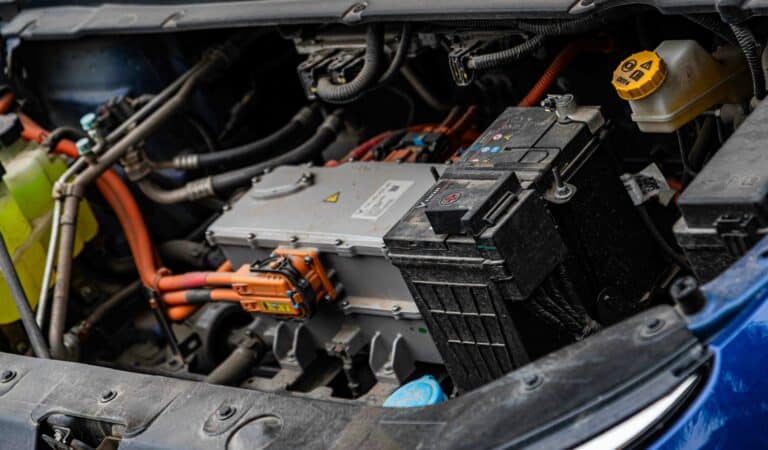
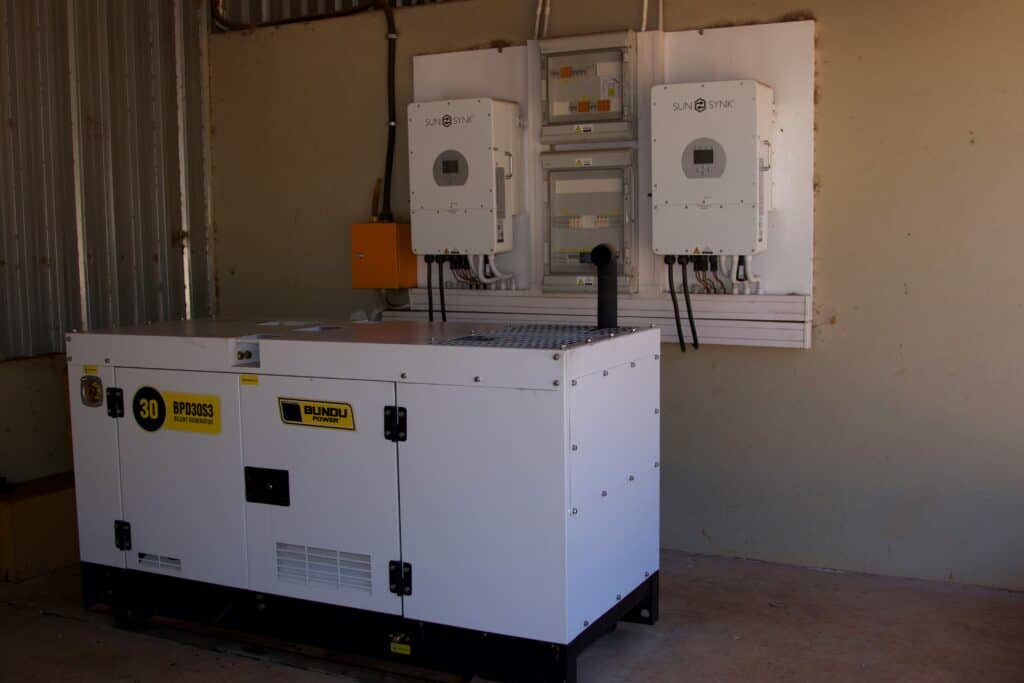
Small vans and boats should stay at 12V, while heavy loads and long cable runs justify 24V. The 12V vs 24V solar system choice turns on current, not capacity.
Watts equal volts times amps. Doubling the voltage halves the current at the same power, which shapes picking a battery bank.
Quick Verdict
Van, boat, and small cabin builders should pick 12V for its huge accessory ecosystem and shorter parts list. Builders facing heavy loads, long cable runs, or a bank that will grow should commit to 24V for lower current and thinner copper.
Key Takeaways
- Watts equal volts times amps, so higher voltage means lower current.
- Lower current allows thinner cable and smaller losses.
- 12V wins on appliance choice.
- 24V wins on copper and growth.
How We Compared
Six factors drive the comparison: copper cost, appliance choice, wiring losses, simplicity, room to grow, and small scale cost. Each traces back to the link between voltage and current.
12V vs 24V at a Glance
| Criterion | 12V | 24V |
|---|---|---|
| Current at same power | Higher | Half as much |
| Cable thickness | Thicker | Thinner |
| Loss over distance | Larger | Smaller |
| DC appliance choice | Very broad | Narrow |
| Room to expand | Limited | Better |
| Usual home | Vans and boats | Bigger cabins |
Voltage sets current and copper, not capacity.
12V Systems, Pros and Cons
PROS:
- Huge DC appliance ecosystem
- Fridges, fans, pumps, lights everywhere
- Lowest entry cost
CONS:
- Higher current at the same power
- Thicker, pricier cable and lugs
- Awkward once loads climb
Best for: small builds with short cable runs and light loads. Skip 12V when the bank will double. Compare these 12V solar batteries.
24V Systems, Pros and Cons
PROS:
- Half the current at the same power
- Thinner cable, smaller lugs and fuses
- Easier to expand later
CONS:
- Far fewer native 24V appliances
- Needs a step-down converter for 12V gear
- Extra component, extra failure point
Best for: bigger cabins and long runs between array and bank. Skip 24V on tiny builds full of 12V accessories. Compare these 24V battery options.
Which Needs Less Copper?
24V wins here, and the reason is plain arithmetic rather than marketing. Watts equal volts times amps. Double the voltage and the current for the same power falls by half.
Cable size follows current, not power. A circuit carrying half the amps can use noticeably thinner conductor for the same job. That difference shows up in the cable, the lugs, and the fuses around them.
Copper is heavy and costly, so the saving grows with every foot of run. A short run inside a van hides the effect. A long run from a roof array to a basement bank makes it obvious.
Anyone pricing a build should total the conductor list, not just the batteries. Quality cables and lugs cost real money, and 12V needs more of both. Winner: 24V.
Which Has More Appliances and Accessories Available?
12V wins, and it is not close. Twelve volts is the automotive and RV standard, so the parts ecosystem around it is enormous. Fridges, roof fans, water pumps, lights, and chargers ship in 12V by default.
That ecosystem is the strongest practical argument for 12V, and shoppers underestimate it. People picture the battery bank and forget the twenty small loads hanging off it. Each of those loads is easier to source at 12V.
A 24V bank can still run 12V gear through a step-down converter. The converter works well, yet it adds another component and another failure point. It also needs sizing and mounting.
Some 24V appliances exist, mostly in marine and industrial catalogs. Choice stays thinner there and prices usually run higher, so the gap is real. Winner: 12V.
Which Loses Less Energy in the Wiring?
24V wins, and the margin widens with distance. Energy lost in a cable climbs with current, so halving the current shrinks that loss sharply. Voltage drop follows the same pattern.
Voltage drop matters more than most builders expect. A 12V system starts with little headroom, so even a modest drop eats a meaningful share of the supply. The same absolute drop on a 24V system costs a smaller fraction.
Distance drives all of this. Short runs hide the difference, and long runs expose it completely. Roof arrays, remote sheds, and banks parked far from the inverter all favor higher voltage.
Builders can offset losses at 12V by going thicker, which costs money, weight, and space. Running the numbers early helps, and a wiring calculator makes the tradeoff visible. Winner: 24V.
Which Is Simpler for a Small System?
12V wins on simplicity. A small build usually runs a handful of DC loads plus one modest inverter. At that size the wiring stays short and the current stays easy to manage.
Simplicity also comes from having fewer boxes in the build. A 12V system skips the step-down converter, because the loads already match the bank. Fewer parts mean fewer connections and fewer things to diagnose later.
Voltage locks in far more than the batteries, which raises the stakes. The charge controller and the inverter both have to match the bank voltage. Even what size inverter a build needs sits downstream of that one choice.
For a compact van or a weekend cabin, 12V keeps the parts list short. Nothing on the DC side needs translating between voltages. Winner: 12V.
Which Scales Better as the System Grows?
24V wins on growth. Adding panels and batteries pushes current up at any voltage, but a 24V bank starts from half the current for the same power. That headroom delays the point where cable, fuses, and busbars need upsizing.
Bigger inverters favor higher voltage too. A large inverter fed by a 12V bank pulls very high current on its input side. High current strains connections, terminals, and hardware.
48V sits above 24V as the next tier. Whole home and large off grid installs usually land there, for the same reason 24V beats 12V. The pattern simply repeats at each step.
Anyone planning to expand should size the bank on paper first, since a sizing calculator shows how fast loads add up. Growth plans belong in the voltage decision. Winner: 24V.
Which Is Cheaper to Build at Small Scale?
12V wins at the small end. Entry level components are common, competition is fierce, and the cheapest gear appears at 12V first. Used and surplus parts turn up more often at that voltage too.
Short runs also blunt the copper penalty that hurts 12V elsewhere. Inside a small van, cable lengths stay so short that thicker conductor costs little extra. Cheaper appliances then outweigh any wiring savings a 24V build would deliver.
That advantage flips as the build grows. Once loads climb and runs stretch, the extra copper and the bigger protection erase the cheaper entry price. Timing matters, so plan around the final size.
Small scale means small loads and a short parts list, which is exactly where 12V is strongest. Budget first builds live right there. Winner: 12V.
Which Fits Your Situation
| If this is you | Better choice |
|---|---|
| Camper van with fridge, fan, lights | 12V |
| Long run from roof to bank | 24V |
| Large inverter and heavy loads | 24V |
| Small system that will double | 24V |
| Whole home off grid setup | 48V, the tier above |
Run length and load size decide.
How to Choose Between Them
Start with the load list, not the battery catalog. Note every appliance and the array to bank distance.
Choose 12V if loads stay light and runs stay short. Heavy loads, long runs, or planned expansion make 24V safer.
Changing voltage later means replacing the controller, the inverter, and most DC gear.
The Verdict
12V wins on appliance choice, simplicity, and small scale cost. 24V wins on copper, wiring losses, and room to grow.
Van, boat, and small cabin builders should stay at 12V. Heavy loads, long runs, or expansion plans call for 24V. Very large off grid homes go to 48V.
Recommended Reading
Readers weighing a bigger build can compare 48V battery options, work out how many batteries an off grid setup needs, and see why daisy chaining batteries causes trouble.
Common Misconceptions
Higher voltage means more stored energy
It does not. Capacity sets storage, so 12V and 24V banks can hold identical energy.
24V always beats 12V
Not on a small build. A short van gains little from halved current, yet loses easy access to 12V gear.
A step-down converter erases the ecosystem gap
It closes most of the gap, not all. The converter adds cost and one more part that can fail.
12V vs 24V Solar System FAQ
What is the main difference in a 12V vs 24V solar system?
The difference is current, not capacity. Watts equal volts times amps, so a 24V bank draws half the current of a 12V bank at the same power. Thinner cable and smaller wiring losses follow, while stored energy stays exactly the same.
Can a 24V system run 12V appliances?
Yes, a 24V system runs 12V gear through a step-down converter. It drops 24V down to a steady 12V for fridges, fans, pumps, and lights. The converter works reliably, yet it adds cost, mounting work, and one more part that can fail.
Does the charge controller need to match the battery voltage?
Yes, and the inverter has to match as well. Both must match the battery bank voltage, so the voltage decision reaches well beyond the batteries themselves. Picking one voltage effectively picks a whole class of controllers and inverters for the build.
Is it hard to switch from 12V to 24V later?
It is expensive rather than technically difficult work. Switching voltage means replacing the charge controller, the inverter, and most of the 12V loads. Fuses and protection usually change too, so getting this decision right early avoids a costly rebuild later.
When does a build outgrow 12V?
No fixed threshold exists, only a general pattern. Builds get uncomfortable at 12V once loads grow heavy, inverters get large, or cable runs stretch across a building. Rising current is the real signal, since it forces thicker copper and bigger protection.
Where does 48V fit in?
48V is the tier sitting above 24V. Whole home and large off grid installs usually land there, for the same current reasons that favor 24V over 12V. Below that scale, the extra hardware cost and thinner appliance choice rarely pay off.
Which voltage suits a van or a small boat?
12V suits both of them in almost every case. Vans and boats use short cable runs and lean heavily on standard automotive and marine accessories. That ecosystem usually decides it, so 24V fits only an unusually heavy load list on board.