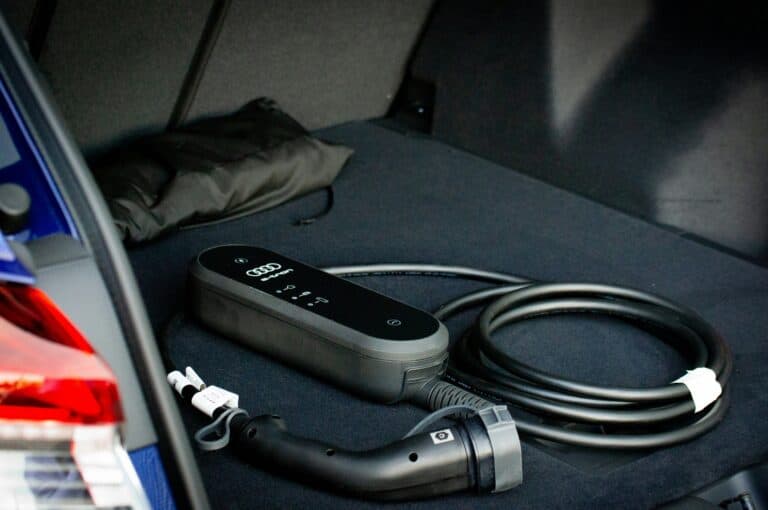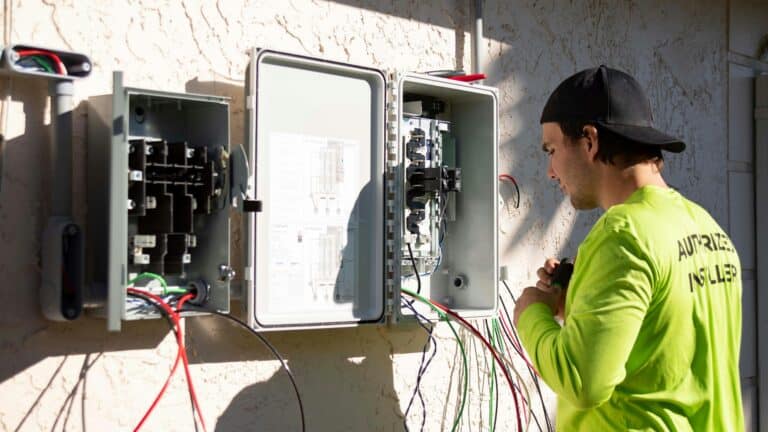

Overnight on a standard outlet for a commute, and a few hours on a 240 volt circuit for a large top-up, with the exact figure set by three numbers rather than by the car alone. How long it takes to charge an EV at home depends on the circuit’s power, the vehicle’s onboard charger limit, and how much energy you are actually replacing.
The last of those three is the one people leave out. Our EV charging time calculator covers running the arithmetic with your own figures.
Quick Answer
Divide the energy you need by the power your setup actually delivers. Power is the lower of what the circuit can supply and what the car will accept. Replacing a day’s commute is a small number; refilling an empty pack is a large one, and most charging is the former.
Key Takeaways
- Charge time is energy needed divided by power delivered.
- The car’s onboard limit caps the rate regardless of the circuit.
- Almost nobody charges from empty, which makes pack size misleading.
- The last portion of the pack charges slowest by design.
- Cold weather extends sessions noticeably.
- Level 1 works because the window is long, not because it is fast.
| Setup | Rough rate | Best for |
|---|---|---|
| Standard household outlet | Slowest | Commutes, overnight window |
| 240 V plug-in unit | Much faster | Most households |
| Hardwired 240 V station | Fastest at home | High mileage, two cars |
| Anything above the car’s limit | No gain | Nothing |
| Cold weather, any setup | Slower | Plan extra time |
| Top 10 percent of the pack | Slowest phase | Skip it daily |
The Formula and What Goes In It
Energy divided by power gives time. That is the entire calculation, and the difficulty is getting honest values for both.
Energy needed is not the pack size. It is the pack size times the percentage you are adding, which for daily driving is a small slice.
Power delivered is the lower of two limits. The circuit can supply a certain amount, and the car’s onboard charger will accept a certain amount, and the smaller one governs.
That second limit catches people out. Our roundup of Level 2 EV charging stations for home covers matching a station to what a vehicle can actually take.
Why the Car’s Limit Caps Everything
Home charging is alternating current, which the vehicle converts internally before it reaches the battery. That converter is the onboard charger, and it has a fixed maximum.
Install a station rated well above that maximum and nothing improves. The car negotiates down to its own limit and holds there.
This is the difference between home charging and public fast charging. Fast chargers supply direct current straight to the pack and bypass the onboard converter entirely, which is why they are dramatically quicker.
So a home setup is capped by the car in a way a highway stop is not. Our guide to DC to AC conversion covers the losses that conversion introduces.
Why Pack Size Is the Wrong Starting Point
You are topping up, not filling
A commute consumes a modest share of a pack. Replacing that share is the session you actually run most nights.
Charging slows near the top
The final portion of the pack accepts current more slowly to protect the cells. Charging to a daily target rather than to full removes the slowest phase.
Empty-to-full is a rare event
It happens after a long trip or a mistake. Sizing your expectations around it produces a number that has little to do with daily life.
The window matters as much as the rate
A slow rate across twelve parked hours beats a fast rate across two. This is the whole reason a standard outlet works for many people.
What Stretches a Session Out
Cold is the largest factor. The car warms the pack before accepting significant current, and that preconditioning happens on your meter and your clock.
A shared or throttled circuit is the second. Stations with load management reduce current when the house draws heavily, which is a feature rather than a fault, and it lengthens sessions.
Voltage sag is the third. Long runs of undersized wire, or a marginal outlet, deliver less than the nameplate figure suggests.
And a nearly full pack is the fourth. If you plug in at a high state of charge, the rate you see will be far below what the same setup delivers at a low state of charge.
Those four stack rather than compete. A cold morning, a shared circuit, a long cable run, and a pack already at eighty percent can together turn a session you expected to finish in a few hours into one that runs most of the day, without anything actually being broken.
That is why a single disappointing session tells you very little. Charging rate is a snapshot of conditions at that moment, and the useful figure is what your setup delivers across a normal week rather than what it managed once.
Our guide to choosing wire size covers why conductor sizing changes delivered power, and our roundup of EV charger adapters and extension cables covers the reach problem without creating a new one.
Estimating Your Own Session Length
- Find your daily energy use. Miles driven times the car’s reported consumption per mile.
- Find the car’s onboard charger limit. It is in the manual and it is the number that caps you.
- Find your circuit’s delivered power. Voltage times usable current, which is below the breaker rating.
- Take the lower of those two as your rate. The larger one is irrelevant.
- Divide energy by rate. That is the session length for a daily top-up.
- Add margin for cold and for the top of the pack. Both stretch the real figure past the arithmetic.
- Compare against your parked window. If the session fits inside it, your setup is adequate.
Our roundup of portable EV chargers for 240 volt outlets covers getting to the faster rate without new wiring, and our guide to how long it takes to charge a solar battery covers the same arithmetic applied to a home bank.
Recommended Reading
Frequently Asked Questions
How long does it take to charge an EV at home?
Overnight on a standard outlet for a typical commute, and a few hours on a 240 volt circuit for a larger top-up. The figure is the energy you need divided by the power actually delivered, where delivered power is the lower of the circuit’s capacity and the car’s onboard charger limit.
Why does a bigger charger not always charge faster?
Because the vehicle’s onboard charger sets a ceiling. Home charging converts alternating current inside the car, and that converter has a fixed maximum. A station rated above it negotiates down and delivers no extra speed.
Does pack size determine charge time?
Only for an empty-to-full session, which almost nobody runs at home. What matters is the energy you are replacing, which for daily driving is a small share of the pack. Size your expectations around the top-up.
Why does the last part of the charge take so long?
The battery management system reduces current near the top of the pack to protect the cells. Charging to a daily target instead of to full skips that phase entirely and shortens the session considerably.
How much slower is charging in winter?
Noticeably. The car warms the pack before it will accept significant current, and that preconditioning runs on your time. Plan for longer sessions in cold weather rather than assuming the mild-weather figure holds.
Can a long extension cable slow charging?
Yes. Undersized or overly long conductors drop voltage, and lower voltage at the same current means less power delivered. Use cable rated for continuous load at the length you need, and treat any warmth at the connections as a problem.
Does home charging match public fast charging?
No, and it is not meant to. Fast chargers supply direct current straight to the battery and bypass the car’s onboard converter, which is why they are far quicker. Home charging trades speed for a long parked window.
What is a realistic daily charging habit?
Plug in when you arrive, charge to a daily target rather than to full, and let the session run inside your parked window. That keeps you away from the slow top of the pack and means charge time rarely becomes something you think about.