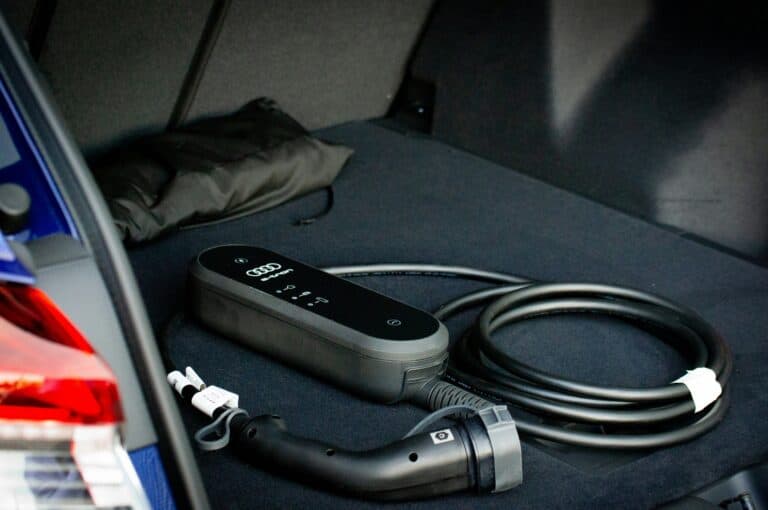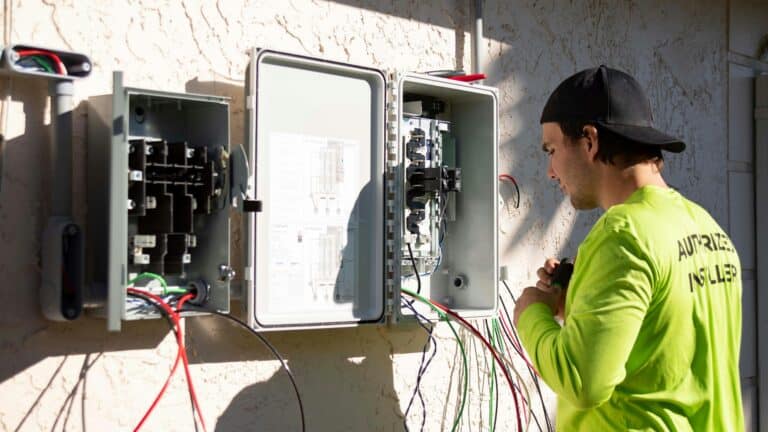

The right home charger is the one your electrical panel can actually feed, because the circuit behind the unit sets the real ceiling. Level 2 EV charging stations run on 240V instead of the 120V outlet a Level 1 cord uses. That voltage jump turns overnight charging from barely adequate into routine.
Most shoppers pick an amperage first and discover the wiring cost second. A 48A station needs a 60A circuit, and plenty of older panels have no room for one without a subpanel or a service upgrade. Checking that before checkout saves a return and a frustrated electrician visit.
This guide covers six category-level station types and where the money actually goes. It also covers what product listings skip: permits, continuous load rules, cold-weather cable behavior, and whether the car can accept the current you paid for. The guide to breaker sizing for new circuits covers the panel side.
Quick Verdict
A 48A hardwired station suits homes with panel capacity and a long-term plan, while a 40A plug-in unit fits most drivers and moves with them. Smart Wi-Fi models earn their keep on time-of-use rates. A budget 32A station still refills a normal daily commute overnight without panel work.
Key Takeaways
- Level 2 EV charging stations need a 240V circuit, and that circuit is usually the larger share of the project cost.
- Continuous load rules size a station at 80% of its breaker, so 48A needs 60A and 40A needs 50A.
- The vehicle’s onboard charger caps the rate, so extra amperage gains nothing until a future car uses it.
- Hardwired units remove an exposed plug connection and are required above certain amperages in some jurisdictions.
- Load management lets a station share an existing circuit instead of forcing a panel upgrade.
- Charging from a home array is a scheduling problem, since overnight production is zero.
How We Picked
This guide is research-based. It draws on manufacturer specifications, published code requirements, installer documentation, and aggregated owner feedback. No units were purchased or installed.
Categories came first, brands never. Home charging decisions turn on amperage, connection method, and enclosure rating, so the sections below organize around those variables.
Electrical requirements were checked against the continuous load rule governing this equipment. Anything drawing current for more than three hours is limited to 80% of its breaker. That is why the tiers land at 32A, 40A, and 48A rather than on round breaker numbers.
Solar relevance was weighed separately. A charger does not care where the electrons came from, so the useful question is whether it can run when an array is producing.
1. A 48A Hardwired Charging Station, Best Overall
Why It Stands Out
A 48A hardwired station is the highest output most residential equipment offers. It delivers the fastest refill a home circuit realistically supports.
Hardwiring removes the plug entirely. Conductors land directly in the terminal block, so no receptacle can loosen, corrode, or overheat.
Worth Knowing
A 48A station requires a dedicated 60A circuit. That is a large load inside a typical 100A or 150A service, and many panels cannot host it without a subpanel. The panel assessment belongs before the purchase.
Hardwired units are permanent, so moving one means an electrician on both ends. Some jurisdictions also mandate hardwiring above a set amperage, and knowing when licensed work is mandatory follows similar logic elsewhere.
This category suits homeowners with panel capacity, a long expected stay, and a vehicle that accepts high current. Renters, near-term movers, and anyone with a full panel should skip it. Added amperage delivers nothing the car or panel cannot use.
2. A 40A Plug-In Station, Best for Most Homes
Why It Stands Out
A 40A plug-in station sits in the practical middle of the market. It runs on a 50A circuit ending in a NEMA 14-50 receptacle, the same outlet many homes already have for a range. That existing outlet turns a wiring job into a mounting job.
Most current EVs accept roughly this level of current. Going higher often produces no difference overnight, so this tier avoids paying for capacity the car ignores.
Worth Knowing
The receptacle deserves real attention. Inexpensive 14-50 outlets are a known weak point under sustained current, so an electrician should specify an industrial-grade one. This is not the place to save on parts.
Plug-in units expose a connection to whatever the wall experiences. Outdoors that connection needs a rated enclosure and weatherproof cover. Verifying an existing outlet sits on its own dedicated breaker matters as much as choosing conductor gauge for a long run.
This category suits renters with permission, homeowners with an existing 14-50, and anyone likely to move. Buyers wanting maximum rate with a 60A-capable panel should step up instead.
3. A Smart Wi-Fi Connected Station, Best for Time-of-Use Rates
Why It Stands Out
A connected station schedules charging around utility rate windows automatically. Where off-peak power costs a fraction of peak power, that is the largest ongoing saving available.
Energy reporting is the second benefit. Per-session data separates vehicle charging from the rest of the household load, which matters for anyone tracking solar self-consumption.
Worth Knowing
Garage Wi-Fi is frequently poor. A detached garage or masonry wall may need a mesh node before smart features work reliably, and that cost belongs in the budget. Once the unit is mounted the lead becomes the nuisance, and cable organizers and holsters keep it off the garage floor between charges.
Cloud features depend on a manufacturer keeping servers running, so confirm the unit has a local onboard timer as a fallback. For solar households the scheduling logic also runs backward from most rate plans, since production peaks at midday. Homes with stored capacity that carries into the evening avoid that conflict.
This category suits owners on time-of-use rates, solar homeowners who want midday charging, and anyone chasing a utility rebate. It suits people who will actually open the app. Drivers who plug in and forget can save by skipping it.
4. A Weatherproof Outdoor-Rated Station, Best for Driveway Installs
Why It Stands Out
An outdoor-rated station carries a NEMA enclosure rating suited to rain, snow, and dust. That rating is the specification to check, not marketing language about weather resistance.
Cable behavior separates good outdoor units from poor ones. A jacket that stiffens in cold becomes hard to coil and eventually cracks at the strain relief.
Worth Knowing
Outdoor installs add conduit, trenching, and usually a longer run. Voltage drop over distance becomes a design factor, so conductor size may need to increase. That is an electrician calculation, not a guess.
Hardwiring is generally better outdoors, since an exposed plug can corrode even under a rated cover. Ground-mounted equipment also needs protection from vehicles and mowers. Surge exposure rises outdoors too, which makes protection against transients on outdoor circuits worth reviewing.
This category suits driveway parking, carports, and cold climates where cable flexibility becomes a daily annoyance or relief. Garage-only installs can save with an indoor-rated unit.
5. A Dual-Port Station for Two Vehicles, Best for Multi-EV Households
Why It Stands Out
A dual-port station charges two vehicles from one circuit, splitting available current between ports or alternating between them. For a two-EV household with a constrained panel, that is often the only workable path. The saving sits in the electrical work: one conduit run, one breaker, one permit.
Worth Knowing
Splitting current halves the rate when both cars charge at once. A 60A circuit shared across two ports delivers roughly half to each. Households where both drivers arrive nearly empty every night will notice.
Port spacing and cable length decide whether the geometry works. Two cars parked side by side need enough cable to reach ports that may sit on opposite flanks. Measuring first prevents an awkward install.
This category suits two-EV households, limited panel capacity, and anyone expecting a second EV soon. It does not suit single-vehicle homes, where the extra port sits unused. Two dedicated circuits remain better when both cars need full speed simultaneously.
6. A Budget 32A Station, Best for Modest Panels
Why It Stands Out
A 32A station runs on a 40A circuit, which fits into an existing panel far more easily than 50A or 60A. Many homes can add one with no service upgrade at all. That single fact makes this tier the practical winner for a large share of buyers.
The overnight math also favors it. A typical daily commute is a modest fraction of a battery pack, and eight hours at 240V covers it comfortably.
Worth Knowing
The ceiling is real. A long travel day followed by an early departure will expose the gap between 32A and 48A. Households with irregular, high-mileage driving should size up.
Budget units often skip Wi-Fi and app scheduling, though many include a basic delay timer. Build quality also varies more here. Cable jacket, connector latch, and enclosure sealing are where corners get cut, and those are the parts handled daily.
This category suits single-EV households, older panels, short commutes, and anyone testing the routine before a larger install. It also suits second properties. Long daily mileage or two EVs points higher up the range.
Level 2 Stations at a Glance
| Category | Circuit Required | Connection | Best Suited To |
|---|---|---|---|
| 48A hardwired | 60A | Hardwired | Large panels, long stays, high-acceptance vehicles |
| 40A plug-in | 50A | NEMA 14-50 | Most homes, renters, existing range outlets |
| Smart Wi-Fi connected | Varies by amperage | Either | Time-of-use rates, solar scheduling, rebates |
| Weatherproof outdoor | Varies by amperage | Hardwired preferred | Driveways, carports, cold climates |
| Dual-port | Typically 50A or 60A | Hardwired | Two-EV homes with limited panel space |
| Budget 32A | 40A | Either | Modest panels, short commutes, single EV |
What to Look For in a Level 2 Station
Does the Panel Have Room for the Circuit?
This question comes before every other one. An electrician runs a load calculation on the existing service and reports the spare capacity. If it falls short, the options narrow to a smaller station, load management, or a panel upgrade.
What Amperage Can the Vehicle Actually Accept?
Every EV has an onboard charger, and its rating caps the charging rate. A station rated above that cap simply idles at the vehicle’s limit. Extra amperage delivers no benefit today, though sizing the circuit up now costs less than redoing it for a future car. Our EV charging time calculator shows what that cap means in hours.
Is the Enclosure Rated for Where It Will Live?
Indoor garage installs have modest requirements. Anything exposed to weather needs a NEMA rating matching the conditions, plus a cable jacket specified for cold if winters get severe. Sun exposure degrades cheaper enclosures over years of driveway service.
Does the Cable Reach Comfortably?
Cable length drives mounting position more than looks do. It must reach the charge port with slack in every way the car might be parked. Backing in and pulling in are different geometries, and longer cables cost more and coil heavier.
Hardwired vs Plug-In
When Hardwiring Is the Better Call
Hardwiring wins outdoors, at higher amperages, and anywhere the install is permanent. It removes the receptacle, which is the component most likely to loosen or overheat under continuous load. Some jurisdictions mandate it above a set amperage, and removal later requires an electrician.
When Plug-In Makes More Sense
Plug-in units suit renters, likely movers, and homes with a properly rated NEMA 14-50 on a dedicated circuit. The station unplugs and travels. Replacing a failed unit takes minutes rather than an appointment.
Receptacle quality remains the variable that matters most. Local rules are worth confirming alongside the permitting steps that apply to added circuits.
What Trips People Up
Assuming the Charger Is the Main Cost
The station is often the smaller line item. Conduit, conductors, a breaker, labor, permit fees, and panel work frequently exceed the hardware price. Long runs push that total sharply upward.
A written quote before ordering prevents the surprise, and it can change which amperage tier makes sense.
Skipping the Permit
Permits and inspection are normal for a new 240V circuit. Unpermitted work can complicate a home sale, void insurance claims, and disqualify utility rebates. The fee is minor against those risks.
Inspections also catch genuine errors, much like the inspection stage on other household electrical projects.
Ignoring the Continuous Load Rule
EV charging counts as a continuous load because it runs for hours. Equipment on a continuous load is limited to 80% of the breaker rating. A 40A station therefore needs a 50A breaker, and a 48A station needs 60A.
Buyers who match station amperage to breaker amperage face nuisance trips or a failed inspection.
Expecting Solar to Charge the Car Overnight
A rooftop array produces nothing at 2 a.m. Charging directly from solar means shifting charging to midday or holding production in battery storage. Otherwise the car draws from the grid regardless of what the panels did earlier.
Net metering muddies this further, since exported daytime production offsets overnight consumption on the bill without powering the car directly. How the inverter handles household loads shapes what is possible.
Recommended Reading
- Choosing a switch for backup power
- Switching between array and grid safely
- Cutting household draw before adding load
- Watching what the system actually produces
- Storing daytime output for evening use
Frequently Asked Questions
Do Level 2 EV charging stations require a dedicated circuit?
Yes, every Level 2 station needs its own 240V circuit with nothing else connected to it. Sharing a circuit risks tripping the breaker and generally fails inspection. The one exception is a load management system built to share capacity, which coordinates draw electronically rather than splitting a wire.
Is a 48A station worth it if the car accepts less?
Not for charging speed today, because the onboard charger caps the rate and the extra capacity sits unused. The argument for buying up is the next vehicle, since the circuit and conductors are the expensive part. A cheaper station on an oversized circuit is often the smarter compromise.
What is load management and when does it help?
Load management monitors household consumption and reduces or pauses charging when the panel nears its limit. It lets a station share existing capacity instead of forcing a service upgrade. Where an upgrade would be costly or slow, that is frequently the difference between installing a charger and giving up entirely.
Can a home solar array charge an electric vehicle directly?
Only during daylight hours, since most charging happens overnight when production is zero. The car draws from the grid unless the household shifts charging to midday or holds production in battery storage. Scheduling the station for peak production solves it for drivers who are home during the day.
Does a plug-in station need special outlet hardware?
It needs a properly rated NEMA 14-50 receptacle on a dedicated 50A circuit, and receptacle quality genuinely matters. Inexpensive outlets are a known weak point under hours of continuous current. An industrial-grade unit installed by a licensed electrician avoids the heat and loosening problems that appear after a year or two.
Are permits actually required for a home charger install?
In most jurisdictions yes, because adding a 240V branch circuit is permitted electrical work. Skipping the permit can complicate a home sale, affect insurance claims, and disqualify utility rebates. The fee stays small next to the install cost, and the inspection provides a useful check on a high-current circuit. Before choosing a unit it is worth asking whether Level 2 is necessary at all, since a lot of drivers are covered by a standard outlet.
What should an outdoor installation include that an indoor one does not?
An enclosure with a NEMA rating suited to the conditions, a cable jacket that stays flexible in cold, and ideally a hardwired connection instead of an exposed plug. Outdoor runs also tend to be longer, which can require larger conductors to manage voltage drop. Physical protection from vehicles is worth adding at the same time.