
Far more than the shaded area suggests. Shading a single cell can cut the output of an entire panel, and in a series string that panel drags down every other panel with it. A shadow covering a few percent of an array can cost a third or more of its production.
The disproportion is the whole point. Shade does not reduce output in proportion to the area it covers, which is why a single vent pipe or branch matters so much more than people expect.
Quick Answer
Partial shading causes losses out of all proportion to the area covered, because panels wired in series are limited by the weakest one. Bypass diodes reduce the damage without eliminating it. Microinverters and DC optimizers largely solve it at a per-panel cost.
Why Small Shadows Cost So Much
| Shaded area | Typical output loss, series string |
|---|---|
| One cell fully shaded | Up to a third of that panel |
| One panel in a string | Can approach the whole string’s surplus |
| 10% of array area | Frequently 30% or more of output |
| Even light dappling | Disproportionate, hard to predict |
Those figures are deliberately wide because the actual outcome depends on the wiring configuration, diode placement, and exactly where the shadow falls rather than on shaded area alone.
The Series String Problem
Panels wired in series all share exactly the same current, so the string as a whole can only ever carry what its weakest panel is able to pass.
A shaded panel producing half its normal current forces every panel in that string toward the same figure, however much sun the others are receiving.
Within a panel the same logic applies at cell level, since cells are also wired in series. One shaded cell restricts the string of cells it belongs to.
This is the same mechanism that makes mismatched panels expensive, which is why the two problems get solved by the same hardware, covered in mixing old and new solar panels.
What Bypass Diodes Do
Panels contain bypass diodes, usually two or three, each covering a section of the cells.
When a section is shaded and cannot pass the current the rest are producing, the diode routes current around that section rather than letting it throttle everything.
The result is that you lose only the shaded section’s contribution rather than the entire panel’s output, which is a very substantial improvement over having no diodes fitted at all.
What diodes do not do is eliminate the loss. Losing a third of a panel to a small shadow is still disproportionate, and it is simply less bad than losing all of it.
Shadow Types Behave Differently
Hard shadows
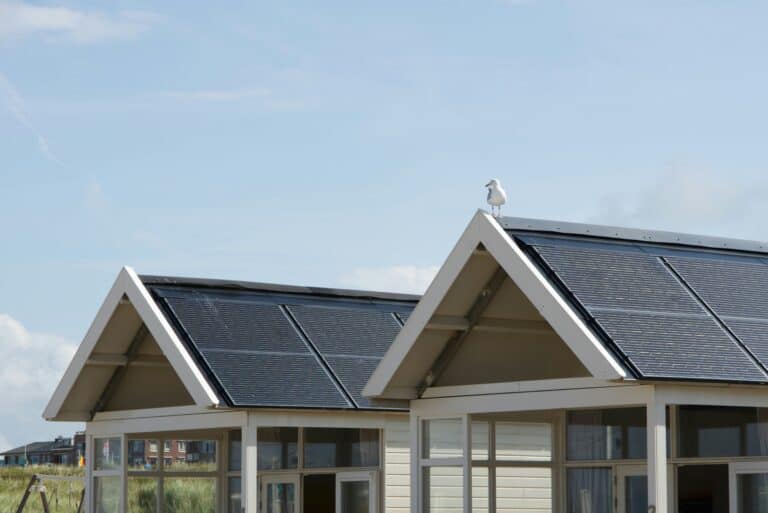
Vent pipes, chimneys, poles, and antennas cast sharp defined shadows that move across the array through the day and hit different panels at different times.
Soft shadows
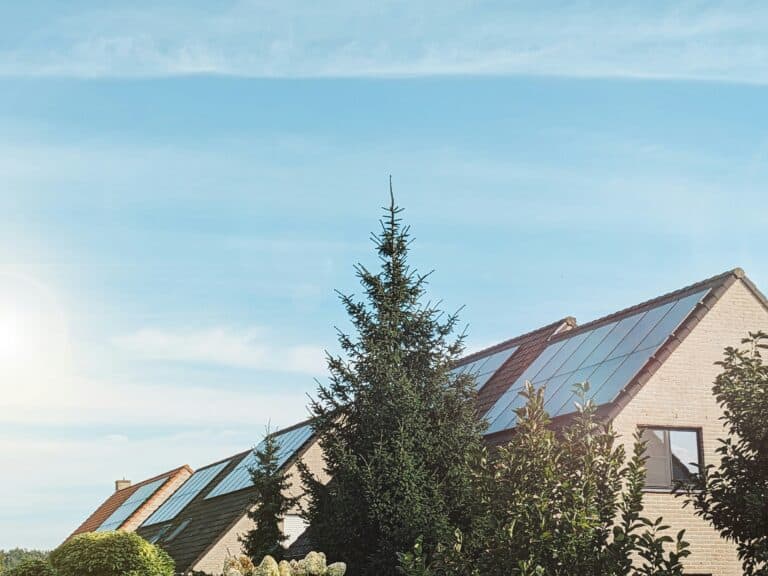
Distant trees and buildings produce diffuse edges that reduce light without blocking it entirely, which costs less per unit area than a hard shadow.
Whole-array shading
Uniform shade across every panel is the least damaging case proportionally, because no panel is limiting another.
Soiling and debris
A bird dropping or a leaf behaves exactly like a hard shadow, which is why concentrated soiling costs more than a dust film, covered in how often to clean solar panels.
Shade Changes Through the Day and Year
A shading assessment taken at one moment describes that moment, and solar arrays operate across every hour of every season.
Sun elevation changes dramatically between summer and winter. The same chimney casts a short shadow at midday in June and a very long one at the same hour in December.
Azimuth shifts too, so the sun rises and sets considerably further north in summer than in winter. Objects that never shade an array in July can shade it heavily in January. Shade usually outweighs bearing, but which direction the panels face is worth confirming once the obstruction is handled.
Morning and evening shading matters less than midday shading in absolute terms, since output is lower at the shoulders anyway. Losing an hour at dawn costs less than losing an hour at noon.
That said, on a system sized tightly to a battery bank, morning shading delays the start of meaningful charging, which can matter more than the raw kilowatt hours suggest.
Deciduous trees introduce a seasonal swing of their own, shading heavily in summer and letting light through in winter, which partly offsets the low winter sun.
Any serious assessment therefore looks at the winter solstice as the worst case, since a site that performs acceptably then will perform well for the rest of the year.
Solutions That Actually Work
Microinverters convert each panel independently, so a shaded panel affects only itself. This is the most complete answer available and the most expensive per watt.
DC optimizers sit on each panel and condition its output before it joins the string, recovering most of what shading would otherwise cost while keeping a central inverter.
String layout matters a great deal if you are using neither of those. Grouping panels that get shaded at the same time into the same string confines the damage to that string rather than spreading it across the whole array.
Multiple MPPT inputs let separately shaded groups be tracked independently, which is a cheaper partial fix than per-panel electronics, covered in choosing a charge controller.
Assessing a Site Before Installing
Shade moves through the day and through the year, so a site that looks clear at noon in June may not be at nine in December.
Winter is the hard case, since the sun sits lower and shadows run much longer from the same objects.
Trees grow, which turns a marginal site into a shaded one over several years without anyone noticing the transition.
Roof-mounted obstructions are frequently the worst offenders precisely because they are close to the panels, and proximity makes a shadow denser, covered in solar panel orientation and output. Soiling behaves differently from shade, and what dust storms do covers the damage a heavy dust event leaves behind.
What to Do About Existing Shade
Removing the obstruction is much the cleanest answer where it happens to be a branch or a removable fitting, and it is frequently not possible at all where the culprit is a chimney or a neighbor’s tree.
Relocating panels away from the shaded zone costs less than fighting the shade with electronics, if there is somewhere to put them.
Adding optimizers to an existing string system is a retrofit many installers offer, and it is worth pricing against the production it would recover.
And simply accepting it is sometimes the correct answer, since a couple of hours of morning shade on an otherwise excellent site may well cost less than the fix would, covered in solar panel underproduction reasons.
Related Reading
- orientation and output
- underproduction reasons
- mixing panels
- charge controllers
- direct sunlight
- panel efficiency
Frequently Asked Questions
How much does shade affect solar panels?
Far more than the area suggests. Ten percent of an array shaded can cost thirty percent or more of output, because series-wired panels are limited by the weakest one.
Why does one shaded panel matter so much?
Panels in series share current, so the string carries only what the weakest panel passes. The same applies to cells within a panel.
Do bypass diodes fix it?
They reduce it considerably without eliminating it. A diode routes current around a shaded section, so you lose that section rather than the whole panel.
What solves shading properly?
Microinverters, which convert each panel independently, or DC optimizers, which condition each panel’s output before it joins the string. Both cost more per watt.
Is a bird dropping as bad as a shadow?
Effectively yes. Concentrated soiling blocks a section completely and behaves exactly like a hard shadow, which is why it costs more than a dust film.
Does shade damage panels?
Not under normal conditions. Bypass diodes prevent the hot spots that sustained shading could otherwise cause, and a failed diode is worth checking on an older panel.
Does shading change through the year?
Considerably. Winter sun sits much lower and further south, so objects that never shade an array in July can shade it heavily in January. Assess against the winter solstice.
How do I assess shade before installing?
Check across the day and across the year. Winter sun sits lower and casts far longer shadows, so a site clear in June may not be in December.
Sources
- National Renewable Energy Laboratory. Photovoltaic Research. https://www.nrel.gov/pv/
- United States Department of Energy. Solar Performance and Efficiency. https://www.energy.gov/eere/solar/solar-performance-and-efficiency
Recommended Reading
See our note on choosing solar panels.