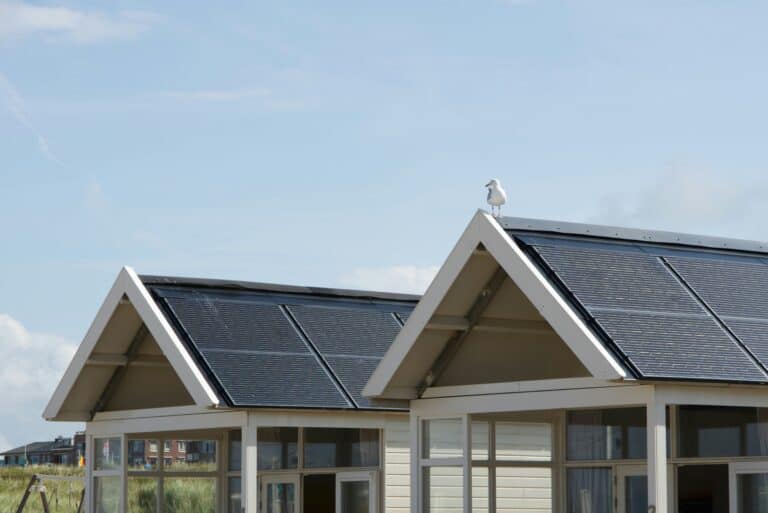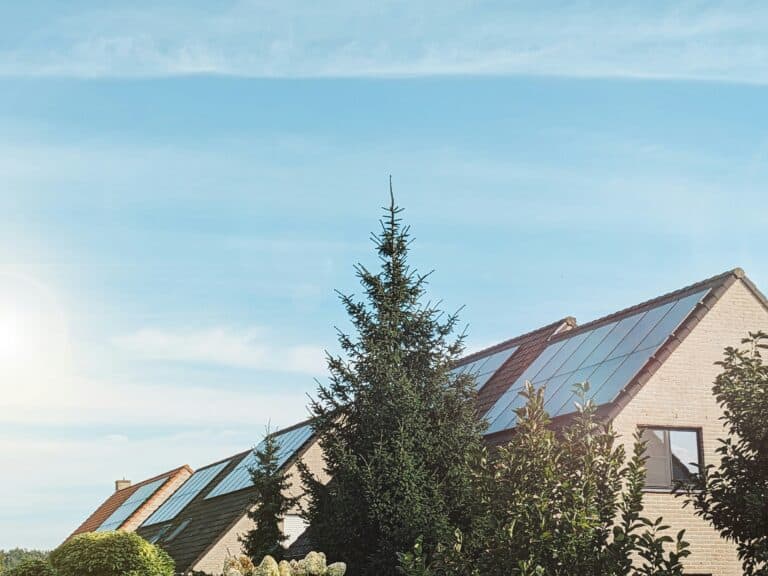

Yes, and it costs you production and creates maintenance problems that tilted panels do not have. Flat mounting typically produces ten to twenty-five percent less than an optimally tilted array, and it means panels never self-clean in rain.
The tradeoff is sometimes genuinely worth making. Flat installations cost less, stay far less visible, and largely avoid wind loading issues, which is exactly why commercial flat roofs use them constantly with a small tilt added.
Quick Answer
Flat mounting works and underperforms. Expect meaningful production loss, standing water and soiling that rain will not remove, and faster efficiency loss from heat. A tilt of even ten to fifteen degrees recovers most of the difference.
What Flat Mounting Costs You
| Factor | Flat | Tilted to latitude |
|---|---|---|
| Annual production | 10 to 25% lower | Baseline |
| Winter production | Substantially lower | Better sun angle |
| Self-cleaning | Poor, water pools | Good, water runs off |
| Airflow underneath | Restricted, runs hotter | Better convection |
| Wind loading | Lower | Higher |
| Visibility | Minimal | More visible |
| Cost | Lower | Higher, more hardware |
Those production figures vary considerably by latitude. Near the equator the penalty is quite small, and at higher latitudes it becomes substantial because the sun sits so much lower in the sky.
Why Angle Matters So Much
A panel produces the most when sunlight strikes it perpendicular to its surface, and output falls away steadily as the angle of incidence increases from there.
The general rule of thumb is that tilt should roughly match your latitude for the best annual figure, which effectively points the panel at the average sun position across the whole year.
Flat panels are effectively optimized for the sun directly overhead, which happens only near the equator and only around midday.
At higher latitudes the winter penalty becomes severe, since the sun sits very low and a flat panel presents almost its entire surface to the light at a glancing angle, covered in solar panel orientation and output.
The Cleaning Problem
Tilted panels shed rain readily, and the runoff carries accumulated dust and debris away with it. That self-cleaning handles a good share of ordinary soiling with no intervention at all.
Flat panels pool the water instead. It sits there, evaporates in place, and leaves behind whatever minerals and dust it happened to be carrying, which builds into a film that ordinary rain will not shift.
Debris accumulates along the frame edges rather than sliding off the surface, and leaves, pollen, and general dirt all collect against the lower rail.
The practical consequence is that a flat array needs cleaning on a schedule where a tilted one often does not, covered in how often to clean solar panels.
Heat Is Worse Flat
Panels lose efficiency steadily as they warm up, and mounting them flat against a roof restricts the airflow that would otherwise carry that heat away.
A hot roof beneath a flush-mounted panel radiates heat upward as well, so the panel is being warmed from both sides.
Tilted mounts create a gap underneath that allows convection to happen, which is precisely why the same panel in the same location produces differently depending on how it has been mounted.
Leaving four to six inches of clearance is worth doing even on a nominally flat installation, covered in how hot is too hot for solar panels.
When Flat Is the Right Choice
Near the equator
At low latitudes the sun passes close to overhead and the production penalty shrinks to a few percent.
High wind areas
Tilted panels catch wind and need substantially more robust mounting. Flat arrays present far less to a storm.
Planning or aesthetic restrictions
Where visible panels are restricted or unwanted, flat mounting is often the only permitted option.
Roofs that cannot take the load
Tilt frames and their ballast add weight, and an older roof structure may not carry it. Flush mounting is considerably lighter.
Very large arrays
On a big flat roof, tilting means spacing rows to avoid self-shading, which costs usable area. Flat packs more panels into the same area, covered in solar panel mounting kits. Load is the other roof question, and our guide on how much weight solar panels add covers distributed load and ballast.
The Compromise Most People Land On
A modest tilt of only ten to fifteen degrees recovers a large share of the production difference while retaining most of the practical advantages that flat mounting offers.
It is just enough for water to run off rather than pooling on the surface, which restores the self-cleaning behavior and removes the standing water problem entirely.
It creates airflow underneath, addressing the heat penalty.
And it stays low enough that wind loading remains modest and visibility stays limited, which is why tilt frames on flat roofs are standard commercial practice, covered in solar panel tilt mounts.
Row Spacing and Self-Shading
Tilting panels on a large roof introduces a problem flat mounting does not have, and it is the reason commercial installations often accept the flat penalty.
A tilted panel casts a shadow behind it, and the lower the sun, the longer that shadow reaches. On a multi-row array, the front row shades the row behind it during morning and evening.
Avoiding that means spacing rows apart, and the required gap grows with tilt angle and with latitude. Steeper tilt and higher latitude both demand more space between rows.
The consequence is fewer panels on the same roof. A tilted array at thirty degrees might fit half the panels a flat layout would, because most of the roof becomes spacing rather than panel. Bus roofs are the flat-mount case in practice, and panels sized for a skoolie conversion have to work at close to zero tilt.
That changes the arithmetic entirely. More panels producing at a worse angle can beat fewer panels producing at a better one, particularly where roof area is the binding constraint rather than budget.
Low tilt is the sweet spot for this reason. Ten to fifteen degrees casts short shadows, so rows sit close together while still shedding water and allowing airflow.
East-west facing arrays are another approach on flat roofs, with alternating rows tilted in opposite directions. That produces a flatter output curve across the day and packs densely, at the cost of a lower midday peak. Which way a row points is a decision of its own, and what direction solar panels should face covers finding true south.
Mounting Considerations
Roof penetrations need proper flashing regardless of mounting angle, and a leak introduced by a badly fitted mount becomes a far more expensive problem than any production it was protecting.
Ballasted systems avoid roof penetrations entirely by using weight to hold everything down, which suits flat commercial roofs well and requires the roof structure to carry that additional load. Weight is the other constraint on any roof array, and a roof load calculation puts a number on what the structure carries.
Wind uplift calculations still matter even when mounting flat, since air moving across a low panel can generate meaningful lift under certain conditions.
And local building code and permitting requirements govern all of this, which makes it a conversation for a qualified installer rather than something to settle from a general article.
Related Reading
Frequently Asked Questions
Can you put solar panels flat on a roof?
Yes. Expect ten to twenty-five percent less production than an optimally tilted array, plus soiling and heat penalties that tilted panels avoid.
How much production do you lose?
It depends heavily on latitude. Near the equator the penalty is small, and at higher latitudes it becomes substantial because the sun sits much lower.
Do flat panels get dirty faster?
They stay dirty longer. Water pools rather than running off, so rain does not carry debris away and a film builds that needs manual cleaning.
Do flat panels run hotter?
Yes, if mounted flush. Restricted airflow underneath plus radiant heat from the roof warms the panel from both sides, which costs efficiency.
What tilt should I use instead?
Roughly matching your latitude gives the best annual figure. Even ten to fifteen degrees recovers most of the difference and solves the water pooling problem.
When does flat make sense?
Near the equator, in high wind areas, where planning restrictions apply, and on large flat roofs where tilting would require row spacing that costs area.
Why do commercial flat roofs use low tilt?
Row spacing. A steeply tilted row shades the row behind it, so steeper tilt means fewer panels on the same roof. Low tilt casts short shadows and packs densely.
Is flat mounting cheaper?
Generally yes, with less hardware and simpler installation. Weigh that against production lost over the twenty-plus year life of the array.
Sources
- National Renewable Energy Laboratory. Photovoltaic Research. https://www.nrel.gov/pv/
- United States Department of Energy. Solar Performance and Efficiency. https://www.energy.gov/eere/solar/solar-performance-and-efficiency
Recommended Reading
See our note on choosing solar panels.