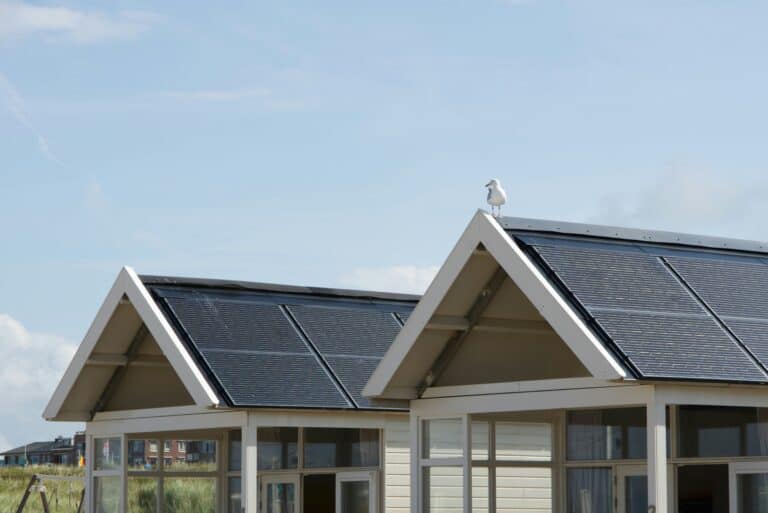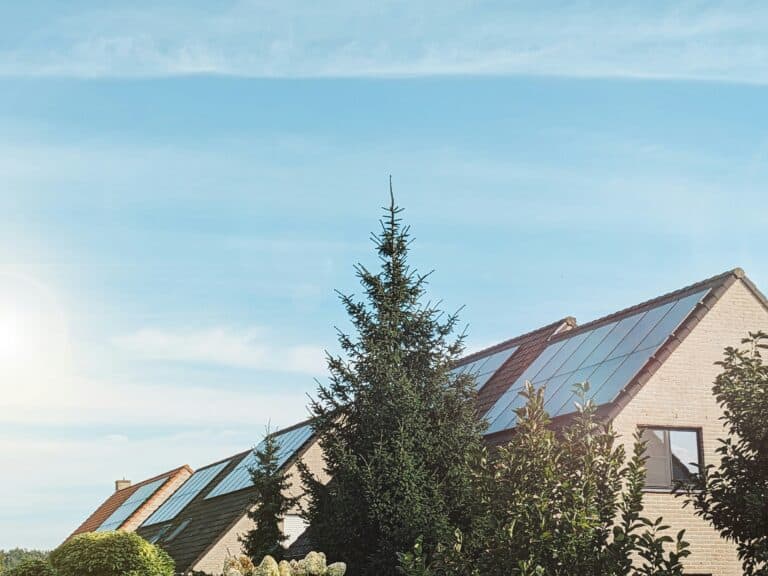
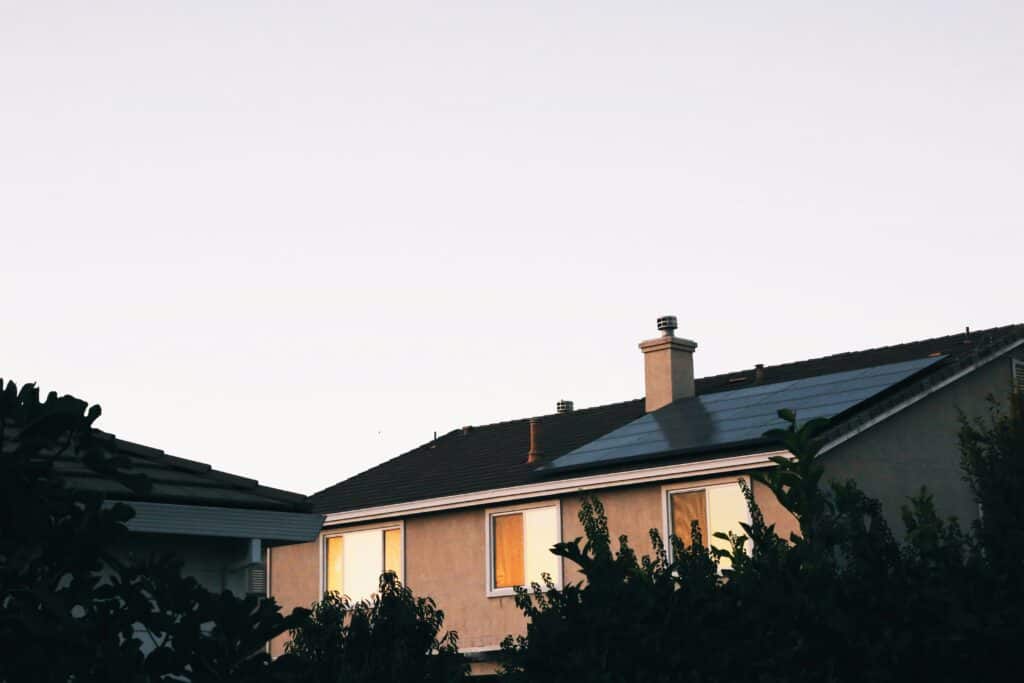
A residential array adds roughly two and a half to four pounds per square foot once panels, rails and hardware are counted, which is a small fraction of what a roof already carries. A solar array roof load calculator is useful mainly for showing how modest that figure is, and for catching the flat roof case where ballast changes it completely. Our guide on how much weight solar panels add to a roof covers the component breakdown.
The calculator works out total weight, spreads it across the array footprint, and flags where the result leaves the ordinary range.
Distributed Load Is the Number Engineers Use
| Load | Typical figure | Comparison |
|---|---|---|
| Pitched roof array | 2.5 to 4 lbs/sq ft | The normal case |
| Tilt mounted array | 3 to 5 lbs/sq ft | Extra legs and bracing |
| Ballasted flat roof | 5 to 10 lbs/sq ft | Concrete resists uplift |
| Snow load, northern code | 20 to 40 lbs/sq ft | What the roof already carries |
| Roof structure itself | 10 to 15 lbs/sq ft | Shingles, deck, framing |
The comparison is the point. An array using three pounds per square foot is adding a fraction of what the same roof is required to carry in snow every winter.
That is why structural capacity is rarely the thing that stops a residential installation.
Where the Weight Comes From
Panels dominate on a pitched roof. A standard four hundred watt module runs forty five to fifty pounds and covers about twenty one square feet.
Racking adds roughly thirty to forty percent on top. Aluminum rails, L feet, flashings and clamps accumulate faster than people expect when counted across a whole array.
Microinverters or optimizers add a pound or two per panel. Wiring and conduit are negligible in structural terms.
Ballast is the exception that dominates everything. On a flat roof, concrete blocks holding panels against wind uplift can weigh more than the panels themselves several times over.
Ballast Is About Wind, Not Gravity
This is the part that surprises people. Flat roof arrays are not weighed down because they might slide, they are weighed down because a low tilt panel behaves like a wing.
Wind passing over an array generates lift. Without penetrating the roof membrane, the only thing resisting that lift is mass.
Ballast concentrates at array edges and corners where uplift peaks, so the distribution is uneven rather than uniform. Those zones need individual engineering.
Our guide on putting solar panels flat on a roof covers the tradeoff against penetrating mounts, and our guide on securing panels in high wind covers the attachment side.
Concentrated Load Is the Real Risk
The average figure tells you very little about what any individual rafter experiences. Every mounting foot transfers weight into a single point.
Attachment spacing decides how much lands on each one. Feet at four foot intervals carry twice what feet at two foot intervals carry.
Feet must land on rafters rather than on decking alone. A lag bolt into plywood holds nothing under uplift, and this is the most common installation defect rather than any weight problem.
Our guide on panel mounting spacing covers layout, and our roundup of mounting kits covers what a complete hardware set includes.
What Actually Stops Installations
Roof age
The most common blocker by far. A roof with under about ten years of life left should be replaced first, because removing and reinstalling an array to reroof underneath costs thousands.
Existing damage
Rot in decking or rafters turns a routine load into a genuine risk, and no calculation compensates for compromised structure.
Undersized framing
Older homes sometimes use framing that would not meet modern requirements. This gets assessed during permitting rather than left to the installer.
Local requirements
Some jurisdictions want an engineer’s letter regardless of the numbers. Our guide on building inspections for solar covers what different areas ask for.
Snow Changes How the Load Behaves
Panels do not simply add their weight to the snow load, they change how snow moves on the roof.
Smooth glass sheds snow in sliding slabs rather than melting evenly. That concentrates load near the eaves as it goes, and it can damage gutters or anything below.
The air gap under an array also changes melt patterns. Snow can persist under panels after the surrounding roof has cleared.
Our guide on whether snow damages solar panels covers the panel side of this.
Penetrations Worry Installers More Than Weight
Every mounting foot is a hole through the roof surface, and water intrusion causes far more solar related roof problems than structural load ever does.
Correct flashing is what separates a thirty year installation from a leak. The flashing must integrate with the shingle course above it so water runs over the top rather than reaching the penetration.
Sealant alone is not flashing. A bead of caulk around a lag bolt fails within a few seasons of thermal cycling, and it is the single most common shortcut on cheap installations.
This is the strongest argument for using an installer who warranties the roof penetrations rather than only the electrical work.
Adding Panels Later Changes the Numbers
Arrays get expanded, and the load calculation from the original install stops applying the moment they do.
Newer panels are physically larger and heavier than the generation before them, even though weight per watt has fallen. A replacement or addition rarely matches the original footprint.
Rails sized for one panel dimension may not accept another, so mixing generations often means new racking rather than just new modules.
Recheck the distributed figure whenever the array grows. Our guide on adding panels to an existing system covers the electrical side of the same decision.
When a Ground Mount Is the Better Answer
If the roof is old, oddly shaped, shaded, or structurally marginal, the load question stops mattering entirely.
Ground mounts cost more in racking and trenching but remove the roof from the equation. They also allow ideal tilt and azimuth rather than accepting whatever the roof offers.
Access for cleaning and maintenance is far better, which matters more in dusty regions than most people expect.
Our roundup of ground mount racking covers the systems, and our roundup of tilt mounts covers the middle option on a low slope roof.
Roof Load FAQ
How much weight does a solar array add to a roof?
Around two and a half to four pounds per square foot for a standard pitched roof system including panels, rails and hardware. A twenty panel array totals roughly eight hundred to a thousand pounds spread across about four hundred square feet of roof.
Why is distributed load the number that matters?
Because roofs are engineered against pressure per unit area rather than total mass. A thousand pounds spread across four hundred square feet is two and a half pounds per square foot, and building codes already require far more capacity than that for snow.
Why do flat roof systems weigh so much more?
Ballasted mounts use concrete blocks to resist wind uplift instead of penetrating the roof membrane. Since mass is the only thing holding the array down, the figure climbs to five or ten pounds per square foot, concentrated most heavily at array edges and corners.
Is my roof strong enough?
Most structurally sound roofs are, because the load is small relative to code snow requirements. Age and condition matter far more than the numbers. Rot, sagging, or a roof near the end of its life are the things that actually stop installations.
Do I need a structural engineer?
It depends on your jurisdiction. Many require an engineer’s letter as part of permitting, particularly for older homes or unusual framing, and installers normally handle it. The calculation itself is routine for a standard residential array.
Does panel weight affect wind resistance?
Less than people assume on a pitched roof, where attachment strength and spacing govern the outcome rather than mass. On a flat ballasted roof it is the opposite, since weight is the only thing resisting uplift.
Should I replace my roof before installing?
If it has under about ten years of life left, yes. Removing and reinstalling an array to reroof underneath costs thousands, and doing both at once avoids that entirely. A newer roof needs no action.
Do panels make snow load worse?
They add their own weight and change how snow behaves. Smooth glass sheds snow in sliding slabs rather than melting evenly, concentrating load near the roof edge as it moves. Snow guards and thoughtful array placement manage that, and installers in snowy regions plan for it.