A dual fuel generator runs on gasoline or propane from the same engine, which matters off grid because the two fuels fail in different ways. The best dual fuel generators for off-grid backup split into six types, and the deciding factor is whether you need quiet occasional top-up power or a machine that carries the whole house through a long stretch. Propane stores for years, and gasoline does not.
Every generator in this category produces carbon monoxide, and that is the part to take seriously. Run one outdoors only, well away from doors, windows and vents, and never in a garage or under a deck even with the door open.
Solar covers the ordinary days, and a generator covers the ones it cannot. Our comparison of solar generators versus gas generators covers where that line sits.
Quick Verdict
A mid-size dual fuel inverter generator is the sensible default for most off-grid sites, because it runs quietly and produces clean power for electronics. Conventional open-frame units cost less per watt and are loud, portable models suit small top-ups, and standby units are a different purchase entirely. Tri-fuel conversions add natural gas, and generators paired to a battery bank run least.
Key Takeaways
- Carbon monoxide is the real hazard, so outdoors and well clear of the building is the only acceptable placement.
- Propane stores for years without degrading, while gasoline goes stale in months.
- Propane produces slightly less power from the same engine than gasoline does.
- Inverter generators produce cleaner power and run far quieter than open-frame units.
- A generator that charges a battery bank runs in short bursts rather than continuously.
- Connecting a generator to house wiring needs a transfer switch and usually an electrician.
How We Picked
We compared generator types rather than individual models, because lineups turn over while the engine and alternator designs stay stable. Each section covers one type and the backup role it fills.
We ranked types on four things: how quietly they run, how clean the power output is, how well they pair with a battery system, and how practical the fuel logistics are off grid.
We excluded anything sold on peak wattage claims alone, and we have not stated output figures, run times, or noise levels, since those vary by model and by load.
1. Mid-Size Dual Fuel Inverter Generators
Why It Stands Out
An inverter generator conditions its output, so the power is clean enough for electronics and for charging a battery bank through an inverter charger. It also throttles down under light load rather than running flat out.
That throttling is why these are so much quieter, which matters a lot on a quiet property.
Worth Knowing
They cost more per watt than open-frame units and are harder to service yourself. Parallel kits let two smaller units combine, which is often cheaper than one large one.
Sizing should come from a real load list rather than a guess. Our guide to building an off-grid load list covers doing that properly.
Best for: Most off-grid sites, and anyone charging batteries or running electronics. Skip it if raw watts per dollar is the only criterion.
2. Conventional Open-Frame Dual Fuel Generators
Why It Stands Out
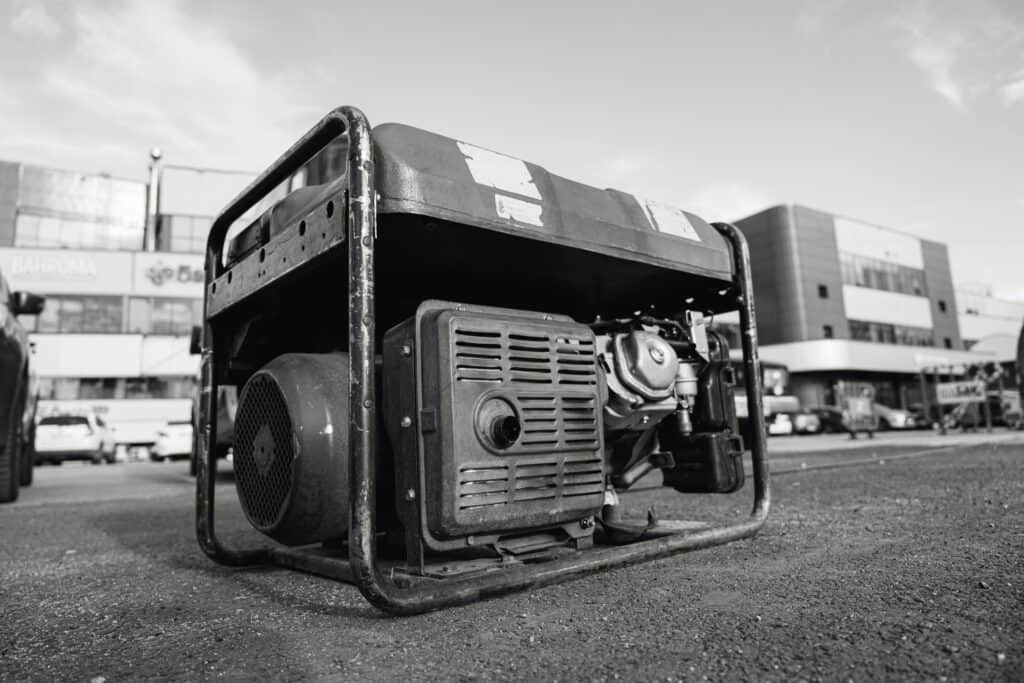
Open-frame generators give you the most output per dollar by a wide margin. For well pumps, power tools and resistive loads, that is often all you need.
They are also simpler to work on, with accessible parts and widely available service items.
Worth Knowing
Noise is the main cost, since these run at fixed engine speed regardless of load. Output is also less clean, which some sensitive electronics dislike.
Distance and a sound barrier help, and the barrier must never restrict ventilation or push exhaust toward the building. Our piece on running power tools off grid covers the loads these suit.
Best for: Pumps, tools, and construction-style loads on a budget. Skip it near neighbors or where noise matters.
3. Portable and Compact Dual Fuel Units
Why It Stands Out
Small dual fuel generators are light enough to move by hand and quiet enough to run near a cabin. For topping up a battery bank on a cloudy week, that is all the machine you need.
Propane operation also suits occasional use particularly well, since a cylinder sits ready for a year without attention.
Worth Knowing
Output is limited, so large motor loads like a well pump or an air conditioner are usually out of reach. Starting surge is where small units fall short.
Two small ones in parallel can cover more than one alone. Our guide to how many batteries you need off grid covers reducing how often you run it at all.
Best for: Battery top-ups, cabins, and occasional light loads. Skip it if you need to start a well pump or a compressor.
4. Large Dual Fuel Generators for Whole-Home Loads
Why It Stands Out
Large portable units can carry a well pump, a furnace fan, and a refrigerator at the same time. For a property that has to keep functioning through a long outage, capacity is the point.
Electric start and wheel kits make a heavy machine manageable, and many include multiple outlet types.
Worth Knowing
Fuel consumption is the real cost, and a big generator burns through propane fast when lightly loaded. Running one at low load also wastes fuel and fouls the engine.
Feeding house circuits requires a transfer switch, never a cord into an outlet. Our guide to transfer switches covers that part, and an electrician should do the install.
Best for: Whole-home backup and properties with well pumps. Skip it as a battery charger, where it will run badly underloaded.
5. Tri-Fuel Generators and Conversion Kits
Why It Stands Out
Tri-fuel units add natural gas to gasoline and propane, which is valuable anywhere a gas line exists. Natural gas never runs out mid-outage and never needs refilling.
Conversion kits also exist for many dual fuel generators, which is cheaper than buying a new machine.
Worth Knowing
Natural gas produces the least power of the three fuels, so output drops on that setting. A gas line connection is plumbing work with its own permit requirements.
Conversions can affect the warranty and, done badly, are dangerous. This is professional work rather than a weekend project.
Best for: Properties with a natural gas supply. Skip it off grid where no gas line exists.
6. Generator and Battery Bank Pairings
Why It Stands Out
A generator feeding an inverter charger runs hard for a short window, fills the batteries, and shuts off. The house then runs from the battery bank in silence.
That pattern uses far less fuel than idling a generator all evening, and it keeps engine hours low.
Worth Knowing
It requires an inverter charger or a charge source sized for the generator, plus enough battery capacity to make the cycle worthwhile. That is a system decision rather than a single purchase.
Generator output quality matters more here, which favors inverter units. Our guide to inverter chargers covers the component that makes this work.
Best for: Established off-grid systems with a real battery bank. Skip it if you have no batteries to charge.
Dual Fuel Generators at a Glance
| Type | Noise | Power quality | Fuel use | Best situation |
|---|---|---|---|---|
| Mid-size inverter | Low | Clean | Efficient at part load | General off-grid backup |
| Open-frame conventional | High | Rougher | Fixed speed | Pumps and tools on a budget |
| Portable compact | Lowest | Clean | Lowest total | Battery top-ups |
| Large portable | High | Varies | Highest | Whole-home loads |
| Tri-fuel | Varies | Varies | Depends on fuel | Sites with a gas line |
| Paired to batteries | Short bursts | Clean needed | Least over time | Established systems |
What to Look For in a Dual Fuel Generator
What actually has to start?
Motor loads like well pumps, compressors and air conditioners draw a large surge on startup, and that surge sizes the generator. Running watts alone will leave you short.
List the loads that must run simultaneously rather than the total of everything you own. Our generator runtime calculator helps with the fuel side of the same question.
Which fuel will you actually store?
Propane keeps for years in a cylinder and is the practical choice for a machine that sits unused. Gasoline degrades in months and needs stabilizer and rotation.
Propane also delivers slightly less power from the same engine. That penalty is usually worth the storage advantage off grid.
How quiet does it need to be?
Inverter units throttle down and run dramatically quieter than fixed-speed machines. On a property where the point is quiet, that difference is the purchase.
Distance helps more than any enclosure, and enclosures must never restrict airflow or trap exhaust. Never box a running generator in.
How will it connect?
Extension cords to individual appliances are fine. Feeding house circuits requires a properly installed transfer switch, because backfeeding through an outlet endangers you and anyone working on the lines.
Have that work done by a licensed electrician. Our guide to when you need an electrician covers the same boundary on the solar side.
Where will it run?
Outdoors, on level ground, well away from doors, windows and vents, with the exhaust directed away from any building. That placement is decided before you buy, not after.
Rain covers designed for running units exist, and a tarp is not one. Plan a spot that stays accessible in winter.
Propane vs Gasoline
Where propane wins
Storage life is the headline, since a cylinder sits for years without degrading. It also burns cleaner, which means less carbon buildup and easier cold starts.
Cylinders are safer to store than gasoline cans and easier to transport in quantity.
Where gasoline wins
More power from the same engine, and availability anywhere. For a machine used often enough to keep fuel fresh, that output advantage is real.
Gasoline is also simpler in very cold weather, where propane vaporization can struggle. Cold affects every part of an off-grid system this way.
Common Generator Mistakes to Avoid
Running it anywhere near enclosed
Carbon monoxide from a generator is lethal and has no smell. A garage with the door open, a porch, a basement, or a spot beside a window all count as unsafe.
Backfeeding through an outlet
Plugging a generator into a household outlet to power the house energizes the utility connection and can kill line workers. A transfer switch is the only correct method.
Leaving gasoline in it for a year
Stale fuel gums up carburetors and is the most common reason a generator will not start when needed. Run it on propane for storage and exercise it on a schedule.
Buying on peak watts
Peak and running figures are different numbers, and motor surge is what sizes a machine. Our inverter sizing calculator applies the same logic to the rest of the system.
Related Reading
- Solar generators for home backup cover the silent alternative for lighter loads.
- Preparing for a power outage covers the plan a generator sits inside.
- Portable power station versus generator covers choosing between the two.
Frequently Asked Questions
What are the best dual fuel generators for off-grid backup?
A mid-size dual fuel inverter generator suits most off-grid sites, because it runs quietly, produces clean power, and pairs well with a battery bank. Large open-frame units make sense where a well pump has to start, and compact models are enough if you only top up batteries.
Is propane or gasoline better in a dual fuel generator?
Propane for storage, since it keeps for years and burns cleaner, and gasoline for maximum output from the same engine. Off grid, most people store propane and keep a little gasoline for when full power is needed.
Can you run a generator in a garage with the door open?
No. Carbon monoxide accumulates in attached and partly enclosed spaces, and it is odorless. Generators run outdoors only, well away from doors, windows and vents, with exhaust pointed away from the building.
How do you connect a generator to a house?
Through a properly installed transfer switch or interlock, fitted by a licensed electrician. Plugging a generator into a wall outlet energizes the utility connection and is dangerous to anyone working on the lines.
Do you lose power running on propane?
Yes, slightly, because propane carries less energy per unit than gasoline. Manufacturers publish separate output figures for each fuel, so check both before sizing.
How often should you run a backup generator?
Exercise it on a regular schedule rather than leaving it idle for a year, since that is what keeps it starting reliably. Stale gasoline in the carburetor is the most common failure at exactly the wrong moment.
Can a generator charge an off-grid battery bank?
Yes, through an inverter charger or a suitable charge source, and that is usually the most fuel-efficient way to use one. The generator runs hard for a short window and shuts off, and the house draws from the batteries.
How big a generator do you need off grid?
Size it from the loads that must run at the same time, including the starting surge of any motors. A load list is the reliable method, and peak wattage on the box is not.