
Usually yes, and the panels themselves are very rarely the actual limiting factor here. What decides it is whether the charge controller and wiring can handle the additional input.
Expanding is a common plan precisely because most people underbuild the first time around and only find out what they actually needed after living with the system for a season. Our note on choosing solar panels covers selection.
Quick Answer
Check the charge controller’s maximum input voltage and current first. If there is headroom, adding panels is straightforward. If not, the controller is the upgrade rather than the panels.
What Has to Be Checked
| Component | What limits you |
|---|---|
| Charge controller | Max input voltage and current rating |
| Wiring | Gauge rated for the higher current |
| Fuses and breakers | Sized to the new array, not the old |
| Battery bank | Enough capacity to absorb the extra |
| Inverter | Unaffected by array size directly |
| Mounting | Physical space and structural load |
The Charge Controller Decides It
Every charge controller has a maximum input voltage and a maximum charging current, and both figures are published on the unit itself as well as in the manual that came with it.
Adding panels in series raises the total voltage. Adding them in parallel raises the total current instead. Which of the two you choose determines which of the controller limits you end up approaching. Adding panels changes the string arithmetic, and our panel string calculator checks the new configuration against your controller.
Exceeding the maximum voltage can damage a controller outright, and it is by far the more serious of the two failure modes, particularly in cold weather when panel open circuit voltage rises above the rated figures on the label.
Exceeding the current rating is generally handled far more gracefully, since many controllers will simply limit their output rather than failing outright, although running one permanently at its ceiling is not something to plan around. Our note on sizing a charge controller covers the numbers.
Series or Parallel
Series raises voltage
Panel voltages add while current stays the same, which suits long cable runs.
Parallel raises the current
Currents add while voltage stays the same, which suits partial shading.
Cold weather pushes voltage higher
Open circuit voltage rises in cold conditions, which is where controllers get damaged.
Series strings suffer badly from shade
One shaded panel limits the whole string. Our roundup of microinverters covers per-panel handling.
Matching Old and New Panels
Panels wired together into the same string should share similar electrical characteristics, because mismatched panels end up dragging each other down toward whichever one is weakest.
In a series string, the panel with the lowest current sets the limit for everything else on that string. In parallel, the panel with the lowest voltage does something broadly similar.
The practical approach when you are adding dissimilar panels is to put them onto their own separate string, or their own controller entirely, rather than mixing them into an existing string.
Panels also degrade slowly with age, which means a five-year-old panel no longer electrically matches a brand new one of exactly the same model number. Our roundup of solar panel kits covers what comes matched.
Wiring and Protection Need Revisiting
More current running through the same cable means the existing wire gauge may no longer be adequate for the job, and undersized wire creates heat and voltage drop rather than failing in any obvious way you would notice.
Fuses and breakers were sized for the array they were originally installed alongside, and an expanded array needs its protection resized to match the new current figures.
Connectors and combiner boxes carry their own current ratings, and those get overlooked routinely because the parts are small and cheap compared with everything else.
None of that is difficult, and all of it gets skipped by people who think of expansion as simply bolting on more panels. Our note on what size wire you need covers gauge.
When the Battery Becomes the Limit
More panels produce more energy, and that energy has to go somewhere. A battery bank that fills by mid-morning cannot absorb additional generation.
The controller simply stops charging once the bank reaches full, which means those extra panels contribute precisely nothing for the remainder of the day.
That makes battery capacity the genuine constraint in plenty of systems where the owner had assumed all along that panels were the thing holding them back.
Adding panels helps most in systems where the bank routinely fails to reach a full charge, and helps least in systems where it fills up early every single day. Our note on what happens when batteries are full covers that.
Physical Space and Mounting
The electrical side gets all the attention and the physical side is what stops plenty of expansions before they start.
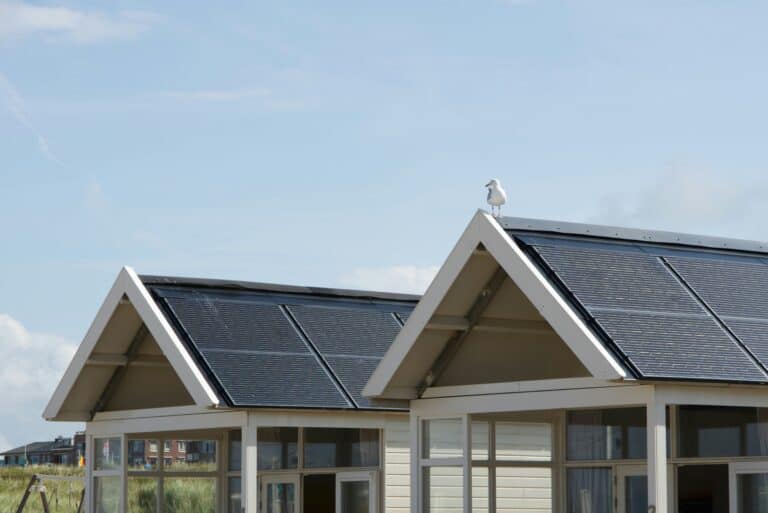
Roof mounting needs unshaded area at a workable orientation, and the good positions are usually taken by the original array.
A second array facing a different direction is not a failure, since panels facing east and west spread generation across the day rather than concentrating it at noon, which suits a battery bank that fills early.
Ground mounting sidesteps roof constraints entirely and needs open unshaded space plus a frame that handles wind loading.
Structural load is worth checking on any roof mount, since the additional weight and the wind forces on a larger array both increase. Our roundup of panel mounting kits covers the hardware.
Adding a Second Controller
Where an existing controller has no headroom, adding a second one with its own panels is frequently simpler than replacing the first.
Multiple controllers can charge the same battery bank without any conflict, provided each one is configured for the same chemistry and the same voltage setpoints.
That approach also isolates the new array, which means dissimilar panels no longer need to match the old ones.
The trade is more hardware and more configuration to keep consistent, and settings that drift apart between two controllers will fight each other. Our roundup of charge controllers covers the options.
What to Check Before Buying
Controller maximum voltage and current
Published on the unit, and the figure that decides everything.
Cold weather voltage margin
Open circuit voltage rises in cold, so leave headroom.
Existing wire gauge
Rated for the old current, not necessarily the new.
Whether the bank actually fills
If it fills by mid-morning, panels are not your constraint.
Common Mistakes to Avoid
Adding panels without checking the controller
Exceeding maximum input voltage can destroy it outright.
Ignoring cold weather voltage rise
Panels exceed rated voltage in cold, which is when controllers fail.
Mixing mismatched panels into an existing string
The weakest panel limits the string, so put dissimilar panels on their own.
Leaving fuses and wire sized for the old array
Protection has to match what is actually flowing now.
Recommended Reading
See our note on adding batteries to an existing system, our roundup of solar fuses and breakers, our roundup of panel connectors and cables, and a note on oversizing an array.
Adding Solar Panels FAQ
Can I add panels to an existing system?
Usually yes. The charge controller’s maximum input voltage and current decide it, not the panels themselves.
Do new panels have to match the old ones?
Within a string, yes. Mismatched panels drag toward the weakest one. Dissimilar panels are better on their own string or controller.
Series or parallel?
Series raises voltage and suits long runs. Parallel raises current and handles partial shading better. Which you choose depends on which controller limit has headroom.
What if my controller has no headroom?
Either replace it with a larger one, or add a second controller with its own panels charging the same bank.
Do I need bigger wire?
Possibly. Existing wire was sized for the old current. More current in undersized wire causes heat and voltage drop rather than an obvious failure.
Will more panels always help?
No. If your battery bank fills by mid-morning, extra generation has nowhere to go and the additional panels contribute nothing after that point.
Why does cold weather matter?
Panel open circuit voltage rises in cold conditions, sometimes above the rated figure, which is when a controller at its voltage limit gets damaged.
Can two controllers share a battery bank?
Yes, provided both are set to the same chemistry and voltage profile. Settings that drift apart will work against each other.