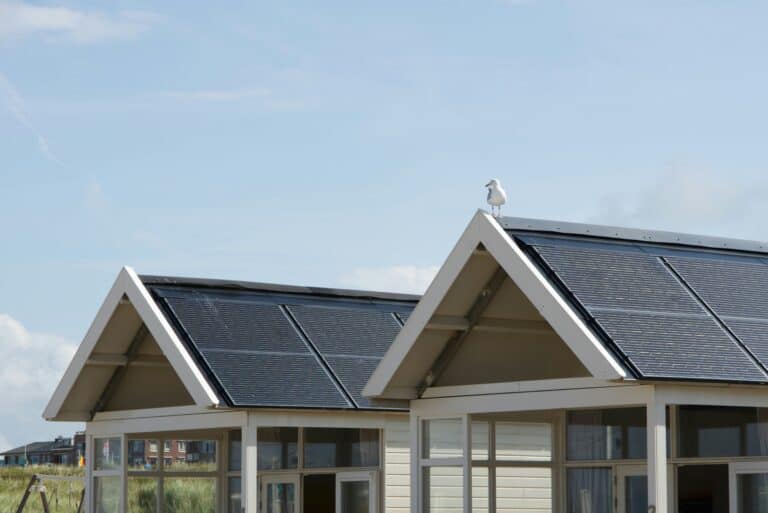

A significant number of states have solar access or solar rights laws that limit what a homeowners association can prohibit. In those states an HOA generally cannot ban solar outright, though it may still impose reasonable conditions on appearance and placement.
The catch is that this varies entirely by state, and in states without such a law an HOA’s restrictions may be enforceable. Our note on solar charge controllers covers the other approval.
A Note on Legal Matters
This describes how solar access laws generally work rather than what applies to you. State law varies considerably and changes, and HOA documents differ from one community to another. This is general information and not legal advice, and a dispute with an HOA warrants a lawyer familiar with your state’s law.
Quick Answer
Many states restrict an HOA’s ability to prohibit solar. Reasonable conditions on placement and appearance are frequently still permitted. Check your state’s law and your governing documents before assuming either way.
What Solar Access Laws Generally Do
These laws exist because HOAs had historically banned solar on aesthetic grounds, and legislatures decided that access to solar generation outweighed uniform appearance.
The typical structure prohibits an HOA from banning solar entirely while allowing restrictions that do not significantly impair performance or significantly increase cost.
What counts as significant is where disputes happen, and it is defined differently from state to state, sometimes with a specific percentage threshold.
Some laws also void provisions in existing HOA documents that conflict with them, which means an old rule in your CC&Rs may be unenforceable. Our note on 100 watt solar panels covers a placement factor.
What an HOA Can Usually Still Do
Require approval
An architectural review process is common and generally permitted, even where prohibition is not. Submitting plans is normal.
Specify placement
Preferring a rear-facing roof over a street-facing one, where that does not significantly reduce output.
Require screening of equipment
Conduit, inverters, and ground-mount arrays may need concealment or landscaping.
Set standards for appearance
Matching conduit color to the roof, or requiring flush mounting rather than tilted racks. Our roundup of wire management and conduit covers meeting those.
Reading Your Governing Documents
HOA authority comes from documents you agreed to at purchase, and most people have never read them properly.
The CC&Rs are the recorded covenants and the most binding of them. Solar restrictions, if any, usually appear there or in architectural guidelines.
Architectural guidelines are frequently separate and easier to amend, which means they may be more current than the CC&Rs and may conflict with them.
Bylaws cover how the board operates, including how decisions are made and appealed, which matters if you end up disputing a refusal.
Look specifically for language about roof modifications, exterior alterations, and anything about equipment visible from the street, since solar restrictions are often written generally rather than naming solar at all.
The Argument That Usually Decides It
Where a state law limits restrictions to those not significantly impairing performance, the practical dispute becomes technical rather than aesthetic.
An HOA requiring panels on a north-facing roof is asking for a significant output reduction, and that is generally the kind of restriction these laws are designed to prevent.
An HOA requiring conduit painted to match the roof costs almost nothing in performance, and that is generally enforceable.
Which means production modeling matters. Being able to show the output difference between the placement you want and the one the HOA proposes turns an opinion into evidence. Our note on panel orientation and output covers the numbers.
Doing It in the Right Order
Read your governing documents first. CC&Rs, bylaws, and architectural guidelines are the rules you agreed to, and knowing what they actually say beats assuming.
Check your state’s solar access law next, since it may override parts of those documents.
Submit through the architectural review process even if you believe the HOA cannot refuse. Skipping the process is what turns a straightforward approval into a dispute about procedure.
Get everything in writing. Verbal approval from a board member is not an approval, and boards change.
Timing Your Application
When you submit matters more than people expect, because HOA boards are volunteer bodies with their own rhythms.
Boards typically meet monthly, and an application arriving just after a meeting waits for the next one. Knowing the schedule can save weeks.
Some associations have a defined response window in their documents, after which an unanswered application is deemed approved. That provision is worth locating before submitting.
Board turnover matters too, since an approval from one board is best documented in writing before the composition changes.
Submitting well ahead of when you want the work done removes the pressure that makes people consider proceeding without approval, which is the decision that turns a delay into a genuine dispute.
If You Are Refused
Ask for the refusal in writing with the specific provision it relies on. That forces the HOA to identify its grounds rather than declining vaguely.
Compare that provision against your state’s solar access law, which is where an unenforceable restriction becomes visible.
Many states have a defined dispute process for HOA matters, and some specifically address solar. That is generally cheaper than litigation.
A lawyer familiar with HOA law in your state is worth a consultation before escalating, since these disputes turn on statutory language rather than on fairness. Our roundup of tilt mounts covers hardware that sometimes becomes the point of contention.
Rentals and Condominiums Are Different
Solar access laws generally protect owners of single-family homes, and the picture changes for other arrangements.
Condominium roofs are usually common property rather than owned by any unit, which means an individual owner typically cannot install on them regardless of state law.
Townhomes vary depending on whether the roof is owned by the unit or by the association, and that distinction is in the governing documents.
Renters generally cannot install permanent systems, since the property is not theirs to modify, though portable equipment raises no such question.
Where a shared roof is involved, the realistic path is a community-wide system approved by the association rather than an individual installation. Our roundup of portable panels covers the option that avoids the question entirely.
Practical Ways to Avoid the Fight
Approach the board early and informally rather than submitting a formal application cold. Boards respond better to being consulted than to being presented with a decision.
Bring specifics: the equipment, the layout, how visible it will be, and what it will look like from the street.
Address the concerns they are actually likely to have, which are almost always appearance and property values rather than the panels themselves.
Point to neighbors with installations if any exist, since precedent within the community is persuasive in a way statute is not. And where a minor accommodation costs you little output, granting it buys goodwill worth more than the argument.
HOA and Solar FAQ
Can an HOA ban solar panels?
In many states, no. Solar access laws limit an HOA’s ability to prohibit installation, though they typically still allow reasonable conditions on placement and appearance. It varies entirely by state.
What restrictions are usually allowed?
Architectural review, placement preferences that do not significantly reduce output, screening of equipment, and appearance standards such as matching conduit color.
What if my CC&Rs prohibit solar?
Some state laws void conflicting provisions in existing HOA documents, which can make an old rule unenforceable. Check your state’s law rather than assuming the document controls.
Do I still need to apply?
Yes. Submit through the architectural review process even if you believe refusal would be unlawful, since skipping it turns a substantive question into a procedural dispute you would lose.
What counts as significantly impairing performance?
Defined differently by state, sometimes with a specific percentage threshold. Production modeling showing the output difference between placements is what turns this into evidence.
What if they refuse?
Request the refusal in writing citing the specific provision, compare it against your state law, and use any statutory dispute process before considering litigation.
Does this apply to ground-mounted arrays?
Frequently with more restrictions, since ground mounts are more visible and may fall under separate rules about structures. Screening requirements are common.
Should I get a lawyer?
For a genuine dispute, a consultation with someone familiar with HOA law in your state is worthwhile, since outcomes turn on statutory language rather than on what seems reasonable.