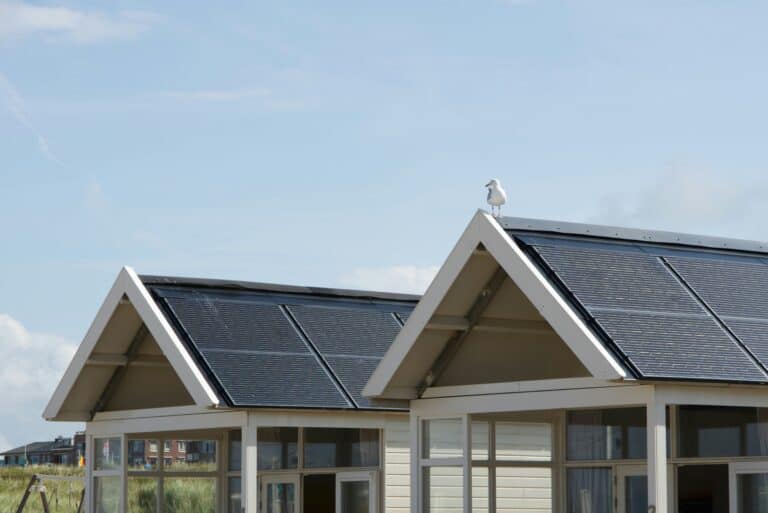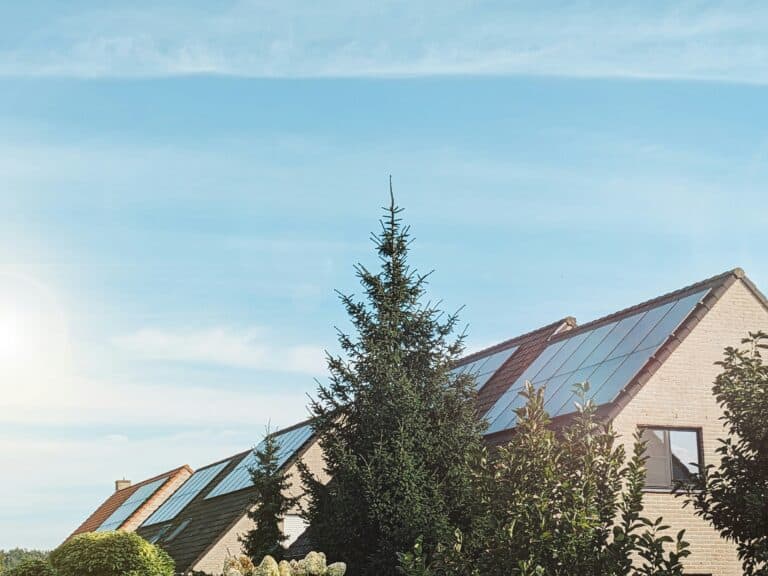

Panels have no moving parts, no filters, and no consumables. That is the reason solar gets described as maintenance-free, and for the panels themselves it is close to accurate.
The rest of the system is a different matter. Batteries degrade, inverters have fans and capacitors, connections loosen and corrode, and mounting hardware works loose over years of thermal cycling. Our note on how often to clean solar panels covers the one routine job.
A Safety Note
Panels generate dangerous voltage in any light and cannot be switched off. Visual checks from the ground and monitoring your production data are safe. Roof access, opening enclosures, tightening electrical connections, and anything involving wiring is work for a qualified installer or licensed electrician.
Quick Answer
Panels themselves need occasional cleaning and a visual check. The inverter, batteries, connections, and mounting hardware are what actually need periodic professional attention.
What the Panels Need
Cleaning, whenever dirt accumulates enough to cost you measurable output. In rainy climates rainfall handles most of that for you; in dry dusty ones it does nothing at all.
A visual check for cracks, discoloration, delamination, and anything growing or nesting underneath the array. This is a ground-level job with a pair of binoculars rather than a reason to climb onto a roof.
Clearing shade as vegetation grows. A panel installed with clear sky can be shaded three years later by a tree nobody was watching.
That is genuinely the list. Our note on solar charge controllers covers what the visual check is looking for.
What Actually Needs Attention
The inverter
The component most likely to fail first. Many have cooling fans, and all have electrolytic capacitors with a finite life. Inverters are commonly replaced at least once during a system’s lifetime.
Batteries
Degrade with cycling and age regardless of use. Lead acid types need periodic checks; lithium types need far less but still age.
Electrical connections
Thermal cycling loosens terminals over years, and loose DC connections generate heat. This is the maintenance item with genuine fire relevance.
Mounting hardware
Fasteners, clamps, and roof penetrations all need periodic inspection, particularly after severe weather. Our note on why batteries degrade covers the storage side.
A Realistic Schedule
Nothing here needs doing weekly, and the useful frame is which checks belong to which interval.
Monthly, glance at production data against the same month last year. That is a two-minute job and it catches most faults earlier than anything else will.
Seasonally, look at the array from the ground for visible damage, new shading from growth, and anything nesting underneath. Spring and autumn are natural points, and after any severe weather is a sensible addition.
Annually, clean if your climate needs it, check that mounting hardware is still where it should be, and review inverter error logs if the system records them.
Every few years, a professional inspection covering connection torque, thermal imaging, and roof penetrations. That interval depends on the installation and the environment, and coastal or dusty sites justify more frequent attention.
Environment Changes the Answer
Generic maintenance advice fails because two installations in different places genuinely need different things.
Dusty and arid sites need cleaning far more often, since there is no rainfall doing it for you and dust accumulates continuously. That is the single biggest deviation from the standard advice.
Coastal installations face salt corrosion on frames, fasteners, and connections, which makes hardware inspection more important and more frequent.
Snowy climates add loading considerations and the question of whether to clear panels at all, which is often not worth the risk of damage. Heavily wooded sites need vegetation management as an ongoing task rather than a one-off.
Our note on whether panels work in winter covers the cold-climate picture.
Monitoring Is the Real Maintenance
Watching production data catches problems long before a visual inspection would, and it costs nothing once set up.
What to look for is a change without a weather explanation: a step drop on a specific date, or a gradual decline across a season compared against the same period last year.
Systems with per-panel monitoring make this considerably easier, since one panel falling behind its neighbors is unambiguous. String inverters only show the total.
Most faults show up in the data first. A system nobody monitors can underproduce for a year before anyone notices. Our roundup of monitoring meters covers the equipment.
Professional Inspection
A periodic professional inspection is worth having on a permanently installed system, and how often depends on the installation and local conditions.
You can learn what actually needs attention first before deciding.
An inspection typically covers connection integrity and torque, mounting and roof penetrations, inverter condition and error logs, and thermal imaging to find hot spots that are invisible otherwise.
Thermal imaging is the part worth paying for specifically. Hot spots and failing connections show up clearly and are undetectable from the ground.
Severe weather is a reasonable trigger for an unscheduled check, particularly hail, high wind, or anything that moved things on the roof.
Portable and Off-Grid Systems
Portable panels get handled, packed, and transported, which means connectors and cables wear in a way fixed installations do not. Checking leads and connectors is worth doing regularly.
Off-grid systems generally carry more battery capacity and more exposed wiring, both of which increase what needs periodic attention.
Equipment stored seasonally has its own considerations, since batteries left at the wrong state of charge over winter degrade faster than ones stored properly.
Our note on maintaining a portable power station covers the portable side in detail.
What It Costs to Ignore
Solar tolerates neglect better than almost any other household system, which is exactly why problems run for years unnoticed.
A dirty array in a dusty climate can lose a meaningful share of output continuously, and because the decline is gradual nobody notices. Over a year that is real money for the cost of an afternoon.
A failed bypass diode or a single dead panel in a string costs a fixed percentage forever until someone looks. Systems without per-panel monitoring can carry that for years.
Loose connections are the one that matters beyond money, since a hot DC joint is a fire risk rather than a production issue. That is the argument for periodic professional inspection even on a system that appears to be working.
Our roundup of grounding equipment covers related safety hardware.
Each of those is avoidable and none of them is obvious until somebody explains it.
What Not to Do
Pressure washing damages seals and can force water into the frame edge. Panels are cleaned with plain water and a soft brush.
Walking on panels cracks cells, and the damage is frequently invisible until output drops.
Cleaning in full midday sun risks thermal shock on hot glass, and it leaves mineral deposits as water evaporates instantly. Early morning is better.
Abrasive cleaners and scrapers scratch the anti-reflective coating, which permanently reduces output. Our roundup of cleaning brushes covers appropriate tools.
Solar Servicing FAQ
Do solar panels need servicing?
The panels themselves need occasional cleaning and a visual check, and little else. The inverter, batteries, electrical connections, and mounting hardware are what genuinely need periodic attention. Any hands on task raises access questions, and whether panels can be walked on covers what the glass and frame tolerate.
What fails first?
Usually the inverter. It contains cooling fans and electrolytic capacitors with finite lifespans, and it is commonly replaced at least once while the panels are still working.
How do I know something is wrong?
Production data. A step drop on a specific date or a decline against the same period last year points at a fault, and it shows up long before anything is visible.
Should I get a professional inspection?
Worth having periodically on a permanent installation, especially for thermal imaging, which finds hot spots and failing connections that cannot be seen from the ground.
Can I clean panels myself?
Ground-level panels, yes, with plain water and a soft brush in the early morning. Roof panels involve working at height and are better handled by someone equipped for it.
Why not pressure wash them?
Pressure can damage the seals and force water into the frame edge. Panels need very little force to clean, and the risk is entirely one-sided.
Do connections really need checking?
Yes, and this is the maintenance item with genuine fire relevance. Thermal cycling loosens terminals over years, and a loose DC connection generates heat.
What about after a storm?
Worth an unscheduled check, particularly after hail or high wind. Look for cracked glass, moved mounting hardware, and any change in production afterward.
Recommended Reading
See our note on choosing solar panels.