
They make when you use and export power matter as much as how much, because a kilowatt-hour has a different price at four in the afternoon than at nine at night. How time of use rates affect solar comes down to a mismatch: panels produce hardest around midday while the expensive hours arrive after the sun has dropped.
That gap is what storage and load shifting exist to close. Our guide to reading a solar monitor covers seeing the shape of your own production curve.
A Quick Note
This is general information, not financial or legal advice. Rate periods, peak windows and export credit rules are set by your state and utility, they differ between utilities, and they change with the seasons and over time. Confirm your own rate schedule with your utility rather than relying on a general description.
Quick Answer
Under time-varying rates, imports during peak hours cost the most and solar produces least then. Exports at midday earn whatever the off-peak or grid-value rate is, which is lower. The response is to shift consumption into the production window and store energy to cover the peak instead of buying it.
Key Takeaways
- Peak pricing usually lands after peak production.
- Midday exports are credited at the cheapest rate.
- Self-consumption during peak is the most valuable kilowatt-hour.
- Load shifting costs nothing and helps immediately.
- Batteries exist mainly to arbitrage this gap.
- West-facing panels trade total output for better timing.
- Rate periods change seasonally, so check both.
| Time of day | Typical rate | Solar output | Best move |
|---|---|---|---|
| Early morning | Off-peak | Low and rising | Cheap to import |
| Midday | Off-peak or mid-peak | Highest | Run heavy loads now |
| Late afternoon | Peak begins | Falling | Discharge battery |
| Evening | Peak | Near zero | Avoid imports entirely |
| Late night | Off-peak | Zero | Charge vehicles |
| Summer afternoons | Longest peak window | Falling fast | Where storage pays most |
The Mismatch in One Picture
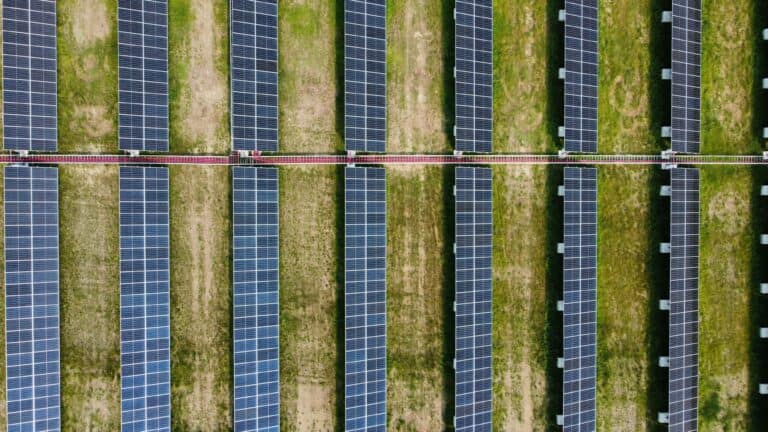
A south-facing array peaks near solar noon and tails off through the afternoon. By the time most households start cooking, the curve is well down.
Utility peak periods are set by system demand, which climbs as people come home and air conditioning runs into the evening.
So the hours when power costs the most are the hours your array contributes least. That is the structural problem.
Nothing about panel quality fixes it. Our guide to how much shade affects solar panels covers a separate cause of afternoon losses worth ruling out first.
What the Rate Structure Does to Export Value
Exports land in cheap hours
Surplus leaves the house during the production window, which is generally off-peak or mid-peak. The credit reflects that period.
Imports land in expensive hours
Evening consumption is billed at peak. Exporting cheap and importing expensive is a losing exchange repeated daily.
Value-based export rates compound it
The California Public Utilities Commission describes its net billing tariff as compensating exports at a rate reflecting the value of that generation to the grid, usually lower than the retail rate.
And imports get sharper
The CPUC has described that tariff as charging customers for grid electricity on high differential time-of-use rates that vary by time of day. Our guide to Arizona net metering and solar incentives covers a state with its own version of this.
Load Shifting Is the Free Fix
Every kilowatt-hour you consume during production is worth the retail rate you avoided paying. That is the most valuable unit in the whole system.
Dishwashers, laundry, pool pumps and water heating all run on timers and none of them care what hour it is.
Precooling the house before the peak window uses cheap energy to buy comfort during expensive hours.
None of this requires equipment, which is what makes it the first move rather than the last. Our guide to building an off-grid load list covers the same exercise of matching loads to production.
Where Batteries Actually Earn Their Cost
Storage under time-varying rates is an arbitrage. You bank cheap midday energy and spend it during the expensive window.
The value per cycle is the spread between the peak import rate and the export credit, multiplied by how much you can move. A wide spread pays for a battery faster than a narrow one.
Backup power is a separate benefit that often gets used to justify the purchase, and it is worth separating the two in your own arithmetic.
Sizing follows from your evening consumption rather than from your array. Our guide to whole home battery backup covers that sizing, and our guide to adding batteries to existing solar covers retrofitting onto an array you already have.
Practical Moves in Order of Cost
- Learn your rate periods. Including the seasonal versions, since summer and winter peaks often differ.
- Move the flexible loads. Laundry, dishes, pool pump and water heater onto timers inside the production window.
- Precool or preheat. Use thermal mass to carry comfort through the peak.
- Move vehicle charging late. Off-peak overnight rates are usually the cheapest hours available.
- Consider west-facing capacity. Lower total output, better alignment with peak.
- Then price a battery. Once the free changes are done, the remaining gap is what storage has to cover.
Our guide to whether charging an EV at home raises your bill covers the largest single shiftable load in most households, and our guide to what a hybrid solar system is covers the architecture that automates the shifting.
West-Facing Panels and the Timing Trade
A south-facing array maximizes annual production. A west-facing array produces less overall and more of it late.
Under flat rates, south wins on volume. Under time-varying rates with an afternoon peak, the later production can be worth more per kilowatt-hour.
Splitting an array across both orientations flattens the curve, which suits a household with an evening-heavy peak.
This is a design decision and it is hard to change later. Our guide to questions to ask a solar installer covers raising it before the layout is fixed.
What to Watch Out For
Rate periods change. A peak window that starts at four in the afternoon this year may start at five next year, and your whole schedule assumed the old one.
Seasonal schedules catch people too, since a summer peak and a winter peak can sit in different hours entirely.
A savings projection built on a flat rate does not describe a time-varying bill, and a projection built on last year’s rate periods may not describe this year’s.
Check the schedule annually rather than once. Our guide to how long solar takes to pay off covers the sensitivity of payback to exactly this kind of change.
Related Reading
- How many watt hours do you need
- Solar monitoring and production meters
- Battery monitors for off-grid solar
Frequently Asked Questions
How do time of use rates affect solar?
They make timing matter as much as quantity. Panels produce most around midday, while utility peak pricing generally lands in the late afternoon and evening. So exports are credited in cheap hours and imports are billed in expensive ones.
Are time of use rates bad for solar owners?
They change what a system is worth rather than making it a bad investment. They reward self-consumption and storage and penalize a household that exports at midday and imports heavily after dark without adjusting anything.
What is the most valuable kilowatt-hour in a solar system?
One you consume yourself during a peak period, because it avoids the highest retail rate you would otherwise pay. That is worth considerably more than the same kilowatt-hour exported at midday for a grid-value credit.
Should you shift loads into the middle of the day?
Yes, and it is the cheapest change available. Dishwashers, laundry, pool pumps and water heating all run on timers. Precooling the house before the peak window uses inexpensive energy to carry comfort through the expensive hours.
Do batteries pay for themselves under these rates?
It depends on the spread. The value per cycle is the difference between your peak import rate and your export credit, times how much energy you can move. A wide spread pays a battery back faster, and backup power is a separate benefit worth counting separately.
Are west-facing panels better with time of use rates?
They can be. West-facing capacity produces less annually and more of it late in the day, which aligns better with an afternoon peak. Splitting an array across orientations flattens the curve for an evening-heavy household.
When should you charge an electric vehicle?
Usually late at night on off-peak rates, or during midday production if you are home and your export credit is low. Charging during the evening peak is the most expensive option available in most rate structures.
Do rate periods stay the same?
No. Peak windows shift over time and often differ between summer and winter, so a schedule built around last year’s periods can quietly stop matching. Check your rate schedule annually rather than setting timers once and forgetting them.
Sources
- California Public Utilities Commission, net energy metering and net billing
- California Public Utilities Commission, net energy metering revisit frequently asked questions