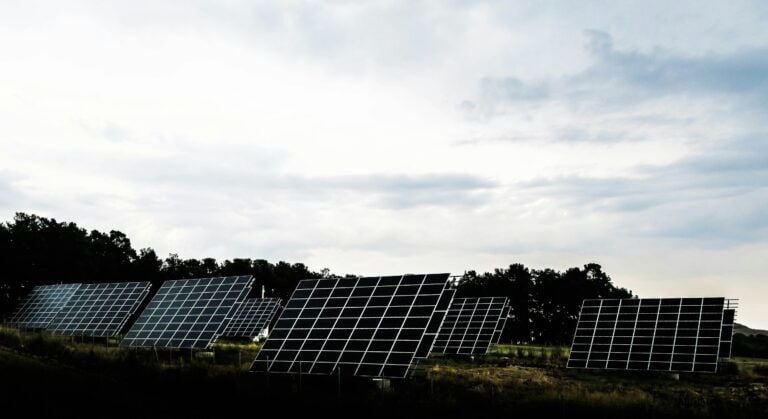

It goes to the grid, into a battery, or nowhere at all, and which one depends entirely on how your system is wired. What happens to extra solar power surprises people because the third option is real: a system with nothing to absorb the surplus simply stops producing it.
Panels do not force out energy nobody wants. Our guide to reading a solar monitor covers seeing which of the three is happening.
A Quick Note
This is general information, not financial or legal advice. Export rules, credit values and interconnection requirements are set by your state and utility and they change. Confirm current terms locally before sizing a system around export income. Any work on grid connections or battery wiring belongs with a licensed professional.
Quick Answer
On a grid-tied system, surplus flows out through the meter and earns a bill credit whose value depends on your tariff. With a battery, surplus charges it first and exports only after it is full. On an off-grid system with a full battery, the charge controller throttles production back and the potential energy is never generated.
Key Takeaways
- Grid-tied surplus becomes bill credit, not cash.
- Credit value depends on your tariff, not your hardware.
- Batteries absorb surplus before anything is exported.
- Off-grid surplus with a full battery is simply not produced.
- Curtailment is normal behavior and not a fault.
- Self-consumption beats export under value-based rates.
- Oversizing only pays if something absorbs the extra.
| System type | Where surplus goes | What you get |
|---|---|---|
| Grid-tied, no battery | Out through the meter | Bill credit at your export rate |
| Grid-tied with battery | Battery first, then grid | Stored energy, then credit |
| Off-grid, battery not full | Into the battery | Stored energy |
| Off-grid, battery full | Nowhere, output is curtailed | Nothing, and that is normal |
| Off-grid with diversion load | Water heater, pump or similar | Useful work instead of waste |
| Grid-tied, export not permitted | Curtailed or self-consumed only | Depends on the interconnection terms |
Grid-Tied Is the Common Case
Your array supplies the house first because that is the shortest electrical path. Loads take what they need and the remainder leaves.
The meter records that export separately from your imports, and the utility nets them at the end of the billing period.
What you receive is almost always a credit rather than money. Most programs apply it against future consumption rather than paying it out.
The size of that credit is the variable worth understanding. Our guide to Arizona net metering and solar incentives covers one state where the compensation model changed.
Why the Credit Is Worth Less Than It Used to Be
The old arrangement
Traditional net metering credited exports at the retail rate, which the California Public Utilities Commission describes as bill credits applied at the retail rates. A kilowatt-hour out canceled a kilowatt-hour in.
The newer arrangement
Under California’s net billing tariff, the CPUC describes export compensation as applied at a rate reflecting the value of that generation to the grid, usually lower than the retail rate.
Why it matters here
When exports pay less than the rate you pay for imports, surplus energy is worth much more used at home than sent out.
What follows from that
Storage and load shifting become worth paying for. Our guide to adding batteries to existing solar covers retrofitting for exactly this reason.
With a Battery, Surplus Has a Queue
A hybrid system follows a priority order. House loads come first, the battery second, and the grid last.
So on a sunny afternoon the battery fills from what the house is not using, and export only begins once it is full.
That ordering is what converts a low export credit into avoided retail purchases after dark.
Battery capacity then sets how much surplus you can keep. Our guide to what happens when solar batteries are full covers the moment the queue reaches its end, and our guide to whole home battery backup covers sizing for it.
Off-Grid Surplus Is Genuinely Discarded
This is the part that surprises people. With a full battery and no loads running, an off-grid array has nowhere to put its output.
The charge controller handles it by backing off. It reduces current draw from the panels so they produce less, and the array sits at open-circuit or near it.
No heat builds up and nothing is damaged. Panels are perfectly content generating nothing.
Curtailment is normal, and a monitor showing low midday production with a full battery is reporting correct behavior. Our guide to how deep to discharge a solar battery covers the other end of the same cycle.
Putting Off-Grid Surplus to Work
- Heat water. A resistive element is the classic diversion load, and hot water stores energy cheaply.
- Run pumps midday. Well, pool and irrigation pumps shift easily to the production window.
- Precool or preheat the space. Thermal mass is storage you already own.
- Charge everything portable. Tools, power stations and vehicles absorb surplus on demand.
- Use a diversion controller. It dumps excess to a load automatically rather than leaving it to you.
- Schedule the laundry. The cheapest form of load shifting requires no equipment at all.
Our guide to building an off-grid load list covers matching loads to production, and our roundup of battery monitors for off-grid solar covers knowing when the battery is actually full.
What Happens in a Blackout
A grid-tied inverter with no battery stops when the grid stops, even in bright sun. That is a safety requirement rather than a malfunction.
The reason is line workers. An inverter feeding a dead line would energize conductors somebody expects to be safe.
So during an outage there is no surplus to speak of, because there is no production at all.
Battery systems with the right architecture can island a portion of the house instead. Our guide to anti-islanding on grid-tied solar covers the mechanism, and our guide to running solar panels without a battery covers what that setup can and cannot do.
Sizing Around Surplus
An array sized well past your consumption only pays if the surplus is worth something. Under retail credit it often is, up to your annual usage.
Under a value-based export rate, extra capacity produces energy you sell cheaply and then buy back expensively. The arithmetic turns against you quickly.
Interconnection limits and utility caps can also restrict how large a system you are permitted to connect.
Work out the export rate before the panel count. Our guide to what happens if you oversize your solar array covers the hardware side, and our guide to adding panels to an existing system covers expanding later instead of guessing now.
Related Reading
Frequently Asked Questions
What happens to extra solar power?
It goes to the grid for a bill credit, into a battery, or nowhere at all. On an off-grid system with a full battery and no loads running, the charge controller reduces output and the energy is never generated in the first place.
Do you get paid for excess solar?
Usually in bill credits rather than cash, and the value depends on your tariff. The CPUC describes traditional net metering as crediting exports at retail rates, while newer net billing credits them at a grid-value rate that is usually lower.
Is wasted solar power bad for the panels?
No. When a charge controller backs off, the array simply produces less and sits near open-circuit voltage. Nothing overheats and nothing is damaged. Panels generating nothing are in a completely normal state.
Does a battery charge before power is exported?
Yes, on a properly configured hybrid system. The priority order is house loads first, battery second, grid last. Export begins only once the battery is full, which is what makes storage worthwhile under a low export rate.
What can you do with off-grid surplus?
Divert it to useful work: heating water with a resistive element, running well, pool or irrigation pumps midday, precooling or preheating the space, or charging tools and vehicles. A diversion controller automates the dump so you do not have to.
Why does my production drop in the middle of the day?
On an off-grid or hybrid system, usually because the battery is full and loads are light, so the controller curtails output. That is correct behavior rather than a fault. On a grid-tied system, look at shading, soiling or an inverter issue instead.
Does extra solar power help during a blackout?
Not without a battery and the right inverter. A grid-tied inverter shuts down when the grid goes down to protect line workers, so there is no production at all during an outage, let alone surplus.
Should you build a bigger array to export more?
Only if exports are worth close to what you pay for imports. Under a value-based export rate, extra capacity means selling cheaply and buying back expensively. Utility interconnection caps may also limit system size regardless.
Sources
- California Public Utilities Commission, net energy metering and net billing