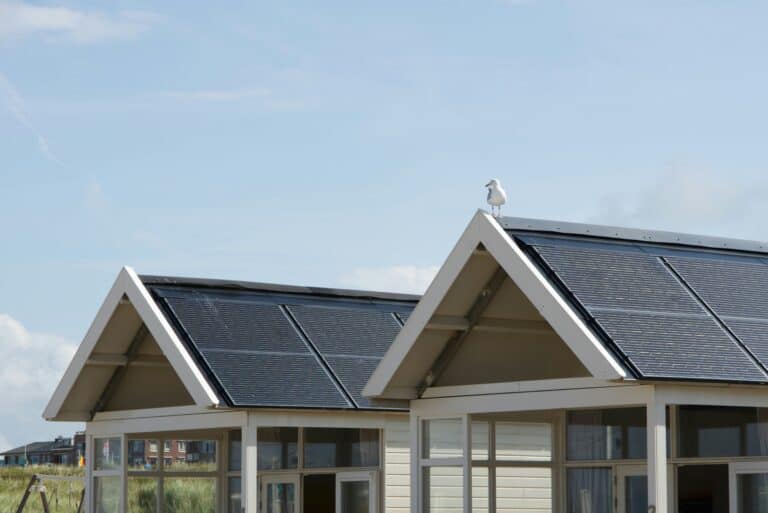

RV solar sizing starts from daily watt hours consumed rather than from how many panels fit, and the roof usually turns out to be the binding limit rather than the budget. The honest way to answer how much solar do you need on an RV is to add up the daily load first, then check what the roof can hold.
Most sizing arguments happen because the two sides get mixed up. A rig that sips power runs on a small array, while a rig with a residential fridge outruns every panel the roof will take. Settling the daily watt hour figure first keeps later decisions grounded.
Quick Answer
Add up the watt hours each appliance uses in a normal day, then plan an array that can replace that amount during the shortest days you expect to camp in. Weekend users often land near 200 to 400 watts. Full time rigs commonly want 600 watts or more.
A Quick Note
This is general guidance rather than a wiring plan for any particular rig. DC wiring carries real fire risk, and roof work adds fall and sealing risk. A qualified installer or electrician should sign off on anything that looks unclear.
Key Takeaways
- Daily watt hours consumed is the starting number, not panel count.
- Vents, air conditioners and antennas eat roof space, so the ceiling arrives early.
- A rated array delivers less than its label, and shade drops it close to nothing.
- An undersized bank throws away harvest once it fills.
- Camping style moves the answer more than the length of the rig does.
| How you camp | Typical daily draw | Roughly what array and bank suits it |
|---|---|---|
| Weekend trips on hookups | Very low, since shore power carries it | Roughly 100 to 200 watts, enough to hold the battery between trips |
| Weekends away from hookups | Often 500 to 1,000 watt hours a day | Commonly 200 to 400 watts and a modest bank; trips end before deficits pile up |
| Full time with a compressor fridge | Frequently 1,000 to 2,000 watt hours | Usually 400 to 600 watts and a bank sized for two cloudy days |
| Full time with heavy laptop and satellite internet use | Often 2,000 watt hours or more | Typically 600 to 800 watts, plus a bank that can absorb a good harvest day |
| Running a residential fridge | A large draw that continues overnight | Often beyond what a roof supplies, so shore power or a generator stays involved |
| Van with no air conditioning | Usually modest, with fans as the main load | Roughly 200 to 400 watts, though a small roof caps the ceiling early |
| Rig that moves every day or two | Similar draw, but recharging differs | Driving time adds charge, so the bank matters more than a final panel |
Guidance ranges only. Actual draw depends on the appliances aboard and how long they run.
Why Daily Watt Hours Is the Starting Number
A watt hour figure describes the energy a rig consumes in a day, which is what an array has to replace. Watts alone describe how fast something draws, not how much it uses. A fan pulling a few watts for twelve hours matters more than a kettle running two minutes.
Building the figure means listing every load that runs off the battery. Lights, the water pump, roof fans, the fridge, chargers and the inverter all belong on it. Appliance labels give a starting wattage, and a battery monitor with a shunt gives a better picture.
Multiply each load by the hours it runs, then add the results and pad the total. Forgotten loads always exist.
Why the RV Roof Is a Hard Ceiling on Array Size
The roof, not the wallet, usually decides how much solar an RV can carry. Panels are rigid rectangles, and RV roofs are not empty rectangles. Every fixture up there removes area no panel can occupy.
Roof fans, skylights, air conditioner shrouds, antennas and vent pipes all take a share. What remains is often an awkward set of leftover strips rather than one clean field. Mounting some panels horizontal can rescue a strip that would go unused.
Panel dimensions therefore matter as much as wattage. Several small panels often fit a cluttered roof better than two large ones. Comparing physical sizes across the panel options built for RV roofs beats comparing headline watts.
Array Watts Versus What the Array Actually Harvests
A panel rating describes output under laboratory conditions that no roof matches. Heat reduces panel voltage, and a dark RV roof runs hot. Angle, dust and wiring losses take further slices.
So a rated array returns less than its label over a real day. Treating rated watts as an optimistic ceiling is the safer habit. Shade is harsher still, since partial shade on one panel can pull down a whole series string.
Controller choice shapes harvest too, since the conversion stage sits between panels and battery. Working through how a controller gets matched to an array is a separate exercise from picking panels.
Battery Bank Versus Array: Which One Is Holding You Back
The array collects energy and the bank stores it, so a shortfall in either caps the system. An undersized bank fills early on a good day, and the extra harvest goes unused. That waste is why a large array on a small bank disappoints.
The bank also carries every overnight load alone. One that barely survives a quiet night has no margin for a cloudy morning.
Usable capacity is the figure that counts, and it varies with chemistry rather than the number on the case. Reading through how bank capacity gets matched to daily use clarifies where that line sits.
For anyone already short on power, the bank is usually the better first upgrade. Storage improves cloudy days, overnight comfort and shore power charging at once. Panels only help when the sun already cooperates.
The Three Input Sources an RV Has
An RV bank fills from three directions, and solar is only one. Shore power at a pedestal charges through the converter, usually faster than a roof array. Solar covers days with no pedestal.
The third source is the alternator while the engine runs, which suits rigs that move often and needs its own dedicated hardware; that side starts with the charging hardware used in RV and van builds. Sizing that component is a separate topic.
A rig that visits hookups weekly needs no array that closes every deficit alone. A rig that never plugs in closes the gap from roof and bank only.
How Camping Style Changes the Answer More Than Rig Size
Two identical rigs can need very different systems, because the people inside camp differently. A weekend traveler who plugs in on Sunday can run a deficit the whole time, because the next hookup restores the bank.
A full time traveler gets no such reset. Every day has to balance, or the bank drifts downward across a week. That difference explains most of the gap between a 200 watt build and an 800 watt build.
Habits matter just as much. Working from a laptop with satellite internet all day is a different load from reading in the evening.
Season and Latitude Change What the Roof Can Deliver
The same array produces very different amounts through the year. Summer brings long days and a high sun, so a modest array feels generous. Winter brings short days and a low sun, so it feels undersized.
Latitude compounds the effect, since winter camping far from the equator shortens the useful window. Weather layers on top, because a cloudy region undoes a good latitude.
Sizing for the worst season a rig will see produces a larger array, while sizing for average conditions occasionally forces rationing. Neither is wrong, but the tradeoff should be deliberate.
What a Watt Hour Estimate Cannot Tell You
An estimate captures appliances, not the people operating them. Real behavior drifts, and a system sized for careful use struggles when habits relax. A fridge door opened often never appears in the arithmetic.
No array size fixes habitual shade parking. Someone who always picks the shaded site underperforms a smaller system in the open. Site choice outranks panel count on any given day.
Specific hardware adds variation no estimate predicts. Two fridges with similar labels can behave differently, and inverter idle draw varies. Where the honest answer is that it depends on the equipment, that is the answer.
What Trips People Up
Sizing from panel count instead of consumption
Two 100 watt panels and one 200 watt panel are not equivalent on a crowded roof. Start from watt hours consumed and let layout follow.
Forgetting the inverter and other quiet loads
An inverter left switched on consumes power all day with nothing plugged in. Standby draws from detectors and control panels add up over 24 hours.
Measuring the roof as if it were empty
Roof length times width gives a number no array will reach. Sketch the fixtures first, then fit panels to the strips that remain.
Adding panels to fix a bank problem
More panels cannot help at night or on an overcast day. When the shortfall shows up after dark, storage is the limit.
Related Reading
Readers weighing a portable alternative can compare the all in one power stations used for RV and van life, which sidestep roof limits. An off grid sizing walkthrough helps organize the load list. Anyone whose roof holds more than the bank can absorb should also read about building an array larger than the system needs.
Frequently Asked Questions
How much solar do you need on an RV for full time living?
Full time rigs commonly land between 400 and 800 watts of panel, though the answer depends on the appliances aboard. A compressor fridge, roof fans and device charging usually sit in the lower half. Heavy internet use and residential appliances push toward the top, or past what a roof allows.
Can solar run an RV air conditioner?
Air conditioning draws far more power than most RV roofs supply for long. Short daytime runs become possible with a very large array and a large bank behind it. Most owners treat it as a shore power or generator load, then size solar for everything else.
Is it better to add more panels or more battery?
It depends on when the shortfall appears. Running out overnight or during cloudy stretches points to the bank, because storage carries those hours. Filling the bank by mid morning and wasting sunshine afterward points to more capacity to absorb what the roof collects.
Do flexible panels change how much roof area is usable?
Flexible panels can follow a curved surface and reach places a rigid frame cannot. They also run hotter when bonded directly to the roof, which reduces output. The area gain is real, so the choice is a tradeoff rather than a clear win.
How much roof space does an RV panel take?
Panel footprints vary widely by model, so the specification sheet matters more than wattage. What limits a build is the shape of the space between fixtures, not total area. Measuring the gaps between vents and the air conditioner before shopping avoids returns.
Does parking in shade really matter that much?
Yes, and more than most people expect. Partial shade across one panel can reduce output from a whole series string, not just the shaded panel. A modest array in open sun regularly outproduces a large array parked under trees, which makes site choice part of the sizing decision.
Should a qualified installer review an RV solar plan?
Having a qualified installer or RV electrician review the plan is worthwhile before anything gets drilled or wired. They can check conductor sizing, fusing, disconnects and roof sealing against the chosen equipment. That review matters most for anyone unsure about DC wiring or roof work.