
A solar well pump is sized by matching three numbers together: the total head the water must travel, the daily volume the property needs, and the usable sun hours available to move it. Solar well pump sizing fails most often when only one of those three is checked and the other two are assumed. A pump that looks strong on paper can still fall short when the pipe run is long or the sun window is narrow.
The calculator below turns those inputs into a flow rate target and a rough array size. It is a planning tool, not a substitute for a well report. For the wider system around the pump, the off-grid system sizing walkthrough covers panels, storage and loads together.
Quick Answer
Add the static water level, the vertical rise to the tank, and the friction loss in the pipe to get total head, which sets the pump. Then divide daily gallons by usable sun hours for the flow rate target. Size the array so that flow happens in ordinary light, not only at noon.
Key Takeaways
- Total head, not well depth, is the number a pump is rated against.
- Head has three parts: static lift, tank rise, and pipe friction.
- Undersized pipe adds head fast, and wider pipe usually costs less than a bigger pump.
- Solar output is sized around usable sun hours, not a full day.
- A storage tank filled during good light beats oversizing the pump for peak demand.
- Well yield and recovery rate come from the well report, never from arithmetic.
Enter the depth to the standing water level, the vertical rise from the wellhead to the tank inlet, the pipe size and run length, the daily gallons required, and the usable sun hours for the season being planned.
| Use | Rough daily demand | Notes |
|---|---|---|
| One person, household use | 50 to 80 gallons | Covers drinking, cooking, washing and a share of laundry. Conservation fixtures pull this lower. |
| Small household of three or four | 150 to 300 gallons | Laundry days and long showers drive the top of the range. Plan for the busy day, not the average one. |
| A few head of livestock | 30 to 100 gallons | Cattle drink far more than sheep or goats. Hot weather can push consumption well past the upper figure. |
| One horse | 8 to 15 gallons | Work, heat and dry feed all raise intake. Add extra for washing down and bucket spillage. |
| Small vegetable garden | 60 to 150 gallons | Depends heavily on soil, mulch and rainfall. Drip lines cut this sharply against overhead watering. |
| Stock tank top-up | 50 to 200 gallons | Evaporation and animal count both matter. Shaded tanks lose noticeably less in summer. |
| Off-grid cabin used at weekends | 40 to 120 gallons | Demand arrives in bursts rather than steadily. Storage smooths the spike far better than a larger pump. |
Every figure here is an approximate planning range, not a measurement. Actual demand varies with climate, fixtures, herd size and habits. Use these as a starting point, then adjust once real usage is known.
What total head actually is in solar well pump sizing
Total head is the full vertical distance plus resistance the pump must overcome to deliver water where it is wanted. It is measured in feet, and it is the single figure a pump curve is plotted against. Well depth alone is not that figure.
A well drilled to 300 feet may hold water standing at 120 feet. The pump only lifts from the standing level, not from the bottom of the bore. Using drilled depth instead inflates the requirement and pushes buyers toward pumps they do not need.
The three components of head every solar well pump sizing needs
Head breaks into three parts that simply add together. Getting all three on paper is most of the work.
The first is static lift, the distance from the standing water level up to the wellhead. The second is the rise from ground level to the tank inlet, which is pure elevation gain. The third is friction loss, the resistance water meets traveling through pipe, fittings and valves.
Add those three and the result is total dynamic head. That number goes on the pump curve. Everything the calculator does downstream depends on it being honest.
Why friction loss punishes undersized pipe
Friction loss rises steeply as pipe diameter shrinks, because the same volume must move faster through a smaller opening. A modest step down in diameter can add a surprising amount of head over a long run.
The practical result is that pipe size and pump size trade against each other. A narrow pipe forces the pump to work against extra head all day, every day. Widening the pipe removes that penalty permanently.
Larger pipe is almost always the cheaper fix. A bigger pump costs more up front, draws more power, and demands more panel to feed it.
Why solar well pump sizing uses sun hours, not a 24 hour day
Solar pumping is sized around usable sun hours because an array only makes meaningful power for part of the day. Early morning and late afternoon light produce a trickle.
Usable sun hours describe the equivalent block of strong production a site sees. Winter figures run far lower than summer figures at the same location. Sizing against the weak season keeps water flowing year round.
Dividing daily gallons by sun hours gives the flow rate target. A house needing 300 gallons across five usable hours needs roughly one gallon per minute. Spreading that same volume across a full day would understate the pump badly.
Why a storage tank beats oversizing the pump
A storage tank filled during good light is the cheapest way to cover demand that arrives at the wrong time. The pump runs when the sun is strong. The tank delivers whenever a tap opens.
Without storage, the pump must be large enough to meet peak instantaneous demand. That means more panel, a heavier controller, and more strain on well yield.
Livestock setups benefit most from this pattern, since animals drink through the afternoon and evening.
Drawdown and why the water level falls while a pump runs
Drawdown is the drop in water level inside the well casing once pumping starts. Water leaves the casing faster than the surrounding ground refills it.
That lower level is the real static lift during operation. Sizing against the resting level alone underestimates head.
Heavy drawdown is a warning sign about well yield rather than pump choice. A pump that outpaces the well will draw the casing down and run dry. Slowing the pump or adding storage usually beats fitting something stronger.
Why array headroom matters when clouds arrive
Array headroom means fitting more panel than the pump strictly needs at full sun. A cloudy day is normal weather, not a design failure. Extra panel keeps the pump moving water through thin light instead of stalling.
Headroom also covers panel soiling, heat losses and seasonal sun angle. Output on a hot dusty afternoon sits below the sticker rating.
Panel selection for outbuildings and pump sheds follows similar logic, and the notes on panels for small structures cover mounting and wiring choices. Controller sizing deserves the same margin, which the walkthrough on choosing a charge controller explains.
DC submersible pumps against surface pumps
DC submersible pumps sit down in the well and push water up. They handle deep static lift well and run directly from panels through a controller. Most deep well solar setups use them.
Surface pumps sit at ground level and pull water toward themselves. Suction is limited by physics to a short vertical distance. They suit shallow wells, ponds, cisterns and tank transfer instead.
Some properties run an AC pump through an inverter rather than a DC unit. That path needs its own load figures, which the inverter sizing tool handles. Battery backed pumping adds another layer, and the runtime calculator shows how long a bank lasts.
Common mistakes in solar well pump sizing
The most frequent error is using drilled depth in place of the standing water level. That mistake alone can double the apparent head.
Ignoring friction is the second. Long horizontal runs to a distant tank quietly add head that never appears on a spec sheet. Fittings, elbows and check valves all contribute.
Other regular slips include sizing on summer sun hours only, forgetting the tank inlet is above the wellhead, and skipping storage entirely. Undersizing wire between array and controller causes similar trouble. Voltage lost in thin cable behaves much like friction in narrow pipe.
Irrigation adds a further trap, because timers change when demand lands. Gear in the roundup of solar powered watering controllers can shift watering into strong light.
What this calculator cannot tell anyone
The calculator cannot tell anyone how much water a well can actually supply. Well yield and recovery rate come from the well report or a pump test. No amount of arithmetic produces them.
A well yielding under a gallon per minute limits everything downstream. Fitting a pump rated far above that yield will pull the casing dry and risk damage. The report is the authority, not the tool.
Water quality, sand content and casing condition also sit outside the calculation. Grit shortens pump life regardless of correct sizing. A local driller or well contractor reads those conditions properly.
Storage sizing for overnight or battery backed operation is another gap. Bank capacity choices are covered in the guide to common lithium battery options. Treat every calculator output as a shortlist starting point.
Related Reading
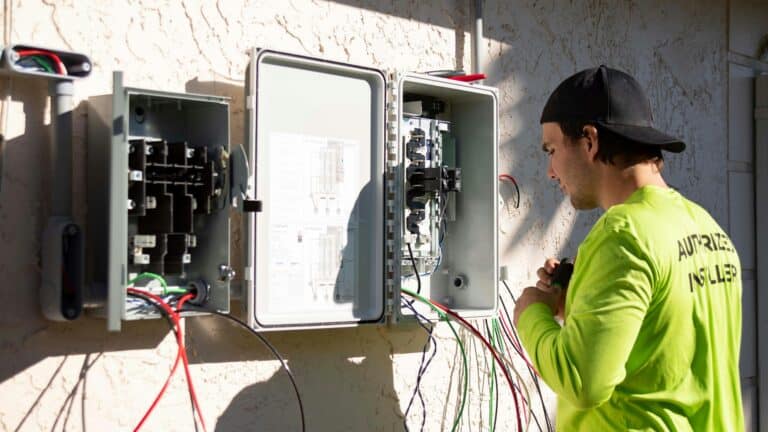
Hardware choices for deep and shallow wells appear in the guide to solar well pumps for off grid properties. Tank and trough layouts for animals are covered in the notes on off grid livestock watering. Wiring rules and permits vary widely, so the article on when a licensed installer is required is worth reading first.
Solar well pump sizing FAQ
What inputs does solar well pump sizing actually need?
Five figures cover it: depth to the standing water level, vertical rise from wellhead to tank inlet, pipe diameter and run length, daily gallons required, and usable sun hours for the weakest season. Everything else follows from those inputs. The well report supplies the water level and the yield limit that caps the whole design.
Is total head the same as well depth?
No, and confusing them is the most common sizing error. Total head starts at the standing water level, not the bottom of the bore, then adds the climb to the tank and the friction inside the pipe. A well drilled to 300 feet with water standing at 120 feet may present far less head than the depth suggests.
How many sun hours should be used?
Use the figure for the weakest season the system must serve. Summer numbers flatter the design and leave winter short, so many planners size on winter sun hours and treat summer output as surplus. Local seasonal irradiance figures are widely published, and the lower value is the safer input.
Does a bigger pipe really help more than a bigger pump?
Usually yes. Friction loss climbs steeply as diameter shrinks, so a narrow pipe taxes the pump on every run, while widening the pipe removes that head permanently for a one time material cost. A larger pump instead raises purchase price, power draw and array size together.
Why does the water level drop while the pump runs?
That drop is drawdown. Pumping removes water from the casing faster than the surrounding ground can refill it, so the level falls until inflow matches outflow. The lower pumping level is the real lift during operation, and severe drawdown signals limited well yield rather than a pump problem.
Is a battery needed for a solar well pump?
Often not. Many setups pump directly to a storage tank during daylight and skip batteries entirely, because the tank becomes the storage. Batteries make sense when pumping must happen at night, when pressure must stay constant, or when the same array serves other loads that need round the clock power.
What should be done when the well yield is very low?
Slow the pump down and lean harder on storage. A low yield well can still serve a household if water is drawn gently across many hours into a large tank, whereas a stronger pump makes the problem worse by drawing the casing dry. The well report and a local driller should guide the final decision.