
Running mains power to a shed means a trench, armored cable, and in most places an electrician and a permit. A solar setup on the roof avoids all of it, and for the loads a shed carries, lights, a few tools, a radio, a small fridge, it does the job for less than the trench alone would cost.
| Load | Rough daily need | System size that suits |
|---|---|---|
| LED lighting only | Very low | 100W panel, small battery |
| Lights plus phone and radio | Low | 100 to 200W |
| Cordless tool charging | Moderate | 200 to 400W |
| Small fridge or freezer | Continuous | 400W plus, larger bank |
| Corded power tools | High but brief | Large inverter, big bank |
| Welding or air compressor | Very high | Generator territory |
Key Points
- Shed roofs rarely face the ideal direction, so a ground or tilt mount often beats the roof
- Battery capacity matters more than panel wattage for evening and winter use
- Cordless tool chargers suit solar far better than corded tools do
- A small system for lights costs a fraction of trenching mains power
- Panels on an unheated building face wider temperature swings than house arrays
- Security matters, since a shed array sits away from the house
How We Picked
Load realism came first. Shed systems fail when someone sizes for lights and then plugs in a table saw. We favored panel and kit combinations matched to loads a shed genuinely carries, with the surge-heavy tools flagged rather than accommodated. If lighting is all you need, a self-contained lighting kit is far simpler than a full panel and battery setup.
Mounting flexibility came second. Shed roofs are small, often shaded by the house or trees, and frequently pointed the wrong way. Panels that suit ground mounting or a tilt frame beside the building open up options a roof-only approach closes off.
Durability in an unheated space settled the rest. A shed swings from freezing to hot in a day, and batteries suffer more from that than panels do. We weighted chemistry tolerance and enclosure options accordingly.
1. The 100 Watt Panel Kit
Why It Stands Out
For lighting and charging a phone, one hundred watts with a small battery and a charge controller covers it. The whole kit costs less than an hour of an electrician’s time, mounts to a roof or a post with basic hardware, and needs no permits in most residential settings.
Worth Knowing
One hundred watts fills a small battery on a good day and struggles on three cloudy ones in a row. If the shed matters in winter, size up rather than adding a second battery, since a battery you cannot recharge is dead weight. Panel options sit in 100 watt panel choices.
Right for lighting and small devices. Skip it if you plan to charge tool batteries every day.
2. The 200 to 400 Watt Array
Why It Stands Out
Two or three panels give you enough headroom for lights, a fan, cordless tool charging, and a laptop, with reserve for poor weather. This is the size most workshop owners end up at once they have lived with a smaller system for a season.
Worth Knowing
Multiple panels introduce wiring choices that affect voltage and current, and the charge controller has to match. Buying a matched kit avoids the mismatch, and controller selection is covered in choosing a controller.
Right for a working workshop with cordless tools. Skip it if lights are all you need.
3. The Ground-Mounted Array
Why It Stands Out
Shed roofs run small, low, and shaded. A ground frame beside the building points wherever the sun is, sits at a proper angle, and stays reachable for cleaning and snow clearing without a ladder.
Worth Knowing
Ground arrays need anchoring against wind and a cable run into the building. They also sit where a mower and a strimmer go, so the cable needs protecting. A frame set near your latitude gives a better angle than most shed roofs offer.
Right for shaded or badly oriented shed roofs. Skip it where the ground floods or the space is needed.
4. The All-in-One Power Station Setup
Why It Stands Out
A portable power station with a panel skips the wiring entirely. Battery, inverter, and charge controller sit in one box with AC sockets on the front, and you carry it indoors when the shed gets cold or someone is likely to take it.
Worth Knowing
Capacity per dollar is lower than building the same system from components, and most units have no user-replaceable battery. For a shed you use now and then, the convenience wins, and options are compared in choosing a power station.
Right for occasional use and anywhere theft is a concern. Skip it for a permanent workshop in use every day.
5. The Flexible Panel for Curved or Light Roofs
Why It Stands Out
Some sheds have curved metal roofs, and some have panels too light to carry rigid glass. Flexible panels bond to a curved surface, weigh a fraction of a rigid panel, and need no rails. Shed roofs come in awkward shapes, so our comparison of flexible panels against rigid ones is worth reading first.
Worth Knowing
Flexible panels run hotter because they sit against the roof with no airflow behind, and heat reduces output. They also degrade faster than glass panels in full sun, so expect a shorter life. Details sit in flexible panel options.
Right for curved roofs and weight-limited structures. Skip it on a flat sturdy roof where rigid panels fit.
6. The Battery and Controller Bundle
Why It Stands Out
Panels produce during the day, and a shed gets used in the evening. The battery is what makes the system useful after dark, and a bundled battery and controller removes the compatibility question between them.
Worth Knowing
Unheated buildings are hard on batteries. Lithium iron phosphate handles temperature swings better than lead-acid but should not charge below freezing without a heater or a low-temperature cutoff. Cold-weather behavior is covered in batteries in cold weather.
Right for any shed used after dark. Skip a battery only if you use the space in daylight and nothing else.
Sizing the System
Count what you plug in
Write down every device, its wattage, and the hours it runs. LED lights draw very little and run for hours. A cordless drill charger draws more and runs for an hour. The total comes out smaller than people fear, and the method sits in working out watt hours.
Size the battery for the worst week
Panels produce nothing at night and little on a dark winter day. The battery covers that gap, and sizing it for two or three days of your normal use keeps the shed working through bad weather.
Leave headroom for what you add later
Shed systems grow. A radio becomes a fridge, and a work light becomes a heater. Sizing at exactly today’s load means rebuilding within a year, and adding panels is easier than replacing a controller.
Keep corded tools off the list
A circular saw or an air compressor draws far more than a shed array supports, and the surge alone trips most small inverters. Cordless tools charged over hours suit solar. Corded tools want mains power or a generator.
Roof Versus Ground Mounting
When the roof works
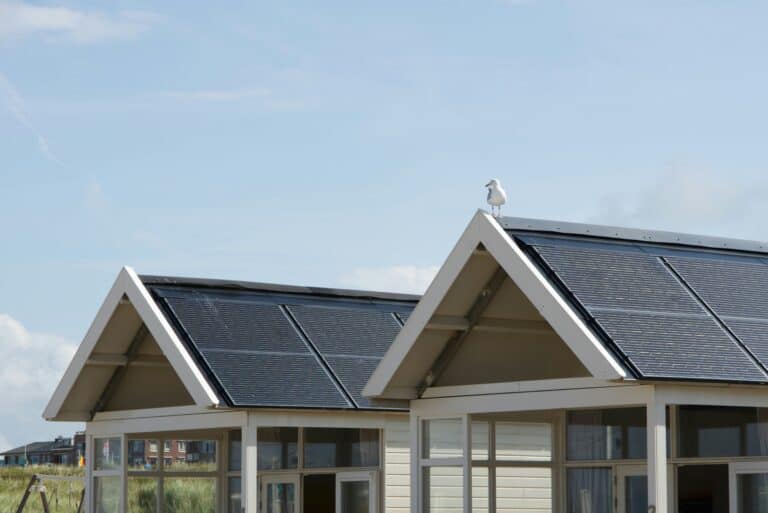
A shed roof facing roughly south with no tree shading and enough pitch to shed water is fine, and mounting there uses space you already have. Small roofs limit array size, so count how many panels physically fit before deciding.
When the ground wins
Shaded roofs, north-facing roofs, weak roofs, and roofs you cannot safely reach all argue for a ground frame. The frame costs more than roof brackets and gives you a better angle, easier cleaning, and no roof penetrations to seal. Greenhouses have a sharper version of the same heat problem, covered in our solar greenhouse fan picks. Measure the face first, then let our panel count calculator do the fitting.
Common Shed Solar Mistakes to Avoid
Sizing for lights and then adding a freezer
A continuous load changes the system entirely. Decide before buying whether a fridge or freezer is in the plan, since retrofitting one onto a lighting system means replacing most of it.
Ignoring shade from the house
A shed tucked behind a house sits in shadow for part of every day, and the shadow moves through the seasons. Watch the site across a day before committing to a roof mount.
Leaving batteries to freeze
Charging lithium below freezing damages cells. An insulated box, a battery with a built-in heater, or a low-temperature cutoff all solve it, and doing nothing does not.
Forgetting the array is out of sight
A shed sits away from the house, and panels and batteries are worth stealing. Fasteners that need tools, a locked battery box, and a camera all cost less than replacing the system.
Worth reading next: start with panel selection and battery sizing, then look at charge controllers and circuit protection. For the wiring hardware between them, see connectors and cables.
Frequently Asked Questions
How many solar panels does a shed need?
For lighting alone, one hundred watts covers it. For lights plus cordless tool charging and a laptop, two hundred to four hundred watts gives headroom. A fridge or freezer running continuously pushes the system considerably larger.
Can I run power tools from shed solar?
Cordless tool chargers work well, since they draw moderate power over an hour. Corded saws, compressors, and welders draw far more than a small array and battery support, and their startup surge trips most small inverters.
Do I need a battery?
If you use the shed after dark or on cloudy days, yes. Panels produce nothing at night, and the battery is what turns daytime generation into power when you are actually in the building.
Is a permit required?
Small off-grid systems that never connect to the house wiring usually avoid the permitting that grid-tied systems require, and rules vary by location. Check locally before assuming, particularly for anything that touches the main panel.
Will batteries survive an unheated shed?
Lithium iron phosphate tolerates the swings better than lead-acid, and no lithium chemistry should charge below freezing without protection. An insulated enclosure or a battery with a low-temperature cutoff handles it.
Roof or ground mount for a shed?
Roof mounting uses space you already have and suits a south-facing roof with no shade. Ground mounting wins where the roof is shaded, pointed the wrong way, too small, or too flimsy to carry panels.