A utility technician removes your existing meter and fits one that measures power flowing in both directions, which takes a few minutes and briefly cuts power to the house. What happens at a solar meter swap is mostly unremarkable, and the part worth attention is what the new display shows afterward.
It sits near the end of the connection process. Our guide to what permits you need for solar covers the separate local approvals.
Quick Answer
A utility crew swaps the meter for one capable of recording import and export separately. The house loses power briefly while the meter is out of its socket. You do not usually need to be home, no work happens inside, and nothing on your side of the panel is touched.
Key Takeaways
- An older meter may only count power flowing inward.
- Export needs measurement in both directions to be credited.
- The swap is a short outage, not a day’s work.
- It happens outside, at the existing meter socket.
- Not every installation needs one.
- Utility crews schedule it separately from everything else.
- The new display shows more than one register.
| Aspect | What to expect | Worth knowing |
|---|---|---|
| Who does it | Utility technician | Not your installer |
| Where | Outside, at the meter socket | No interior access needed |
| Duration | Minutes, not hours | Scheduling is the long part |
| Power interruption | Brief, whole house | Treat it as a short outage |
| Your presence | Usually not required | Access to the meter must be clear |
| Your equipment | Untouched | Nothing past the meter changes |
| Afterward | New display with several registers | Learn which is which |
| Whether you need one | Depends on the existing meter | Many modern meters already qualify |
Why a Different Meter Is Needed
A traditional meter was built to answer one question: how much power came into the building.
Once you generate on site, that is no longer sufficient. Power flows inward when you draw more than you produce and outward when you produce more than you use, and those two quantities have to be recorded separately to be treated differently.
Some older meters simply cannot distinguish direction. Others can physically run backward, which sounds convenient and is not how any modern credit arrangement is administered.
A bidirectional meter records import and export as separate totals. That separation is what allows a utility to apply one value to the power you take and another to the power you send, which is the whole basis of the credit arrangement. Our guide to how net metering works covers those values and how much they vary.
Many meters installed in the last several years already measure both directions, which is why plenty of installations need no swap at all. Whether yours does is a question for the utility rather than the installer.
What the Visit Involves
Outside only
The work happens at the existing meter socket on the exterior wall. Nothing inside the house is opened, and nothing past the meter is touched.
A brief outage
The house has no power while the meter is out of its socket. Plan for it the way you would a short cut: computers shut down, nothing mid-cycle that you care about.
Access matters more than attendance
You generally do not need to be home, but the technician needs to reach the meter. A locked gate, a vehicle parked against it, or an overgrown shrub will turn a short visit into a rescheduled one.
Sealing afterward
The new meter is sealed, and that seal is not yours to break. Anything that requires removing the meter is utility work.
Scheduling Is the Actual Wait
The swap itself is trivial and the appointment is not, which is why this step surprises people at the end of a project.
Meter work is handled by utility field crews with their own queue, separate from whoever processes your application. That means it does not move because your paperwork moved.
It also means nobody necessarily tells you it is needed. An installer who has not asked, and a utility that has not volunteered, produces a project that looks complete and then waits on a visit nobody scheduled.
So the useful question, asked early rather than at the end, is whether a meter exchange is required and whether it has been requested. If the answer to the first is yes, the second matters.
Where a swap is needed, it usually happens around the point the utility issues authorization to operate rather than at installation. That ordering is normal, and our guide to commissioning a new solar system covers the verification work that can be finished beforehand so nothing is left outstanding.
Reading the New Display
This is the part with lasting value, because the meter is the utility’s record and your monitor is not.
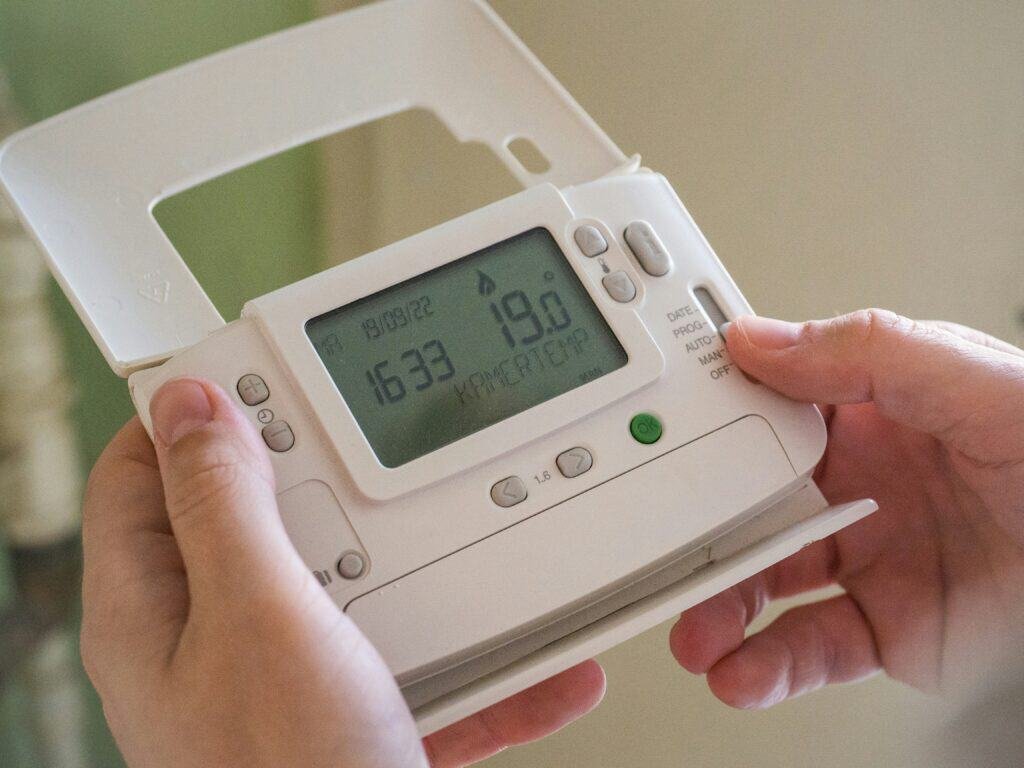
A bidirectional meter cycles through several registers rather than showing one number. Typically you will see total import, total export, and often a current instantaneous reading with an indicator of direction.
Learning which register is which is worth five minutes once. It is the difference between being able to check a bill and having to take it on trust.
Expect your inverter’s production figure and the meter’s export figure to disagree, and for that to be correct rather than a fault. Production is everything the array made; export is only the portion that left the building after your own consumption took its share.
A house consuming most of what it produces will therefore show a large production number and a small export number. Our guide to reading a solar monitor covers the production side, and our note on what happens to extra solar power covers where the rest goes.
When a Second Meter Is Involved
Some arrangements need more than one meter, and finding that out at the visit rather than beforehand is avoidable.
The utility meter records what crosses the boundary: power in, power out. It does not know how much your array generated, only how much of that generation was surplus to the house.
Where a program pays on total generation rather than on export, a separate production meter is needed on the array circuit to measure everything it produced. That is a second device, sometimes a second socket, and occasionally a second visit.
Certain incentive and renewable credit arrangements require this even where the credit structure itself is straightforward. Whether yours does is a question for the utility and for whoever administers the program, and the answers can differ.
Ask before installation if you are enrolling in anything paying on generation, because retrofitting a production meter into a finished array is more work than fitting one during the build.
What to Do Around the Swap
- Ask early whether one is needed. The utility knows, the installer often assumes.
- Confirm it has been requested. Not just identified as necessary.
- Clear access to the meter. Gate unlocked, nothing parked in front.
- Treat the visit as a short outage. Shut things down beforehand.
- Photograph the old meter reading. Before the swap, for the record.
- Photograph the new one after. Starting figures for both registers.
- Check the first full bill against both. Import and export separately.
Those two photographs cost nothing and settle any later question about starting figures, which is otherwise difficult to reconstruct from either side.
Related Reading
Frequently Asked Questions
What happens at a solar meter swap?
A utility technician removes the existing meter at the exterior socket and fits one that records power flowing in both directions. It takes minutes, briefly cuts power to the whole house, and involves no interior access and no change to anything past the meter.
Why do I need a different meter?
Because a traditional meter only records power coming in. Once you generate on site, import and export have to be measured separately so the utility can apply different values to each, which is the basis of the credit arrangement.
Does every solar installation need one?
No. Many meters installed in recent years already measure both directions, so plenty of installations need no swap. Whether yours does is a question for the utility rather than for your installer, who may be assuming either way.
Will my power go out?
Briefly, for the whole house, while the meter is out of its socket. Treat it as a short planned outage: shut computers down, avoid anything mid-cycle. Power returns as soon as the new meter is seated.
Do I need to be home?
Usually not, but the technician needs to reach the meter. A locked gate, a car parked against the wall or an overgrown shrub will turn a short visit into a rescheduled one, which is a worse outcome than being absent.
Why is the scheduling so slow when the job is so short?
Because meter work belongs to utility field crews with their own queue, separate from whoever handles your application. It does not move because your paperwork moved, and sometimes nobody has requested it at all.
Why does the meter disagree with my inverter?
Because they measure different things and both are right. The inverter reports everything the array produced. The meter reports only what left the building after your own consumption took its share, so a house using most of its production shows a small export figure.
Can I remove or reset the new meter?
No. It is sealed, and the seal is not yours to break. Anything requiring the meter to come out is utility work, including situations where you need the supply isolated for other reasons.