
Wind rarely pushes a solar array over. It gets underneath and lifts, because a panel at an angle is a wing and moving air across an inclined surface generates lift.
That changes what matters. The fasteners doing the work are the ones resisting upward pull, and the failure point is almost always the attachment to the structure rather than the panel itself. Our roundup of mounting kits covers the hardware.
A Safety Note
Structural attachment and wind load calculations are engineering work. Local building codes specify wind loads for your area, and permitted installations are engineered to meet them. This describes the principles rather than instructing you to do the work, and anything attached to a building belongs with a qualified installer. Putting that wind to use is covered in our small wind turbine guide.
Quick Answer
Reduce tilt where wind is the concern, use hardware rated for your local wind load, attach into structure rather than sheathing, and check fasteners periodically since vibration loosens them.
Why Uplift Is the Problem
Air flowing over a tilted panel moves faster across the upper surface and slower underneath, which generates lift in the same way it does on a wing.
Wind also gets under the leading edge of an array and pushes upward directly, which is why edges and corners of a roof experience higher loads than the middle.
The result is that a panel array pulls upward on its mounts during a storm rather than pressing down, and mounts designed only for weight are the wrong mounts.
Building codes specify design wind speeds by location, and mounting systems are rated against them. Matching those figures is what engineering a permitted install involves. Our note on putting panels flat on a roof covers the tilt question.
Tilt Is the Biggest Variable
Flatter means less lift
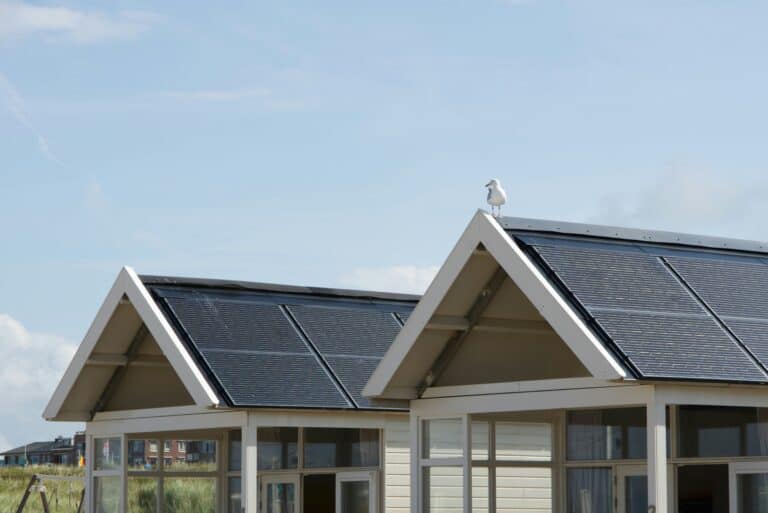
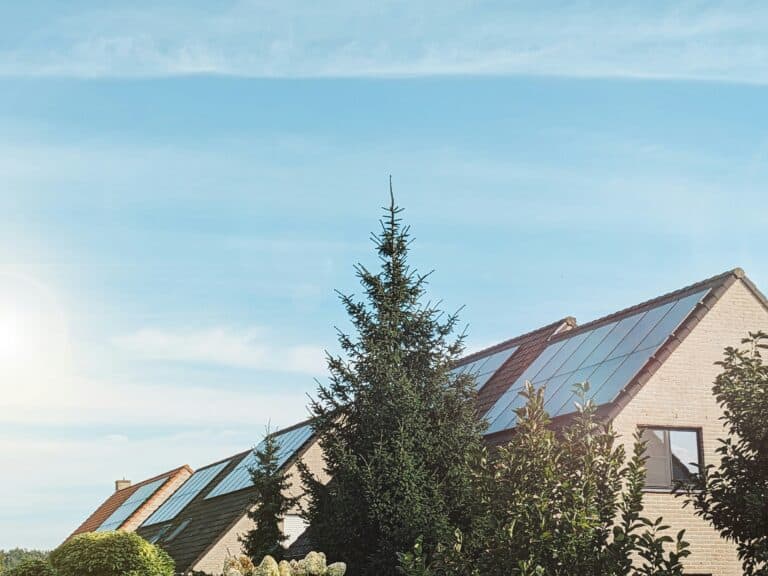
A panel close to flush with the roof presents far less surface to catch wind, which is why flush-mounted rooftop arrays handle wind better than tilted ones.
Tilt buys output
Angling toward the sun increases production, so the trade is real rather than one-sided.
Adjustable racks compromise
Some allow lowering the tilt seasonally, which lets you flatten the array ahead of a storm.
Ground mounts are more exposed
Wind reaches underneath from all directions rather than being partly shielded by a roof. Our roundup of ground mount racking covers those systems.
Where Wind Loads Concentrate
Wind pressure is not uniform across a roof, and building codes reflect that with different design loads for different zones.
Corners experience the highest uplift, followed by edges, with the middle of a roof seeing the lowest loads. That is why setback requirements exist and why arrays are frequently kept back from edges.
Roof pitch changes it too. Steeper roofs generate different pressure distributions than shallow ones, and the loads differ between windward and leeward slopes.
Height above ground increases exposure, so a two-story roof sees higher wind speeds than a single-story one in the same location.
None of that is guesswork in a permitted installation, since the mounting layout is engineered against local design wind speeds with those zones accounted for. Our note on does snow damage solar panels covers the pitch question.
Attachment Is Where Failures Happen
The panel and the frame rarely fail. What fails is the connection between the mounting system and whatever it is attached to.
On a roof that means fasteners must reach structural members rather than just the sheathing, since screws into plywood alone pull out under uplift.
Flashing at each penetration matters for water rather than wind, and a failed flashing after a storm causes damage that has nothing to do with the array coming loose.
On ground mounts, foundation depth and type carry the load, and that is determined by soil conditions and local frost depth as much as by wind. Our note on whether panels need grounding covers a related attachment requirement.
Ballasted Systems
Flat commercial roofs frequently use ballasted mounting, where weight rather than penetration holds the array down.
The appeal is obvious: no holes in the roof membrane means no leak paths, which matters enormously on a flat roof.
The constraint is structural. Ballast is heavy, and the roof has to carry that load in addition to the panels, which requires engineering assessment rather than assumption.
Ballasted systems also rely on the array acting as a single connected mass, so the interconnection between rows matters as much as the weight itself.
They are rare on residential pitched roofs for good reason, since gravity works differently on a slope and penetrating mounts are the standard answer there. Our roundup of tilt mounts covers pitched-roof hardware.
Portable and RV Systems
Portable panels are the ones most likely to actually blow away, since they are light and frequently not secured at all.
Weighting or staking a portable panel matters more than people assume, and a panel that has taken off across a campsite is both damaged and dangerous.
RV roof mounting faces a different problem, since driving at highway speed generates wind loads exceeding most storms. Adhesive and bracket systems are rated with that in mind.
Checking RV mounts periodically matters because vibration works fasteners loose in a way a static rooftop never experiences. Our roundup of panels for RV and van life covers that use.
Before a Storm
Lower adjustable tilt where the system allows it, since flattening the array reduces uplift significantly.
Remove and store portable panels rather than leaving them staked, which is the only fully reliable option for loose equipment.
Clear the surroundings of anything that could become a projectile, since debris impact damages panels more often than wind alone does.
Inspect afterward rather than assuming everything held. Loosened fasteners and lifted flashing are not visible from the ground and get worse with the next storm. Our note on solar charge controllers covers periodic inspection.
What Inspection Should Cover
Post-storm inspection is where problems get caught while they are still cheap, and it is worth knowing what to look at.
Fastener torque is the first thing, since wind loading works connections loose progressively rather than all at once.
Flashing and sealant at roof penetrations comes next, because a lifted flashing lets water in long before anything structural fails.
Panel frames and glass need looking at for cracks, and the underside of an array is where damage frequently hides.
Production data is the check that catches what visual inspection misses, since a panel with impact microcracks looks fine and produces measurably less.
Roof work carries its own risk, so this is a case for a qualified installer rather than a ladder and an afternoon. Our note on whether panels need servicing covers the routine.
Hail and Debris Are the Other Half
Panels are generally rated for hail impact under standardized testing, and severe hail exceeds what any rating covers.
Debris carried by wind does more damage than wind pressure in most storms, which is why clearing the surroundings matters.
Damage is frequently not obvious. A panel with microcracks from impact looks intact and produces less, and that shows up in monitoring rather than on inspection.
Insurance generally covers weather damage to permanently mounted systems, which is the practical backstop when engineering is not enough. Our note on 100 watt solar panels covers coverage.
Securing Panels in Wind FAQ
How does wind damage solar panels?
Mostly by uplift rather than sideways force. Air moving across a tilted panel generates lift, and the array pulls upward on its mounts during a storm.
Does tilt make it worse?
Yes. A steeper tilt catches more wind and generates more lift, which is why flush-mounted rooftop arrays handle wind better than tilted ones. The trade is reduced output.
What usually fails first?
The attachment to the structure rather than the panel or frame. On roofs that means fasteners must reach structural members rather than sheathing alone.
Are ground mounts more vulnerable?
More exposed, since wind reaches underneath from every direction rather than being partly shielded by a roof. Foundation depth and soil conditions carry the load.
What should I do before a storm?
Lower adjustable tilt if the system allows, remove and store portable panels, and clear the surroundings of anything that could become a projectile.
Do RV panels need different mounting?
Highway speed generates wind loads exceeding most storms, so RV systems are rated accordingly. Vibration also loosens fasteners over time, which a static roof never experiences.
Is hail damage always visible?
Not necessarily. Impact can cause microcracks in cells that look intact from outside, and the effect shows as reduced output in monitoring data rather than as visible damage.
How do I know my mounts are rated correctly?
Local building codes specify design wind speeds, and mounting systems are rated against them. A permitted installation is engineered to meet that figure, which is one of the arguments for permitting.
For the wider picture, see our guide to how to choose solar panels.