
Charging time is the energy a battery still needs divided by the power the charger actually delivers into it. That one division answers almost every EV charging time question, because no car carries a single fixed charging number. Change the starting percentage or the circuit, and the answer changes with it.
Most drivers guess badly here. They remember one slow session and assume the car is slow, when the real limit was a 120 volt outlet or a breaker that could not carry more current. Knowing what a circuit can safely carry often explains more than any spec sheet does.
Quick Answer
Take the battery capacity in kilowatt hours, multiply by the percentage span you want to add, then divide by the charger power in kilowatts. Divide that result by about 0.9 to cover losses. A 60 kWh pack going from 20 to 80 percent on a 7.7 kW charger lands near five and a half hours.
Key Takeaways
- Charging time scales with the size of the gap you are filling, not with the size of the battery alone.
- Roughly ninety percent of the power drawn from the wall reaches the pack, so real sessions run longer than clean math suggests.
- Circuit amperage sets a hard ceiling that no charger or car can push past.
- The final ten percent takes far longer than the first ten percent, because the car deliberately slows the rate.
- Cold batteries accept power more slowly, which stretches winter sessions well beyond summer figures.
- Home charging usually replaces one day of driving, so most sessions finish long before morning.
Enter the battery capacity in kilowatt hours, the current charge percentage, the target percentage, and the charger power in kilowatts. The result below updates as those numbers change.
| Level | Typical circuit | Power | Rough range added per hour |
|---|---|---|---|
| Level 1 | Standard 120 volt household outlet | 1.4 kW | A few miles only. Suitable for light daily driving. |
| Level 2 | 240 volt, 20 amp circuit | 3.8 kW | Roughly triple the Level 1 rate. Fine for short commutes. |
| Level 2 | 240 volt, 40 amp circuit | 7.7 kW | The common home standard. Covers most daily driving in a few hours. |
| Level 2 | 240 volt, 50 amp circuit | 9.6 kW | Noticeably quicker than 40 amps. Useful for long daily mileage. |
| Level 2 | 240 volt, 60 amp circuit | 11.5 kW | The practical ceiling for home wiring. Most packs fill overnight easily. |
| DC fast | Public station equipment only | 50 kW and higher, set by the station | Hundreds of miles per hour in ideal conditions. Not a home option. |
Range per hour varies widely by vehicle efficiency, so treat these as approximate guidance rather than fixed figures.
Why EV charging time depends on battery size and charge span
A charging estimate needs two facts about the battery, not one. The first is total capacity in kilowatt hours. The second is the span you actually intend to fill, expressed as a percentage gap.
A 40 kWh car and an 80 kWh car both take the same time to add ten percent on the same charger. The larger pack simply holds more energy in that ten percent, so it gains more range for the same clock time. Size changes the payoff, not the arithmetic.
This is why comparing cars by charging hours alone misleads people. A long session on a big battery may deliver far more usable range than a short session on a small one. For anyone sizing storage more generally, the same logic drives matching a battery bank to daily loads.
What the wall delivers versus what reaches the pack
Power leaving the wall never fully arrives in the battery. Some is lost as heat in the cable and the onboard charger. More goes to running the car’s own cooling and control systems during the session.
About ninety percent is the working figure most people use for a healthy Level 2 setup. That means dividing the clean result by 0.9, which adds roughly eleven percent to the estimated time. The calculator applies that adjustment automatically.
The loss exists because current has to be converted before storage. The same principle shows up whenever power crosses a conversion stage, which is the point behind converting between DC and AC power. Nothing crosses a converter for free.
Why the last ten percent takes disproportionately long
Batteries do not accept a steady rate from empty to full. As cells approach a full state, the car reduces current on purpose to protect them. That deliberate slowdown is called tapering.
The practical effect surprises new owners. Going from 20 to 80 percent may take a few hours, while the final push from 90 to 100 percent can take almost as long as a much wider span lower down. The car is not broken when this happens.
Any simple estimate assumes a flat rate, so it will understate the time to a true full charge. Treat estimates above roughly ninety percent as optimistic. Below that ceiling, straight arithmetic holds up well.
Why the overnight window beats peak charging speed at home
Home charging is judged by whether it finishes before morning, not by how fast it starts. A typical parked window runs ten to twelve hours. Anything that fits inside that window is fast enough.
That reframes upgrade decisions. Moving from a 40 amp to a 60 amp circuit only matters if the current setup regularly fails to finish overnight. For most drivers it does not, which makes the extra spend hard to justify.
The same patience logic applies to bigger household energy projects, where a slower payoff still wins over years. Anyone weighing that tradeoff can run how long a solar setup takes to pay for itself before committing.
How circuit amperage caps EV charging time regardless of the car
The charger never draws more than the circuit allows. Continuous loads are limited to eighty percent of the breaker rating, which is why a 50 amp breaker supports a 40 amp charger. That rule sets the real ceiling.
A car that accepts 11.5 kW still charges at 7.7 kW on a 40 amp circuit. The car is not the bottleneck, the wiring is. Buying a faster charger changes nothing until the circuit changes too.
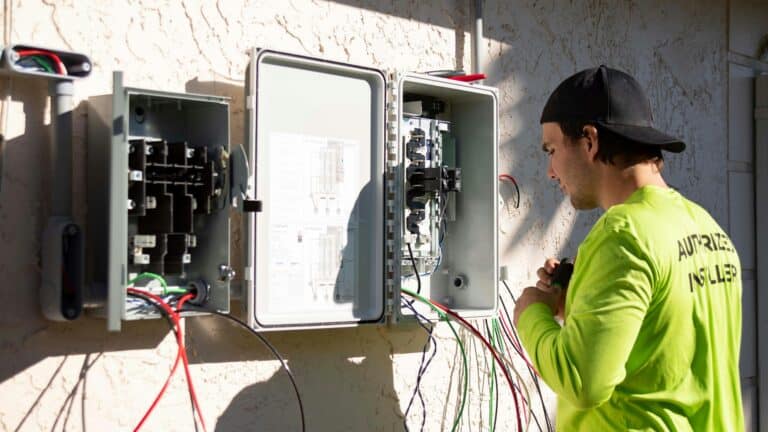
Panel capacity limits how much can be added at all. Heavy circuits compete with everything else in the house, including wiring a backup power source into the panel. Any panel work belongs with a licensed electrician handling the install.
How cold weather stretches charging sessions
Cold batteries accept power more slowly than warm ones. Chemistry inside the cells simply moves less freely at low temperature. The car also spends energy warming the pack instead of storing it.
Winter sessions therefore run longer for the same percentage gain. Efficiency drops at the same time, so each stored kilowatt hour delivers fewer miles. Both effects push in the same direction.
Plugging in soon after driving helps, because the pack is still warm. Garage parking helps for the same reason. Neither trick eliminates the penalty, but both reduce it noticeably.
Why most home charging is topping up rather than filling from empty
Very few drivers arrive home near zero. Typical daily driving uses a modest slice of a modern pack, so the nightly job is small. Most sessions replace one day of use.
That is why Level 1 works for some households despite its low power. A short commute may be fully replaced overnight on a standard outlet. Level 2 becomes worthwhile once daily mileage climbs.
Renters face a different version of this question, since permanent wiring may not be allowed. Portable equipment and shared outlets often carry the load, much as they do when asking whether solar works in a rental. Flexibility matters more than peak speed there.
Common mistakes when estimating charging time
The most frequent error is planning around a full charge. Almost nobody charges from zero to one hundred at home, so the resulting numbers look far worse than reality. Estimate the span you actually use.
The second error is ignoring losses entirely. Clean arithmetic without the ninety percent adjustment always reads too optimistic. The gap grows on longer sessions.
A third mistake is quoting the car’s maximum acceptance rate as if it were the home rate. Circuit size wins that argument every time. Check the breaker before believing any advertised figure.
What this EV charging time calculator cannot tell you
This tool performs arithmetic on the numbers entered into it. It does not know the specific charging curve built into any given vehicle. That curve is why real sessions drift from flat calculations near the top of the pack.
It also cannot see conditions on the day. Ambient temperature, pack temperature, battery age, and utility voltage all shift the outcome. None of those appear as inputs.
Treat the result as a planning figure with a comfortable margin, not a promise. It answers whether a session fits an overnight window, which is the question that usually matters. For exact behavior near full, watch the car’s own display.
Related Reading
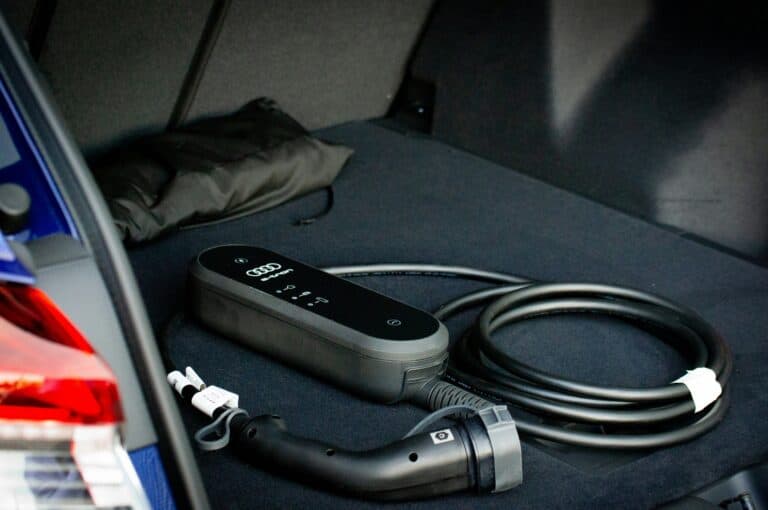
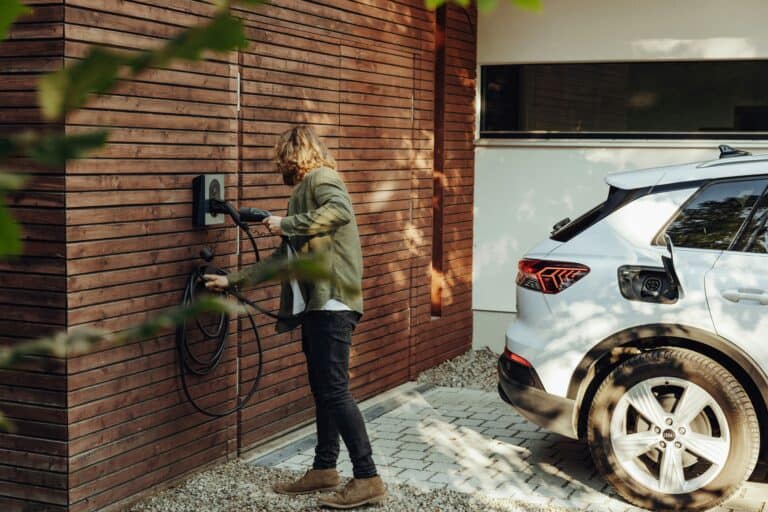
For a closer look at home equipment, start with the roundup of Level 2 charging stations for home use. Drivers without a dedicated circuit often prefer portable units that plug into a 240 volt outlet. Keeping the cable off the garage floor is easier with a wall holster and cable organizer.
EV charging time frequently asked questions
How is EV charging time calculated?
Multiply battery capacity in kilowatt hours by the percentage gap you want to fill, then divide that energy by the charger power in kilowatts. Divide the result by about 0.9 to account for energy lost as heat and to vehicle systems. A wider gap or a weaker circuit both push the final number up.
How long does a full charge take on a standard outlet?
A 120 volt outlet delivers about 1.4 kW, so filling a large pack from low takes well over a day. That makes Level 1 impractical for a full refill. It works fine as a nightly top up for short commutes, where only a small percentage needs replacing before morning.
Does a bigger charger always charge faster?
No, because the circuit and the car both impose limits, and the lower of the two wins. A 11.5 kW charger on a 40 amp circuit still delivers 7.7 kW, and a car that accepts only 7.7 kW behaves the same way on any larger unit. Check both figures before paying for an upgrade.
Why does the last part of the charge slow down?
The vehicle reduces current as cells approach full, which protects them and extends pack life. This tapering is normal behavior rather than a fault, and it means the final ten percent can take as long as a much wider span lower in the range. Stopping around eighty or ninety percent avoids most of the delay.
How much longer does charging take in cold weather?
Cold slows the chemistry inside the cells and forces the car to warm the pack first. Sessions run longer for the same percentage gain, and range per stored kilowatt hour drops too. Plugging in while the battery is still warm from driving reduces the penalty, as does parking inside a garage.
Should the charger be sized for the car or the panel?
Size it for the panel first, because a charger cannot draw more than the breaker allows and continuous loads are capped at eighty percent of that rating. Check available panel capacity before choosing equipment. An electrician can confirm whether a heavier circuit fits without a service upgrade.
Is it better to charge every night or wait until the battery is low?
Frequent shallow top ups suit most drivers, since they keep the car ready and use the overnight window efficiently while avoiding the slow taper near full. Waiting until the pack is nearly empty creates long sessions with no practical benefit. Many owners simply plug in whenever the car is parked at home.