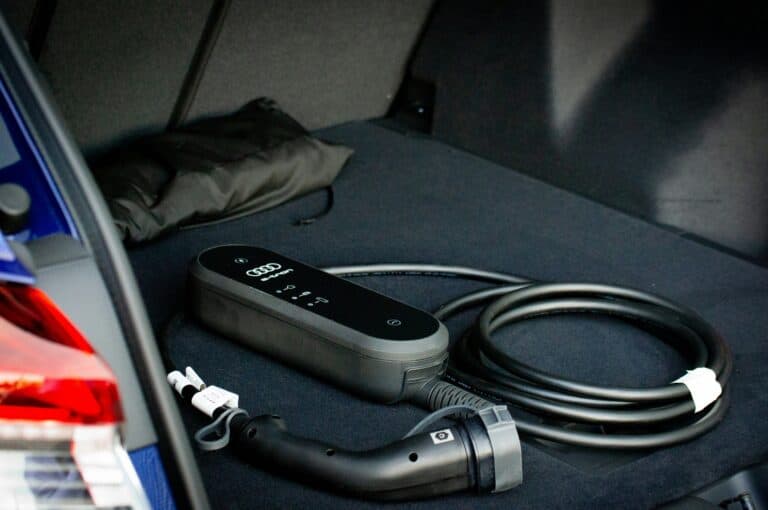

An adapter changes the plug, and it never changes what the circuit can safely deliver. The best EV charger adapters and extension cables come down to correct current rating, proper listing, and keeping the run as short as you can get away with. Plug adapters for different outlet types are the genuinely useful category, extension cables are the one to approach carefully, and daisy-chaining anything is where people get into trouble.
Charging pulls a heavy load for hours at a time, which is what separates this from an extension cord for a lamp. Heat builds in undersized conductors and in loose connections, and it builds slowly enough that nobody notices until something melts.
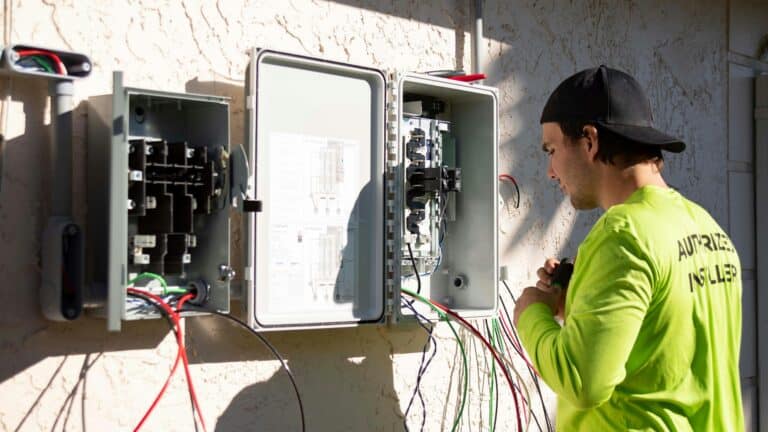
Outlet work itself belongs to a professional. Our guide to when you need an electrician applies the same way to a 240V circuit for charging.
EV Charger Adapters and Extension Cables at a Glance
| Item | What it does | Risk level | Use it when |
|---|---|---|---|
| Outlet plug adapters | Fits one charger to another outlet type | Low if correctly rated | Traveling between outlet types |
| Connector adapters | Fits one car’s port to another standard | Low, car-specific | Using a network you lack a port for |
| Level 1 extension cords | Extends a 120V charger | Moderate | Short runs, heavy gauge only |
| Level 2 extension cables | Extends a 240V charger | Higher | Last resort, correct rating |
| Charging cable organizers | Holds cable off the ground | Low | Any permanent setup |
| Portable chargers with swappable plugs | One unit, several outlet types | Low | Instead of adapter stacks |
Key Points
- An adapter never increases what a circuit can deliver, and the breaker still decides the limit.
- Current rating on every part of the chain has to meet or exceed the charging current.
- Never stack adapters or chain extension cables, since each junction is a heat source.
- A charger with swappable plug tails is safer than a pile of adapters.
- Outdoor connections need weather-rated housings and should stay off wet ground.
- Warm or discolored plugs mean stop charging and have the circuit checked.
How We Picked
We compared adapter and cable categories rather than individual products, because listings change constantly while the electrical principles do not. Each section covers one category and when it is appropriate.
We ranked categories on four things: whether they are properly listed and rated, how much heat risk they add, how much genuine flexibility they buy you, and whether a safer alternative exists.
We excluded anything unlisted or sold without a clear current rating, and we have not stated amperages or wire gauges, since those come from the circuit, the charger, and your local electrical code.
1. Outlet Plug Adapters
Why It Stands Out
A plug adapter lets one charger work with different outlet types, which is the single most useful thing in this category. Travel between a dryer outlet, a welder outlet and an RV pedestal stops being a problem.
Good adapters are short, heavy, and clearly marked with a current rating.
Worth Knowing
The adapter does not change the circuit. If it lets a charger request more current than the circuit supports, you have to set the charger down to match, and many portable units allow that.
Buy listed adapters rated at or above your charging current. Our guide to portable 240V chargers covers the units these pair with.
Best for: Traveling between outlet types and using existing 240V outlets. Skip it if the outlet’s circuit cannot support the charge rate you intend.
2. Connector Adapters Between Charging Standards
Why It Stands Out
Connector adapters let a car charge from a network built around a different plug standard, which widens where you can actually stop. For anyone driving outside their own metro area, that coverage matters.
Manufacturer-supplied adapters are the ones to prefer, since they are designed and validated for that specific pairing.
Worth Knowing
Compatibility is car-specific and not every combination is supported, particularly at high-power DC stations. Check your own vehicle’s documentation rather than a listing.
Third-party adapters vary a great deal in quality. Cable management still applies at home, which is what cable organizers and holsters handle.
Best for: Using charging networks your car lacks a native port for. Skip unbranded DC adapters entirely.
3. Level 1 Extension Cords for 120V Charging
Why It Stands Out
Level 1 charging draws a modest current, so a short heavy-gauge cord is the least risky extension in this category. For reaching a garage outlet from a driveway spot, it often solves a real problem.
Because charging is slow at this level, an overnight session tolerates a small loss over the cord.
Worth Knowing
Gauge and length are the whole safety question, and a thin household cord is not acceptable for hours of continuous load. Heavier and shorter is always the safer direction.
Keep the connection dry and off the ground. Our EV charging time calculator shows what Level 1 actually delivers overnight.
Best for: Short reach on a 120V charger, used with heavy-gauge cord. Skip it if the cord is thin, long, or damaged.
4. Level 2 Extension Cables for 240V Charging
Why It Stands Out
Purpose-built 240V extension cables exist, with correct conductors and rated connectors. Where a charger simply cannot reach, a properly rated cable is better than an improvised one.
They are built for continuous load rather than intermittent tool use, which is the difference that matters.
Worth Knowing
This is the highest-risk item in this category, and every charger manufacturer would rather you did not need one. An extension adds two connections, and connections are where heat starts.
The better answer is almost always to have the outlet moved closer. Our guide to Level 2 home charging stations covers siting one properly in the first place.
Best for: A last resort where a rated cable is the only option. Skip it in favor of relocating the outlet whenever that is possible.
5. Weatherproof Covers and Outdoor Enclosures
Why It Stands Out
Outdoor charging means connections exposed to rain, snow and standing water. A weather-rated cover or enclosure keeps the joint dry through a long charge.
Lockable versions also stop casual tampering on a driveway.
Worth Knowing
An enclosure has to be rated for outdoor use in your climate rather than improvised from a plastic box. Trapping moisture is worse than leaving a connection in open air.
Keep every junction above expected water level. Standing water at a connection is the failure nobody plans for.
Best for: Any outdoor charging setup. Skip improvised covers entirely.
6. Portable Chargers with Interchangeable Plug Tails
Why It Stands Out
Some portable chargers accept swappable plug tails, so one unit covers several outlet types without any adapter in the chain. That removes a junction and a failure point.
Many also let you select a charging current to match the circuit you are plugged into, which is exactly the right behavior.
Worth Knowing
Tails are proprietary, so you are buying into one manufacturer’s ecosystem. The up-front cost is higher than a handful of adapters.
Current selection has to actually be used, since a charger set high on a weak circuit is the hazard. Our piece on wire sizing covers why conductor size sets the limit.
Best for: Anyone who charges in several places regularly. Skip it if you only ever use one outlet at home.
What to Look For in EV Charging Adapters
What is the circuit actually rated for?
The breaker and the wiring set the limit, and no adapter changes that. Match the charging current to the weakest part of the chain, which is often the outlet rather than the charger.
If you do not know what a circuit is rated for, find out before charging on it. That is an electrician question, not a guess.
Is every part listed and rated?
Listed products have been evaluated to a safety standard, and unlisted ones have not. A current rating printed on the adapter is the minimum information you should accept.
Continuous-duty rating matters more than a peak figure. Charging runs for hours, unlike a power tool.
How short can the run be?
Shorter is safer and more efficient at every level. Voltage drop and heat both scale with length, and neither is visible.
Relocating the outlet is usually a better investment than a long cable. Our guide to permits covers the process for that kind of work.
Does the connection stay dry?
Rain, snowmelt and puddles all find connections left on the ground. Keep every junction elevated and covered with something actually rated for outdoor use.
Cable routing also matters for tripping and for vehicle traffic. A holster or reel keeps it off the ground between sessions.
What does the charger’s maker say?
Most charger manufacturers state clearly whether extension cables are permitted with their equipment, and some void warranty coverage. That guidance is specific to the unit you own.
Read it before buying an extension rather than after. Warranty terms are easier to check now than to argue later.
Adapters vs Having the Outlet Moved
Where adapters win
Travel, borrowed outlets, and any situation you do not control. An adapter kit turns a dryer outlet at a relative’s house into a charging spot.
They cost far less than electrical work and take no planning.
Where moving the outlet wins
At home, where you charge every night, a correctly placed outlet removes every junction and every compromise. It is the permanent fix rather than the workaround.
It also lets the circuit be sized for the charge rate you want. Our guide to disconnect switches covers the same principle of building the system properly the first time.
What Trips People Up
Stacking adapters
Two adapters in series double the number of connections and the heat risk. One correctly rated adapter is acceptable, and a stack is not.
Using a household extension cord
Ordinary cords are not built for hours of continuous high current. That is the most common way a charging setup overheats.
Ignoring a warm plug
Warmth, discoloration or a burning smell at a plug means stop and have the circuit inspected. Those are early signs, not quirks.
Assuming an outlet supports full rate
A 240V outlet says nothing about what its circuit can sustain. Set the charger to match the circuit, and read our fuse and breaker sizing calculator for how those limits are derived.
Worth reading next: transfer switches cover the other place amateur wiring causes real harm, preparing for a power outage covers charging when the grid is down, and whole-home battery backup covers pairing charging with storage.
Frequently Asked Questions
What are the best EV charger adapters and extension cables?
Listed outlet plug adapters rated at or above your charging current are the useful category, and a portable charger with swappable plug tails is safer still because it removes a junction. Extension cables are the item to avoid where you can, and relocating the outlet is the better fix at home.
Is it safe to use an extension cord for EV charging?
Only with a cord or cable properly rated for continuous load at that current, kept as short as possible and dry. Ordinary household extension cords are not suitable, and many charger manufacturers advise against extensions entirely.
Can an adapter make a charger faster?
No. The circuit’s breaker and wiring set the maximum, and an adapter only changes the shape of the plug. Using one to draw more than the circuit supports is how connections overheat.
Can you plug two adapters together?
Do not. Every junction adds resistance and a potential heat source, and stacking them multiplies that. Use one correctly rated adapter, or buy a charger with the right plug tail.
Do EV charging adapters need to be weatherproof outdoors?
Any connection left outside needs an enclosure actually rated for outdoor use, and it needs to stay off wet ground. Improvised covers can trap moisture and make things worse.
Why is my charging plug getting warm?
Slight warmth is normal, and real heat, discoloration or a smell is not. Stop charging and have the outlet and circuit inspected, since those signs usually indicate a loose connection or an undersized circuit.
Are third-party connector adapters safe?
Manufacturer-supplied adapters are validated for that specific car and network, and third-party quality varies widely. For DC fast charging in particular, stick to what your vehicle’s maker supports.
Should you charge at full rate on a shared circuit?
No, since charging pulls a sustained load and other devices on the same circuit add to it. Set the charger to a current the circuit can carry continuously, which most portable units let you do.