Not always, and the deciding number is your daily mileage rather than your car or your battery size. You need a Level 2 charger at home if you routinely drive more than a standard household outlet can replace overnight, and Level 1 covers a surprising share of ordinary driving without any electrical work at all.
The mistake is treating Level 2 as the default and Level 1 as a stopgap. Our roundup of Level 2 EV charging stations for home covers the hardware for when the answer is yes.
Quick Answer
Add up your daily miles. If a standard outlet replaces them overnight, Level 1 is enough and costs nothing to install. If you regularly exceed that, or run two vehicles, or need fast turnaround between trips, Level 2 earns the circuit.
Key Takeaways
- Daily mileage decides this, not battery capacity.
- Level 1 needs no installation, no permit, and no panel capacity.
- The charger is often cheaper than the circuit that feeds it.
- Two EVs in one household changes the answer immediately.
- Plug-in Level 2 on an existing 240 volt outlet is a middle path.
- Cold climates and long highway trips push toward Level 2.
| Your situation | Level 1 | Level 2 |
|---|---|---|
| Short commute, car home all night | Enough | Convenience only |
| Long daily mileage | Falls behind | Needed |
| Two EVs sharing one plug | Not workable | Needed |
| Frequent same-day round trips | Too slow | Needed |
| Renting, cannot alter wiring | Only option | Usually not permitted |
| Plug-in hybrid | Usually enough | Rarely justified |
| Cold winters | Struggles | Helpful |
What Level 1 Actually Delivers
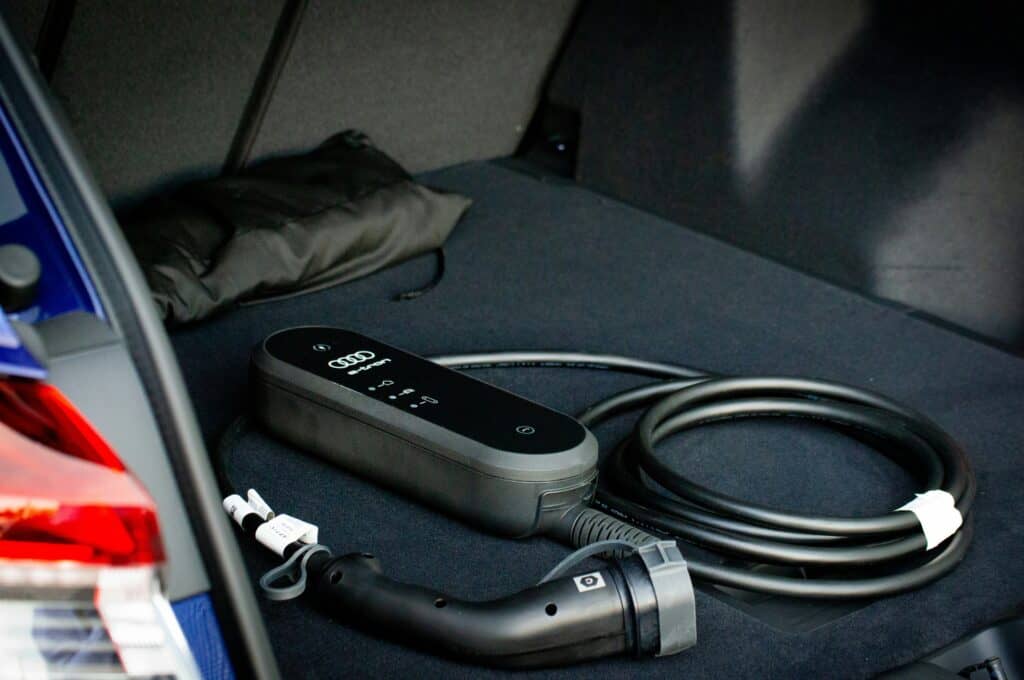
Level 1 is the cord that came with the car plugged into an ordinary household outlet. No installation, no permit, no electrician.
It adds range slowly, measured in a handful of miles per hour of charging. Across a full night parked at home, that accumulates into a meaningful number.
For a car that sits in a driveway from evening to morning, the slow rate matters less than the long window. The question is not how fast it charges but whether the window is long enough.
That is why the useful comparison is daily miles driven against overnight miles gained. Our EV charging time calculator covers turning a rate into a session length.
The Arithmetic That Decides It
Start with your real daily driving rather than your worst week. Odometer readings a month apart divided by the days between them is the figure that matters.
Then compare that against what your overnight window replaces at Level 1 speeds. If the second number comfortably exceeds the first, you do not need a circuit installed.
Headroom matters, though. A setup that exactly breaks even leaves nothing for an unexpected long day, and the pack slowly drains across a busy week.
Most people who find Level 1 insufficient discover it through that drift rather than through a single long trip. Watching the state of charge across two weeks tells you more than any single day does.
What Level 2 Actually Costs
The unit is the cheap part
A capable Level 2 station is a modest purchase. The wiring, breaker, and labor behind it often cost more than the station itself.
Panel capacity is the real gate
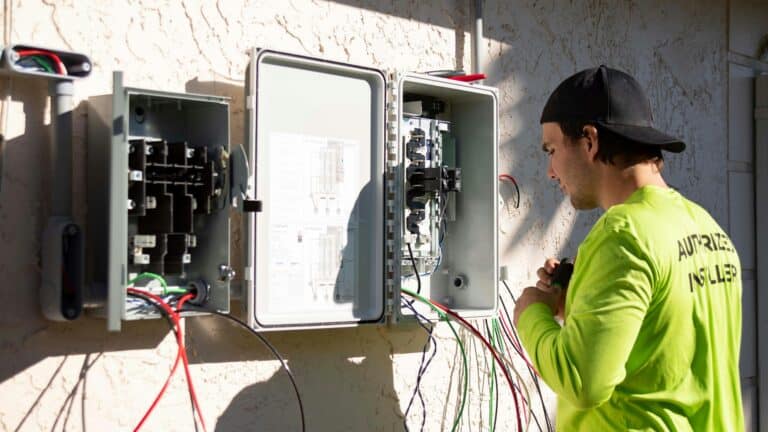
Level 2 wants a dedicated 240 volt circuit sized well above the charger’s draw, because charging counts as a continuous load. A full panel means a subpanel or a service upgrade, and that is where budgets move.
Permits and inspection
This is permitted electrical work in most jurisdictions. Skipping it creates an insurance problem rather than saving money. Our guide to what permits you need covers the general shape of that process.
Load management as an alternative
Some stations can share a circuit or throttle themselves when the house draws heavily. That can avoid a service upgrade entirely, which is often the largest single line item.
The Middle Path Most People Miss
A plug-in Level 2 unit on an existing 240 volt outlet sits between the two. If there is already a dryer or welder outlet within reach, you may have Level 2 capability without new wiring.
It is also portable. The same unit travels to a rental, a second home, or a relative’s dryer outlet, which a hardwired station cannot do.
The trade is that it is not permanent and outlet condition matters. An old 240 volt receptacle was not designed for hours of continuous draw, and heat at a worn contact is the failure mode.
Our roundup of portable EV chargers for 240 volt outlets covers that category, and our roundup of EV charger adapters and extension cables covers reaching an outlet that is close but not close enough.
Situations That Settle It Immediately
Two EVs and one parking area is the clearest case. Level 1 cannot service two vehicles in one night, and alternating nights gets old quickly.
A pattern of same-day round trips is the second. If the car goes out, comes back, and goes out again, the overnight window is not the constraint, the midday turnaround is.
Cold climates push the same direction. Battery conditioning and cabin heat consume energy that Level 1 has to replace on top of the miles, and the margin narrows.
A short driveway stay is the fourth. Someone who parks at home for six hours rather than twelve has half the window and the same mileage.
Deciding Without Guessing
- Record odometer readings a month apart. Divide by days to get a real daily average.
- Time your actual parked window. Plug-in to unplug, not evening to morning in theory.
- Run Level 1 for two weeks first. The car comes with the cord, so this test is free.
- Watch the trend, not a single day. A slow decline across the two weeks is the signal.
- Check your panel before pricing stations. Available capacity decides whether this is a small job or a large one.
- Look for an existing 240 volt outlet. A dryer or shop receptacle can skip the whole circuit question.
- Get the circuit quoted separately. The electrical work is the variable cost, not the hardware.
Our guide to whether you need an electrician covers where the line falls between homeowner work and licensed work, and our roundup of EV charging cable organizers and holsters covers living with either setup day to day.
Recommended Reading
Frequently Asked Questions
Do you need a Level 2 charger at home?
Only if your daily driving exceeds what a standard outlet replaces overnight. Many commutes fit comfortably inside Level 1’s overnight window. Two EVs, same-day round trips, a short parked window, or cold winters are the situations that make Level 2 necessary rather than merely convenient.
How much range does Level 1 add overnight?
A handful of miles per hour of charging, which across a long overnight window accumulates into a usable amount. The exact figure depends on the vehicle’s efficiency and the outlet’s voltage. Compare it against your real daily mileage rather than against the battery’s capacity.
Is Level 2 worth it for a plug-in hybrid?
Rarely. Plug-in hybrid batteries are small enough that a standard outlet usually refills them overnight with room to spare. The gasoline engine also removes the consequence of arriving at a low charge, which is what makes slow charging tolerable.
What does installing a Level 2 charger involve?
A dedicated 240 volt circuit sized above the charger’s continuous draw, a breaker, the run itself, and a permit and inspection in most places. If the panel lacks capacity, add a subpanel or a service upgrade, which is usually the largest cost in the project.
Can you use an existing dryer outlet?
Sometimes, with a plug-in station and the right adapter. Check the receptacle’s condition and the circuit’s rating first, since older outlets were not built for hours of continuous load. Never run the dryer and the car on the same circuit simultaneously.
Does a bigger charger charge faster?
Only up to what the car will accept. Every vehicle has an onboard charger with a maximum rate, and a station rated above it delivers no extra speed. Match the station to the vehicle’s limit rather than buying the largest available.
What if I rent?
Level 1 is generally your option, since altering the wiring needs the landlord’s approval and permitted work. A plug-in Level 2 unit is worth asking about if a suitable 240 volt outlet already exists in a garage or laundry area.
Can load management avoid a panel upgrade?
Often, yes. Stations with load management monitor household draw and reduce charging current when the house is busy, which lets a smaller service support charging. It is usually far cheaper than upgrading the service and it slows charging only at peak moments.