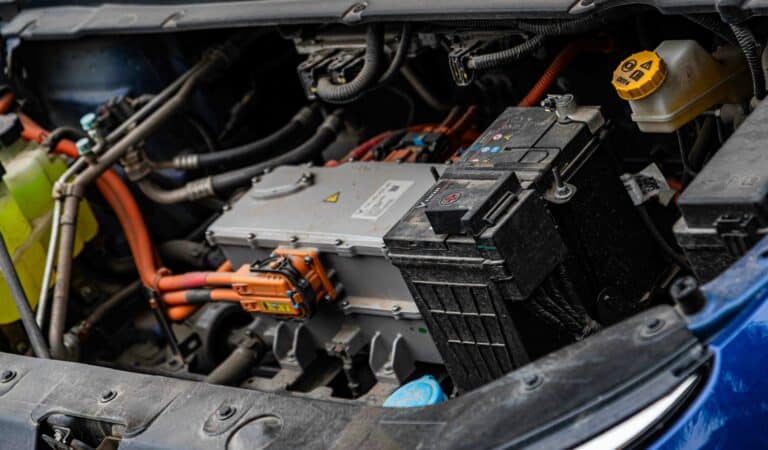

Heat accelerates degradation on every battery chemistry and, at extremes, becomes a safety problem. A rough guide is that lifespan halves for every 10C above about 25C, which is why a bank in a hot garage ages far faster than the same bank kept cool.
Most heat damage is gradual rather than dramatic. The battery does not fail suddenly, it simply reaches the end of its life years earlier than the datasheet suggested.
A Quick Note
Battery thermal events are a genuine safety matter rather than only a performance one. A battery that is swelling, venting, smoking, or hot to the touch should not be handled or moved. Disconnect at a safe distance if you can do so safely, evacuate, and contact emergency services.
Quick Answer
Expect faster capacity loss above roughly 25C, with lifespan falling sharply as temperature rises. Most lithium and lead acid banks operate up to about 45 to 50C with protection cutting in beyond that. Ventilation and siting matter more than any other mitigation.
What Heat Does at Different Temperatures
| Temperature | Effect |
|---|---|
| Below 25C | Rated performance and lifespan |
| 25 to 35C | Noticeably accelerated degradation |
| 35 to 45C | Substantially shortened life |
| Above 45C | Protection typically limits charging |
| Above 60C | Risk of thermal runaway on some chemistries |
All of those bands are approximate and they vary considerably by manufacturer. The datasheet for your specific battery gives operating and storage ranges that override any general figure quoted anywhere.
Why Heat Degrades Batteries
Chemical reaction rates rise with temperature across the board, and the reactions that gradually degrade a battery accelerate right alongside the ones that usefully store energy.
In lithium cells, heat accelerates growth of the solid electrolyte interphase layer, which consumes lithium and permanently reduces capacity.
In lead acid, heat accelerates grid corrosion and water loss, which is why flooded batteries in hot climates need topping up far more often.
The damage is cumulative and irreversible, so a summer spent at 40C costs capacity that cooling in autumn does not restore, covered in why solar batteries degrade over time.
How Protection Systems Respond
Charge current reduction
Many battery management systems taper charge current as temperature rises, which protects the cells and slows charging.
Charge cutoff
Above a threshold, typically somewhere around 45 to 55C on lithium, the system stops charging entirely until it cools.
Discharge cutoff
Usually set higher than the charge limit, since discharging generates less internal heat than charging does.
Temperature-compensated charging
Many controllers adjust charge voltage against a temperature sensor on the bank, which prevents overcharging a warm battery at a voltage set for a cool one.
Thermal runaway protection
The last line of defense, and lithium iron phosphate is considerably more resistant to runaway than other lithium chemistries, covered in battery management systems.
Where Heat Actually Comes From
Ambient temperature is much the largest source, and a garage, an attic, or an outdoor enclosure in summer can sit a long way above the outside air temperature.
Charging generates internal heat, particularly at high current, so a bank charged aggressively in an already warm space compounds both.
High discharge rates do the same, which is why inverter loads matter as much as charging when siting a bank.
Enclosure design frequently makes it worse, since a sealed box protects a battery from weather and traps every watt of heat it produces, covered in solar battery boxes.
Keeping a Bank Cool
Siting is the biggest lever available. An interior space, a north-facing wall, or anywhere shaded beats a sunlit garage by a wide margin.
Airflow around each battery matters, so leaving gaps rather than stacking tightly lets convection carry heat away.
Insulating the enclosure against solar gain while ventilating it is the combination that works, rather than choosing one or the other.
Reducing charge current during the hottest part of the day is worth considering in extreme climates, since it removes heat generation when ambient is already high.
Charging Rate Is a Lever Too
Beyond siting and airflow, how hard you charge a bank affects how much heat it generates internally, and that is adjustable in software rather than requiring hardware.
Internal heating rises with the square of current, so charging at half the rate produces roughly a quarter of the internal heat. That relationship is steeper than most people expect.
A bank charged aggressively at midday in summer is being heated from two directions at once, by the ambient temperature and by its own charge current.
Most charge controllers allow a maximum charge current limit, and reducing it during hot months is a genuine option where the array can still refill the bank across a longer window.
The trade is charging time. A lower current means the bank fills more slowly, which matters if your sun window is short or your daily draw is high relative to capacity.
Discharge rate works the same way. High inverter loads generate internal heat, so a bank sized tightly against a large inverter runs hotter than one with headroom.
Where a bank consistently runs hot, oversizing it slightly is a durable fix, since a larger bank supplying the same load works less hard per battery and generates less heat doing it.
Warning Signs Worth Acting On
Swelling or bulging on any battery case, which indicates internal gas generation and means the battery should be isolated rather than used.
A battery noticeably hotter than its neighbors, which points at an internal fault or a serious imbalance in the bank.
Any smell, particularly sweet or chemical odors from lithium or sulfurous smells from lead acid.
Capacity dropping faster than expected across a summer, which is the mild version and the one that should prompt reviewing where the bank lives.
Cooling Options and What They Cost
Once siting is settled, the remaining options range from free to expensive, and the cheap ones do most of the work.
Spacing costs nothing. Leaving gaps between batteries rather than stacking them tightly allows convection between units, and it is the single most overlooked free improvement available.
Passive vents are next, with an inlet low and an outlet high so warm air leaves under its own buoyancy and draws cooler air in behind it.
A thermostatically controlled fan costs little and only runs when needed, which suits hot climates where passive convection cannot keep up during the afternoon.
Shading an outdoor enclosure does more than most active measures, since direct sun on a metal or dark plastic box raises internal temperature far above ambient.
Thermal mass helps in climates with cool nights, because a heavy enclosure or a concrete floor absorbs heat during the day and releases it overnight, flattening the peak.
Air conditioning a battery room is the expensive end, and it is genuinely used in commercial installations where the bank value justifies it. For a residential bank, the money is usually better spent on siting.
Cold Is a Separate Problem
Heat and cold both reduce performance and they do so in different ways, which is worth separating.
Cold reduces available capacity temporarily rather than permanently, so a battery that underperforms in January recovers in spring.
Charging lithium below freezing is the genuine risk, since it causes lithium plating that permanently damages cells, which is why many systems block it.
A bank that swings between extremes across the year is the hardest case, and moderating both directions matters more than optimizing either, covered in solar batteries in cold weather.
Related Reading
- why batteries degrade
- batteries in cold weather
- battery boxes
- battery management systems
- choosing a battery
- battery monitors
Frequently Asked Questions
What happens if a solar battery gets too hot?
Degradation accelerates sharply, with lifespan roughly halving for every 10C above about 25C. At extremes, protection limits charging and thermal runaway becomes a risk.
Is the damage reversible?
No. Heat damage is cumulative, so a hot summer costs capacity permanently and cooling afterward does not restore it.
At what temperature does charging stop?
Typically somewhere around 45 to 55C on lithium, set by the battery management system. Discharge limits are usually higher, since charging generates more internal heat.
Where should I put my battery bank?
Somewhere interior or shaded, with airflow around each battery. A sunlit garage or a sealed outdoor box are the two worst common choices.
Does a sealed enclosure help?
It protects against weather and traps heat. Insulating against solar gain while still ventilating is the combination that works.
What are the warning signs?
Swelling or bulging, a battery noticeably hotter than its neighbors, or any chemical or sulfurous smell. Those need isolating rather than monitoring.
What is the cheapest way to cool a bank?
Spacing between batteries costs nothing and is the most overlooked improvement. Shading an outdoor enclosure does more than most active measures, since direct sun raises internal temperature far above ambient.
Is cold as bad as heat?
Different. Cold reduces capacity temporarily and recovers, where heat damages permanently. Charging lithium below freezing is the genuine cold-weather risk.
Sources
United States Department of Energy. Energy Storage Basics. https://www.energy.gov/eere/energy-storage-basics
National Renewable Energy Laboratory. Battery Storage Research. https://www.nrel.gov/storage/