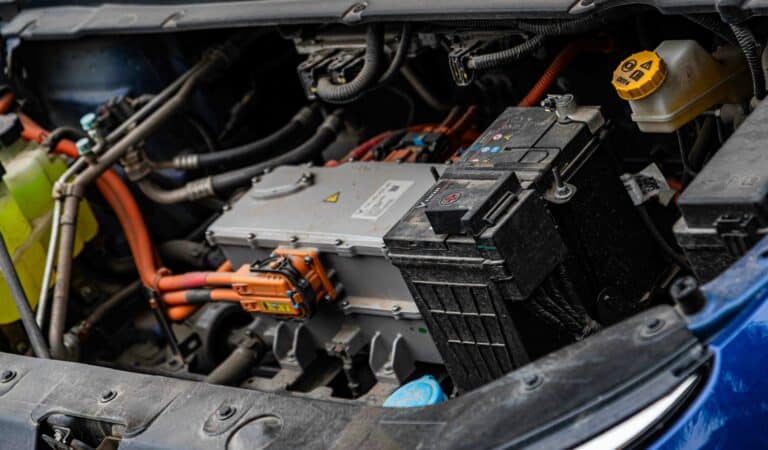

A battery management system watches individual cells inside a battery pack and disconnects the pack before any cell goes somewhere it should not. Overcharge, over-discharge, excessive current, and temperature outside the safe window all trigger a cutoff. Without one, a lithium pack has no protection except your attention.
Most people meet a BMS as a component inside a finished battery rather than a product they choose. Where it becomes a purchase is in DIY packs built from raw cells, and in systems where you want the battery to talk to the inverter rather than each guessing about the other.
Quick Verdict
Buy a BMS rated for more continuous current than your inverter can draw, matched to your cell count and chemistry. Add balancing that can actually keep up with your pack size, and choose a communicating BMS if your inverter supports it. Drop-in batteries already include one, so check before buying a second.
Key Takeaways
- A BMS protects cells from overcharge, over-discharge, overcurrent, and temperature extremes
- Cell count and chemistry must match, since a 4S LiFePO4 BMS suits nothing else
- Continuous current rating should exceed your largest sustained draw
- Passive balancing is slower and cheaper; active balancing moves charge between cells
- Low-temperature charge cutoff is what stops cold charging damaging lithium cells
- Communicating systems let the inverter and battery coordinate rather than guess
How We Picked
Current rating honesty came first. A BMS advertised at two hundred amps that only sustains that briefly is a different product from one rated two hundred amps continuous. Manufacturers publishing both continuous and peak figures ranked above those quoting one number.
Balancing capability came second. Passive balancing bleeds charge from high cells through a resistor, and the current it can shed is small. On a large pack with cells that drift, a slow balancer never catches up, and the pack loses usable capacity to whichever cell hits the limit first.
Temperature protection settled the rest. Charging lithium iron phosphate below freezing plates lithium onto the anode and permanently reduces capacity. A BMS with a low-temperature charge cutoff prevents that, and one without it leaves the risk with you.
1. The Standard LiFePO4 BMS
Why It Stands Out
A four-cell BMS for a twelve volt lithium iron phosphate pack is the common case in DIY solar and RV builds. It handles balancing, cutoffs, and current protection for a modest price, and the wiring is straightforward enough for a careful first build.
Worth Knowing
Cell count is fixed. A 4S board suits four cells in series and nothing else, so a 24 volt pack needs an 8S board. Match the board to the pack you are building rather than adapting one, and check whether it supports the charge and discharge currents your system produces. Chemistry differences sit in the chemistry comparison.
Right for DIY 12 volt lithium packs. Skip it for lead-acid, which needs no BMS.
2. The High-Current BMS
Why It Stands Out
Systems running a large inverter pull heavy current from the pack, and the BMS sits in that path. A board rated two hundred amps or more continuous handles a three thousand watt inverter at twelve volts without cutting out under load.
Worth Knowing
High-current boards generate heat, and many need a heatsink or airflow to hold their rating. A BMS rated for two hundred amps in open air may derate in a sealed battery box. Check the mounting requirements before enclosing it, and size cable to match, which is covered in cable and lug sizing.
Right for large inverters and high-draw systems. Skip it if your loads are modest, since the cost rises steeply with rating.
3. The Active Balancing BMS
Why It Stands Out
Active balancers move charge from strong cells to weak ones rather than burning off the excess. On a pack where cells have drifted apart, that recovers usable capacity a passive balancer cannot reach, and it works during discharge as well as charge.
Worth Knowing
Active balancing costs considerably more and adds complexity. On a well-matched new pack, cells drift slowly enough that passive balancing keeps up, and the extra spend buys little. It earns its place on older packs and on cells bought from mixed batches.
Right for packs with drifting cells and mismatched batches. Skip it on a new matched pack.
4. The Bluetooth-Monitored BMS
Why It Stands Out
A BMS with a phone app shows individual cell voltages, current, temperature, and state of charge without opening the battery box. Seeing one cell running high while the others sit level tells you something a pack-level voltage reading never will.
Worth Knowing
The Bluetooth module draws a small constant current, which matters on a system that sits unused for months. App quality varies more than the hardware does, and some manufacturers abandon apps after a few years, leaving you with a BMS that still works and monitoring that does not.
Right for anyone building a pack who wants visibility into it. Skip it if you already run a shunt-based monitor covering the same ground, as compared in battery monitors.
5. The Communicating BMS
Why It Stands Out
A BMS that speaks to a compatible inverter over a data connection lets the two coordinate. The battery tells the inverter its actual state of charge and its charge limits, and the inverter adjusts rather than following a fixed voltage curve. Charging ends up gentler and state of charge readings end up accurate.
Worth Knowing
Compatibility is specific rather than general. A BMS and an inverter both supporting a protocol still need to support the same version, and manufacturers publish compatibility lists for good reason. Verify the exact pairing before buying either half.
Right for larger systems with a supported inverter. Skip it if your inverter has no data port.
6. The Low-Temperature Cutoff Module
Why It Stands Out
Charging lithium below freezing causes permanent damage, and plenty of basic BMS boards do not check temperature. A separate cutoff module with a temperature probe blocks charging when the cells are too cold, which protects a pack living in an unheated space.
Worth Knowing
Probe placement decides whether it works. A sensor on the outside of a case reads ambient rather than cell temperature, and cells warm slowly. Mount the probe against a cell, and understand that the cutoff blocks charging rather than warming anything. Cold behavior is covered in batteries in cold weather.
Right for packs in garages, sheds, and vehicles. Skip it if your BMS already includes temperature protection.
Battery Management Systems at a Glance
| Type | Balancing | Monitoring | Best for |
|---|---|---|---|
| Standard LiFePO4 | Passive | None | DIY 12V packs |
| High current | Passive | Varies | Large inverters |
| Active balancing | Active | Varies | Drifting or mixed cells |
| Bluetooth | Usually passive | Cell-level via app | Visibility into a pack |
| Communicating | Varies | To the inverter | Larger coordinated systems |
| Temperature cutoff module | None | Temperature only | Cold environments |
How to Choose a BMS
What is your cell count and chemistry?
This is the first filter and it is absolute. A 4S board suits a twelve volt LiFePO4 pack, 8S suits twenty-four volts, and 16S suits forty-eight. Lithium iron phosphate and other lithium chemistries have different voltage windows, so a board must match both.
What is your largest sustained draw?
Add up what runs at once, convert to amps at your pack voltage, and pick a BMS rated above that continuously. An inverter drawing heavily at twelve volts produces very large currents, and a BMS that trips under load is worse than useless.
Will the pack ever be cold?
If the battery lives in a garage, a shed, or a vehicle, low-temperature charge protection is a requirement rather than a feature. Cells damaged by cold charging do not recover.
Do you need it to talk to anything?
Standalone boards protect the pack and tell you nothing. Bluetooth adds visibility, and a communicating BMS adds coordination with a compatible inverter. Decide which of the three you need before comparing prices.
DIY Pack Versus Drop-In Battery
What a drop-in gives you
The BMS is inside, matched to the cells, and covered by the warranty. You wire it like a lead-acid battery and stop thinking about cell voltages. For most people this is the sensible route, and options sit in drop-in battery choices.
What a DIY pack gives you
Lower cost per amp hour, cell-level visibility, and the ability to repair rather than replace. It also gives you responsibility for the protection, since a mistake in BMS selection or wiring is a fire risk rather than an inconvenience.
Common BMS Mistakes to Avoid
Undersizing the current rating
A BMS that trips every time the inverter surges makes the system unusable. Rate it above your maximum sustained draw with margin, not at it.
Mismatching cell count
Boards are built for a specific series count. Using a 4S board on three cells or five is not a configuration, it is a fault.
Skipping temperature protection
Cold charging damage is invisible until capacity has already gone. If the pack ever sits below freezing, the cutoff is not optional.
Assuming balancing fixes bad cells
Balancing evens out small differences between healthy cells. A cell that has genuinely failed drags the pack down regardless, and no balancer repairs it, as covered in why batteries degrade.
Recommended Reading
- how solar batteries work
- chemistry differences and what they mean
- monitoring at the system level
- overcurrent protection alongside a BMS
- where capacity goes between charges
- sizing a bank
- choosing a solar battery
Frequently Asked Questions
Do I need a BMS for a lithium battery?
Yes, for any lithium chemistry. Cells need protection from overcharge, over-discharge, overcurrent, and temperature extremes, and no lithium pack should run without it. Lead-acid batteries do not need one.
Does a drop-in lithium battery already have a BMS?
Almost always, built in and matched to the cells. That is a large part of what the price covers, and buying a second BMS for a drop-in battery is unnecessary.
What current rating do I need?
Higher than your largest sustained draw, with margin. Work out the amps your inverter pulls at your pack voltage under full load, and pick a BMS rated above that continuously rather than at its peak figure.
What is the difference between active and passive balancing?
Passive balancing bleeds charge off high cells through a resistor. Active balancing moves that charge into low cells instead. Active recovers more usable capacity on drifted packs and costs considerably more.
Will a BMS stop cold charging damage?
Only if it has a low-temperature charge cutoff and a probe positioned against the cells. Plenty of basic boards have no temperature protection, and a separate cutoff module fills that gap.
Can a BMS fix an unbalanced pack?
It can even out small differences between healthy cells over time. A cell that has genuinely degraded limits the pack regardless, and balancing cannot restore capacity that has already been lost.