
Often yes for off-grid, shed, cabin and hobby builds, and rarely for a permitted grid-tied roof array. Whether used solar panels are worth buying depends on what the array has to satisfy, because the hardware discount is real while the surrounding costs do not fall at all.
Modules lose output slowly, which is what makes the secondary market work. Our guide to how long solar panels last covers that decline curve.
Quick Answer
Used panels are cheap per watt and carry no usable warranty. They suit ground mounts, sheds, cabins and off-grid systems where labor is your own and permits are simple. They suit a grid-tied roof poorly, because racking, wiring, inspection and labor cost the same on cheap panels as on new ones.
Key Takeaways
- Price per watt is the only metric that compares them fairly.
- Warranties almost never transfer to a second buyer.
- Older panels are lower wattage, so you need more racking space.
- Labor, racking and wiring cost the same either way.
- Decommissioned commercial modules are the best-value source.
- Always check the module against its own spec sheet with a meter.
- A permitted grid-tie job usually needs listed, current modules.
| Use case | Used panels? | Why |
|---|---|---|
| Shed or workshop | Strong yes | Small load, simple mount, your own labor |
| Off-grid cabin | Yes | Space is available, permits are light |
| Ground mount at home | Yes, often | Room to spread out low-wattage modules |
| RV or van roof | Usually no | Space per watt matters more than price |
| Permitted grid-tied roof | Usually no | Soft costs dominate, listings and inspection matter |
| Pumps, gates, fans | Yes | Undemanding loads, easy to oversize |
| Learning or test bench | Yes | Cheapest way to make mistakes |
Where the Discount Comes From
Most used panels reach the market through decommissioning rather than failure. Commercial arrays get repowered with higher-wattage modules well before the old ones stop working.
That produces pallets of functional panels with no warranty and no home. Price collapses because the seller’s alternative is paying a recycler.
Insurance write-offs and canceled projects supply the rest. Some of those are undamaged surplus and some are hail claims, which is a very different thing.
Knowing which bucket a listing came from changes what you should pay. Our guide to what happens to solar panels in a hailstorm covers what to look for on a claim panel.
The Costs That Do Not Fall
Racking and mounting
Rails, clamps and feet cost the same regardless of what sits in them. Lower-wattage modules need more rail per watt, so this cost rises.
Wiring, fusing and disconnects
Conductor sizing follows current, not panel age. Our guide to what size wire you need for solar panels covers the calculation.
Labor and roof work
An installer charges by the job. Cheap modules do not shorten the day or reduce the risk.
Permits and inspection
Fees are fixed and paperwork is identical. Our guide to what permits you need for solar covers that side.
Space Is the Hidden Cost
An older module of the same physical size makes considerably less power than a current one. Panel dimensions barely changed while wattage climbed.
On a roof with limited usable area, that trade is brutal. You run out of room before you reach your target output.
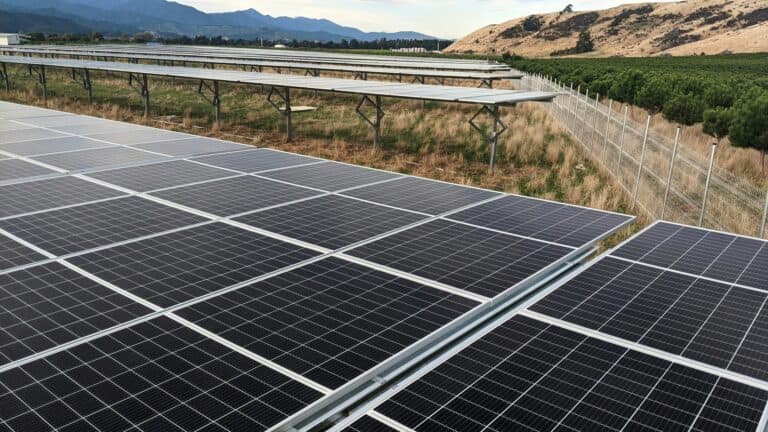
On a ground mount or a field, space is usually free and the math flips entirely. Spreading out cheap watts costs you nothing but racking.
So the question is not really about the panels. Our guide to ground mount against roof mount solar covers which situation you are in.
What to Check Before Buying
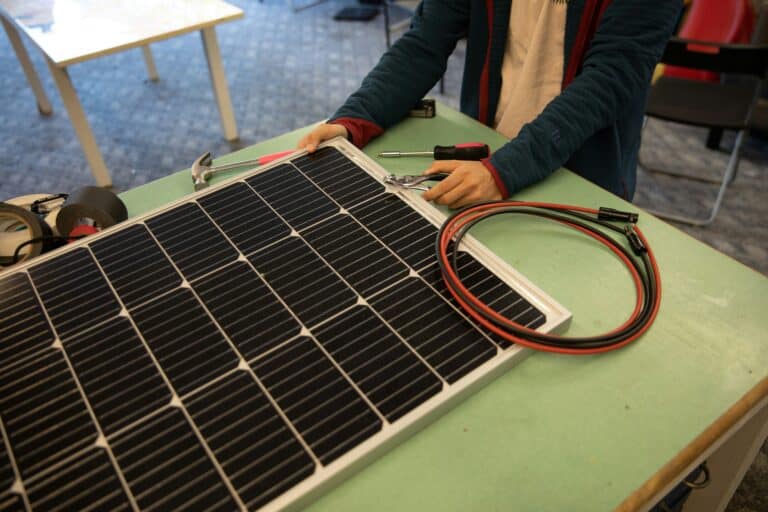
- Get the model number and find the spec sheet. Without rated voltage and current you cannot judge anything you measure.
- Measure open-circuit voltage in sun. Close to the rating means healthy cells and an intact series path.
- Measure short-circuit current. Low current with full voltage points at soiling, shading or a diode.
- Inspect the glass at an angle. Spiderweb cracks and chips at the corners hide in a straight-on photo.
- Look at the backsheet and junction box. Cracking, chalking, a loose lid or corroded terminals are all disqualifying.
- Check for delamination and browning. Cloudiness, bubbling or yellowed encapsulant means output you will not get back.
- Ask why they came down. Repower surplus is worth buying. Storm claim stock needs far more scrutiny.
Our guide to testing a solar panel with a multimeter covers both measurements, and our guide to reading a solar panel spec sheet covers what the numbers should be.
The Warranty Question
Assume there is none. Product and performance warranties are usually written to the original purchaser at the original installation address.
Many manufacturers behind older modules no longer exist anyway. A transferable warranty on a defunct brand is worth nothing.
That changes how you buy rather than whether you buy. Order spares in the same purchase, because a dead module in three years has no replacement path.
Budget one or two extra panels per string. Our guide to what a solar panel warranty covers covers what you are giving up.
Mixing Used Panels With What You Have
Adding used modules to an existing string is where good deals turn into lost production. Series strings share current, and the weakest module sets it.
Voltage mismatch matters too, since strings need to stay inside the inverter’s operating window. An odd module can push a string outside it.
Keeping used panels on their own string, their own charge controller or their own microinverters avoids all of that. Isolation is cheaper than matching.
Buy a matched lot rather than assembling one. Our guide to mixing old and new solar panels covers the mismatch, and our guide to string inverters against microinverters covers the architecture that tolerates variety.
Where the Answer Is Clearly Yes
Sheds, workshops, coops, gates, pumps, fans and lighting are ideal. Loads are small, mounting is simple and nobody inspects a shed roof.
Off-grid cabins are the other strong case. Land is available, the labor is yours, and oversizing the array is the standard answer to cloudy weeks anyway.
Learning is the third. Cheap panels are how people find out what a charge controller actually does without risking real money.
Our roundup of solar panels for sheds and workshops covers the new alternative, and our guide to how much solar you need for a cabin covers sizing it.
Where the Answer Is Clearly No
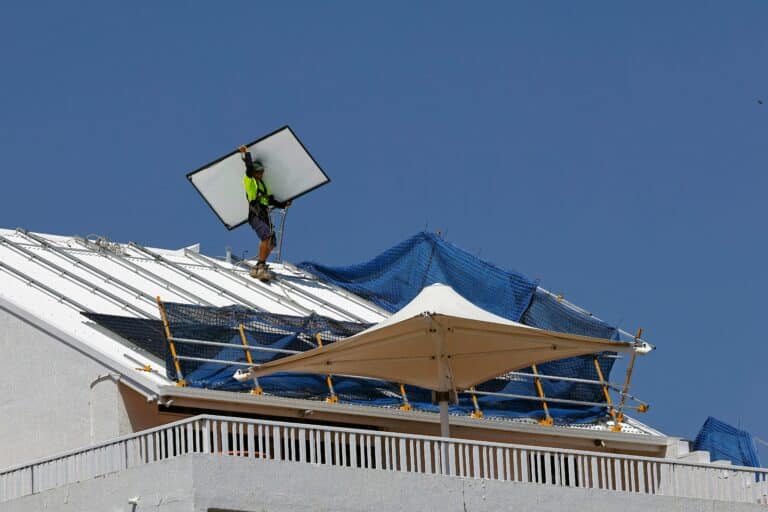
A permitted grid-tied roof array is the weakest case. Listings, inspection, interconnection and installer liability all favor current modules.
Most installers will not warrant a job built on customer-supplied used hardware. That alone ends the conversation for a lot of people.
RV and van roofs fail on space rather than paperwork. Watts per square foot is the constraint, and that is exactly where old panels lose.
Anything mission critical is the last one. Our guide to solar panel efficiency covers the space trade, and our roundup of 100 watt solar panels covers the new-panel baseline to price against.
Related Reading
Frequently Asked Questions
Are used solar panels worth buying?
For sheds, cabins, ground mounts and off-grid loads, usually yes, since price per watt is low and space is available. For a permitted grid-tied roof array, usually no, because racking, wiring, labor, permits and inspection cost the same on cheap panels.
Do used solar panels come with a warranty?
Assume not. Product and performance warranties are generally written to the original purchaser at the original address, and many manufacturers behind older modules no longer exist. Buy one or two spare panels in the same lot instead.
How much should used solar panels cost?
Compare on price per watt against new modules rather than on price per panel, since older panels produce less from the same physical footprint. Then add the racking, wiring and labor, which do not get cheaper, before deciding the deal is good.
Where do used solar panels come from?
Mostly from commercial arrays repowered with higher-wattage modules, which produces pallets of working panels with no warranty. The rest come from canceled projects and insurance write-offs, and storm claim stock deserves much closer inspection than repower surplus.
How do you check a used solar panel?
Find the model’s spec sheet, then measure open-circuit voltage and short-circuit current in good sun and compare. Inspect the glass at an angle for spiderweb cracks, and check the backsheet and junction box for cracking, chalking or corrosion.
Can you mix used panels with new ones?
Not on the same series string, where the weakest module limits current for all of them and voltage mismatch can push the string outside the inverter’s window. Give used panels their own string, charge controller or microinverters instead.
Are used panels a bad idea on an RV?
Usually, because roof area is the binding constraint and older modules produce less power per square foot. Paying more per watt for current panels buys back roof space, which is the thing you actually run out of on a vehicle.
Will an installer use panels I supply?
Most will not, particularly on a permitted grid-tied job, because they cannot warrant hardware they did not source and inspection favors current listed modules. Used panels generally suit work you are doing yourself.