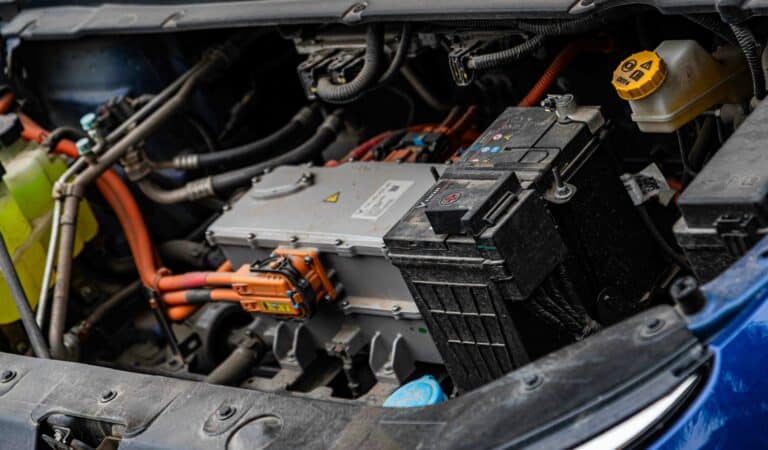

A DC air conditioner draws straight from your battery bank, skipping the inverter and the conversion losses that come with it. That matters off-grid because cooling is the largest load most systems ever face, and every percent lost in conversion is capacity you paid for and never used. Off-grid air conditioning has historically meant oversizing everything to survive the startup surge, and DC units change that arithmetic.
The category splits along voltage. 12V units suit vans and small cabins with modest banks, 24V and 48V units suit larger systems where higher voltage keeps cable losses manageable. Getting that choice right matters more than any specification on the box, and it follows your existing bank rather than the other way round. Sizing the bank itself is covered in what size solar battery you need.
Quick Verdict
Match the unit voltage to your battery bank rather than converting. 12V rooftop units suit vans and small builds, 48V mini-splits suit cabins with substantial banks and run far more efficiently. Soft-start or variable-speed compressors matter more than raw cooling capacity, since startup surge is what breaks off-grid systems.
How We Picked
Voltage compatibility came first, because a unit that does not match your bank needs a converter that undoes the reason for buying DC in the first place.
Startup behavior came second. Fixed-speed compressors draw a large surge on every start, and that surge sizes your entire system. Variable-speed and soft-start designs ramp instead, which lets a smaller bank run a larger unit.
Duty cycle mattered more than peak output. An air conditioner that cools hard and cycles constantly consumes more over a night than a smaller unit running steadily, and off-grid the overnight total is what counts.
Installation complexity ruled out anything requiring refrigerant work on site. Pre-charged line sets and self-contained units keep the job within reach of a competent owner.
12V Rooftop RV Air Conditioner
Why It Stands Out
The standard answer for vans, trailers, and small builds already running a 12V system. Rooftop mounting keeps floor space free and puts the condenser where airflow is best, and the whole unit is self-contained with no refrigerant lines to run.
Modern versions use variable-speed compressors that ramp rather than surging, which is what makes them workable on a modest lithium bank. Older fixed-speed rooftop units needed far more system behind them.
Worth Knowing
Roof mounting adds height and weight, both of which matter on a vehicle. The cutout is also permanent, so getting placement right the first time is the whole job.
Cooling capacity is limited by the physical size of a rooftop unit, and a well-insulated small space is what these are designed around rather than an uninsulated one.
Best for van builds, small trailers, and anyone on a 12V system who wants a self-contained install. Skip if your space is large, poorly insulated, or if roof height is already a constraint.
48V DC Mini-Split System
Why It Stands Out
The efficiency choice for cabins and larger off-grid builds. Higher voltage means lower current for the same power, which keeps cable sizes and losses down over the longer runs a building needs.
Mini-splits also separate the compressor from the indoor unit, so the noise stays outside. For a cabin where the alternative is a rooftop unit running above your head, that is a substantial quality-of-life difference.
Worth Knowing
A 48V unit requires a 48V bank, and retrofitting one to a 12V system means rebuilding the bank rather than adding a converter. That comparison sits in 48V batteries for solar.
Installation involves mounting two units and connecting a line set. Pre-charged systems make this achievable, and it is still more work than a self-contained unit.
Best for cabins, tiny homes, and established off-grid systems already running 48V. Skip if your bank is 12V or if you want something you can install in an afternoon.
24V Marine Air Conditioner
Why It Stands Out
Built for boats, which means built for salt air, vibration, and continuous running. That construction standard carries over well to any off-grid installation in a harsh environment.
24V sits usefully between the two common extremes, halving current against a 12V unit without requiring a full 48V rebuild. For systems already at 24V it removes the compromise entirely.
Worth Knowing
Marine units frequently use seawater cooling, and the air-cooled versions are the ones relevant to land installations. Checking which type you are buying matters.
The marine build quality comes with marine pricing, and you are paying for corrosion resistance that a dry inland cabin may not need.
Best for boats, coastal installations, and 24V systems wanting durable hardware. Skip if you are inland on a budget, where the corrosion resistance is a cost without a benefit.
12V Portable Air Conditioner
Why It Stands Out
No permanent installation, no roof cutout, and it moves between spaces. For anyone renting, testing a build, or wanting cooling in a tent or awning as well as inside, portability is the whole argument.
These also suit intermittent use. A unit run for two hours before sleep draws far less than one running all night, and portable units fit that pattern without a permanent commitment.
Worth Knowing
Portable units vent hot air through a hose, and that hose has to go somewhere. In a sealed van that means a window kit or a dedicated port, which starts to look like an installation after all.
Efficiency is lower than a fixed unit, since the hose radiates heat back into the space and the single-hose design pulls conditioned air out with it.
Best for renters, temporary setups, and anyone cooling one area for a few hours at a time. Skip if you need continuous cooling or maximum efficiency from a limited bank.
Hybrid AC and DC Mini-Split
Why It Stands Out
Accepts both DC from a battery bank and AC from grid or generator, switching between them. For a cabin with occasional generator use or partial grid access, that flexibility removes the need to choose.
Running direct DC when the sun is up and switching to AC when it is not lets you use solar output as it arrives rather than cycling it through the battery, which reduces wear on the bank.
Worth Knowing
The dual input adds cost and complexity against a DC-only unit, and if you never use the AC side you have paid for capability that sits idle.
Switching behavior varies between models, and some prioritize one source in ways that may not match how you want the system to run.
Best for cabins with generator backup or intermittent grid access. Skip if your system is purely off-grid with no other power source, where the AC input adds nothing.
12V Evaporative Cooler
Why It Stands Out
Draws a fraction of what a compressor unit does, because there is no compressor. In dry climates an evaporative cooler produces a meaningful temperature drop for a load a small bank handles comfortably.
The simplicity is also durability. Fewer moving parts, no refrigerant, and nothing that fails expensively, which suits remote installations where service is difficult.
Worth Knowing
Humidity determines whether these work at all. In dry desert air the effect is substantial, and in humid conditions it is close to nothing while adding moisture to the space.
They also need a water supply and regular refilling, which is a genuine consideration where water is carried rather than plumbed.
Best for dry climates, low-power systems, and anyone whose bank cannot support a compressor. Skip anywhere humid, where the physics does not work regardless of the unit.
DC Air Conditioners at a Glance
| Type | Voltage | Best environment | Install effort |
|---|---|---|---|
| Rooftop RV unit | 12V | Vans, small trailers | Moderate, permanent cutout |
| Mini-split | 48V | Cabins, tiny homes | High, line set required |
| Marine unit | 24V | Boats, coastal, harsh conditions | Moderate to high |
| Portable unit | 12V | Rentals, temporary setups | Low, needs venting |
| Hybrid mini-split | 48V plus AC | Cabins with generator | High |
| Evaporative cooler | 12V | Dry climates only | Very low |
How to Choose a DC Air Conditioner
Start with your bank voltage
The unit should match what you already have. Converting between voltages to run an air conditioner reintroduces the losses that made DC attractive, and a 48V unit on a 12V bank is not a purchase, it is a system rebuild.
Check the startup draw, not just the running draw
Fixed-speed compressors surge hard on every start, and that surge determines what your system must be capable of. Variable-speed and soft-start designs ramp up instead, which is often the difference between workable and not.
Size against insulation, not floor area
A well-insulated small space needs far less cooling than a poorly insulated one of the same size. Insulation is cheaper than capacity and it works overnight without drawing anything.
Work out the overnight total
Peak output matters less than what the unit consumes across the hours you actually run it. Calculating that against your bank is the step people skip, and working out watt hours covers the method.
DC Against Running AC Through an Inverter
The case for DC
No conversion losses, no inverter sized for the surge, and fewer components between the battery and the load. For a system where cooling is the largest draw, that efficiency is the entire argument.
The case for AC through an inverter
Far more choice, lower prices, and easier replacement. AC units are a mass market and DC units are not, which shows in both cost and availability. If you already own an inverter sized for the surge, the efficiency gap may not justify the price gap, and inverter sizing covers what that surge requires.
What Trips People Up
Sizing from a room calculator
Standard sizing tools assume a house with grid power and no concern about consumption. Off-grid the calculation runs the other way, starting from what your bank can supply overnight.
Ignoring cable losses
Long 12V runs at high current lose meaningful voltage. Cable sizing matters more on DC air conditioning than almost any other load, covered in battery cables and lugs.
Assuming solar will cover it directly
Air conditioning runs hottest in the afternoon and you sleep at night. The bank does the overnight work, and array size alone does not solve it.
Skipping the low-voltage cutoff
An air conditioner will happily flatten a bank. A battery monitor with a cutoff protects against waking up to a dead system, covered in battery monitors.
Recommended Reading
- sizing a bank for large loads
- higher voltage bank options
- where capacity actually goes
- the alternative approach
- the other big DC appliance
- matching chemistry to load
- what appliances you can run off grid
Frequently Asked Questions
Can you run an air conditioner on solar off-grid?
Yes, and it is the largest load most off-grid systems carry. A DC unit drawing directly from the bank avoids inverter conversion losses, and the limiting factor is usually overnight battery capacity rather than array size.
Is a DC air conditioner more efficient than AC?
It avoids the conversion step, which removes a percentage of loss on a load that runs for hours. The saving is real and modest, and it matters most where cooling is the dominant draw on the system.
What voltage DC air conditioner should I buy?
Whatever your battery bank already is. 12V suits vans and small builds, 24V and 48V suit cabins where longer cable runs make higher voltage worthwhile. Converting voltage to run the unit defeats the purpose.
How many batteries do I need to run one overnight?
It depends on the unit’s draw and how many hours you run it, so the calculation starts from watt hours consumed rather than a battery count. Insulation quality changes the answer substantially.
Do evaporative coolers work off-grid?
In dry climates, well, and they draw a fraction of what a compressor unit does. In humid conditions they produce little cooling while adding moisture, so climate decides whether they are viable at all.
Can I use a regular window unit with an inverter?
Yes, provided the inverter handles the startup surge, which is several times the running draw on a fixed-speed compressor. A soft-start device reduces that surge and is cheaper than upsizing the inverter.
What size solar array do I need for air conditioning?
Array size determines how fast you replace what you used, and bank size determines whether you can run overnight. Both matter, and people usually undersize the bank while focusing on panels.