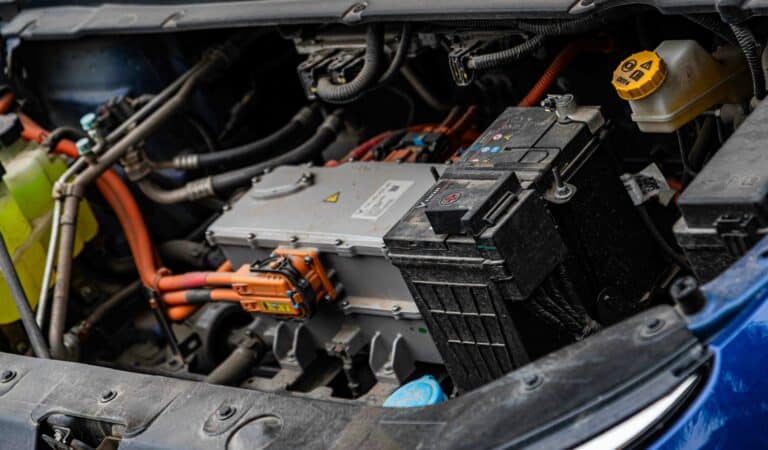

Flooded lead acid batteries need active ventilation because they vent hydrogen during charging, which is explosive in air. Sealed AGM, gel, and lithium batteries produce little or no gas in normal operation, and they still need airflow for heat rather than for gas.
Those are two different requirements that get treated as one question. Gas ventilation is a safety code matter; thermal ventilation is a lifespan matter.
A Quick Note
Hydrogen accumulation in an enclosed space is a genuine explosion hazard rather than a theoretical one. Ventilation requirements for flooded batteries are set by electrical and building codes, and installation should be confirmed by a qualified electrician familiar with your jurisdiction rather than designed from general guidance.
Quick Answer
Flooded lead acid requires ventilation to the outside, with no ignition sources nearby. AGM and gel vent only under fault conditions and need modest airflow. Lithium needs airflow for cooling rather than gas. Every chemistry benefits from air movement to manage heat.
Ventilation Needs by Chemistry
| Chemistry | Gas ventilation | Thermal airflow |
|---|---|---|
| Flooded lead acid | Required, to outside | Required |
| AGM | Recommended, vents on fault | Required |
| Gel | Recommended, vents on fault | Required |
| LiFePO4 | Not for normal operation | Required |
The right column of that table applies universally. Heat shortens life on every chemistry there is, so airflow is never genuinely optional even where gas is not a concern at all.
The Hydrogen Problem
Flooded lead acid batteries electrolyze water during charging, producing both hydrogen and oxygen as a result. That process is entirely inherent to the chemistry rather than being any kind of fault condition.
Hydrogen is lighter than air and collects at the highest point of an enclosed space, which is why ventilation openings belong near the ceiling rather than at floor level.
It is explosive across a wide concentration range and ignites from a very small energy source, including a switch arc or a static discharge.
Gassing increases substantially during equalization charging and during overcharge, which is when ventilation matters most, covered in LiFePO4 against lead acid.
Why Sealed Batteries Are Different
AGM and gel batteries are valve regulated, meaning they recombine the gases produced during charging back into water internally.
That recombination handles normal operation, and a pressure relief valve vents only when charging goes wrong or the battery overheats.
So the ventilation requirement is much lower and it is not zero, since an overcharge condition can still produce gas.
Lithium iron phosphate produces no hydrogen at all in normal operation, and its venting risk relates to thermal events rather than to routine charging, covered in how to choose a solar battery.
Thermal Ventilation Applies to Everything
Heat shortens battery life on every chemistry, and an enclosure without airflow traps every watt the batteries produce while charging and discharging.
Passive ventilation with low and high openings creates convection, since warm air rising out the top draws cooler air in the bottom.
Active ventilation with a fan is worth it in hot climates or tightly packed installations, and a thermostatically controlled fan only runs when needed.
Spacing between batteries matters as much as the enclosure openings, since tightly stacked units heat each other, covered in what happens if a solar battery gets too hot.
Enclosure Design That Works
Openings low and high
Convection needs both. A single opening does very little, where an inlet near the floor and an outlet near the ceiling moves air continuously.
Vent to outside for flooded batteries
Venting into another interior room moves the hazard rather than removing it, which is why code generally requires outside air.
No ignition sources inside
Switches, relays, fuses, and inverters all arc. Those belong outside the battery enclosure rather than in it.
Insulate against sun, ventilate against heat
An outdoor enclosure needs both, since insulation alone traps internal heat and ventilation alone lets solar gain in, covered in solar battery boxes.
What Else Belongs in the Enclosure Plan
Ventilation is one part of enclosure design, and several other decisions interact with it closely enough to be worth settling together.
Access matters more than people plan for. A bank that cannot be reached for terminal checks, watering on flooded types, or capacity testing will not receive any of those things.
Terminal covers prevent accidental shorts from a dropped tool, which is a genuinely common cause of damage in home installations and costs almost nothing to prevent.
Containment for spills applies to flooded batteries, since electrolyte is corrosive and a cracked case on a wooden floor is a considerably larger problem than on a sealed tray.
Cable entry points need sealing against pests without becoming airtight, since rodents chewing battery cabling is a real failure mode in outdoor and garage installations.
Signage is worth adding even on a domestic installation, because anyone responding to an emergency at your property benefits from knowing there is a battery bank and what chemistry it is.
And leaving room to expand is worth doing at build time, since an enclosure sized exactly for the current bank forces a rebuild rather than an addition later on.
Common Installation Mistakes
Putting the inverter in the same sealed box as flooded batteries, which places an arcing device in a hydrogen-collecting space.
Venting at floor level only, which does nothing for a gas that rises and collects at the top.
Sealing an enclosure completely to keep dust and weather out, which solves one problem and creates a worse one.
And treating lithium as needing no ventilation at all, when the thermal requirement applies regardless of the gas question.
Sizing the Ventilation
For flooded batteries the requirement is not simply an opening, it is a calculated airflow rate, and the calculation depends on the bank.
Hydrogen production scales with charge current and with the number of cells, so a larger bank charged harder generates more gas and needs more air moved.
Codes generally express the requirement as an air change rate for the enclosure or as a minimum free opening area, and the specific figures vary by jurisdiction and by standard.
Equalization charging is the design case rather than normal operation, since gassing rises sharply during equalization and any ventilation sized for ordinary charging will be inadequate then.
Passive ventilation is frequently sufficient for smaller banks, provided openings are correctly placed and genuinely unobstructed rather than screened down to nothing.
Powered ventilation becomes necessary on larger installations, and the fan itself must be rated for the environment, since a standard motor inside a hydrogen space is exactly the ignition source you are ventilating against.
Because the numbers are jurisdiction-specific and the consequence of getting them wrong is an explosion rather than a warranty claim, this is the part of a battery installation that genuinely belongs with a qualified electrician.
Indoor Against Outdoor Siting
Indoor installations offer temperature stability, which is the single biggest factor in battery lifespan overall, and they concentrate any ventilation requirement squarely within a living space.
Outdoor installations solve the gas question easily and expose the bank to temperature extremes in both directions.
A garage sits between the two and is frequently the worst of both, since it gets hot in summer and cold in winter while still being an enclosed space.
A dedicated ventilated enclosure in a shaded outdoor position is often the best compromise, and code requirements govern all of it, covered in solar batteries in cold weather.
Related Reading
- battery heat
- battery boxes
- LiFePO4 against lead acid
- choosing a battery
- cold weather
- fuses and breakers
Frequently Asked Questions
Do solar batteries need ventilation?
Flooded lead acid requires it for hydrogen. Sealed AGM, gel, and lithium need airflow for heat rather than gas, and that thermal requirement applies to every chemistry.
Why is hydrogen dangerous?
It is explosive across a wide concentration range and ignites from a very small energy source, including a switch arc or static discharge.
Where should vents go?
Low and high. Hydrogen rises and collects at the ceiling, and convection needs an inlet near the floor with an outlet near the top.
Do lithium batteries need venting?
Not for gas in normal operation. They still need airflow for cooling, since heat shortens life on every chemistry.
Can I put the inverter in the battery box?
Not with flooded batteries. Inverters, switches, relays, and fuses all arc, and those belong outside a space where hydrogen can collect.
Is a sealed enclosure ever right?
Rarely. Sealing keeps dust and weather out and traps heat, which shortens battery life. Insulate against sun and ventilate against heat instead.
How much ventilation do flooded batteries need?
It is a calculated airflow rate rather than just an opening, scaling with charge current and cell count. Equalization charging is the design case, and figures are jurisdiction-specific.
Where is the best place for a bank?
Somewhere temperature-stable and shaded with airflow. A garage is frequently the worst of both worlds, being hot in summer and cold in winter.
Sources
- United States Department of Energy. Energy Storage Basics. https://www.energy.gov/eere/energy-storage-basics
- National Renewable Energy Laboratory. Battery Storage Research. https://www.nrel.gov/storage/