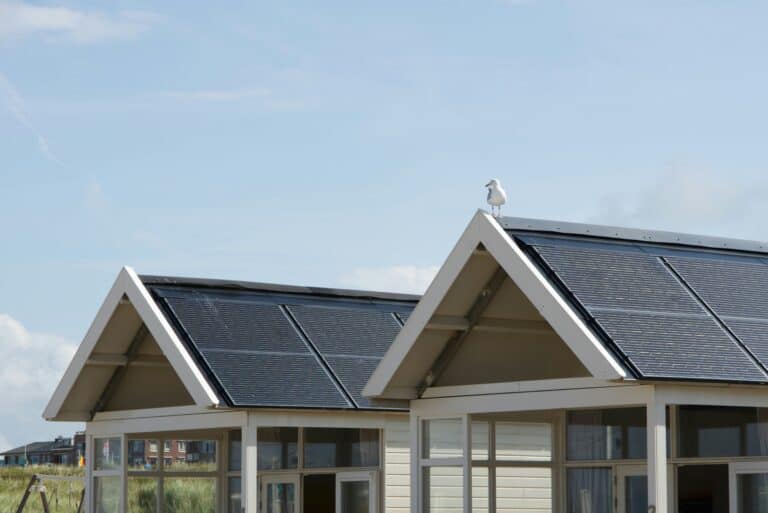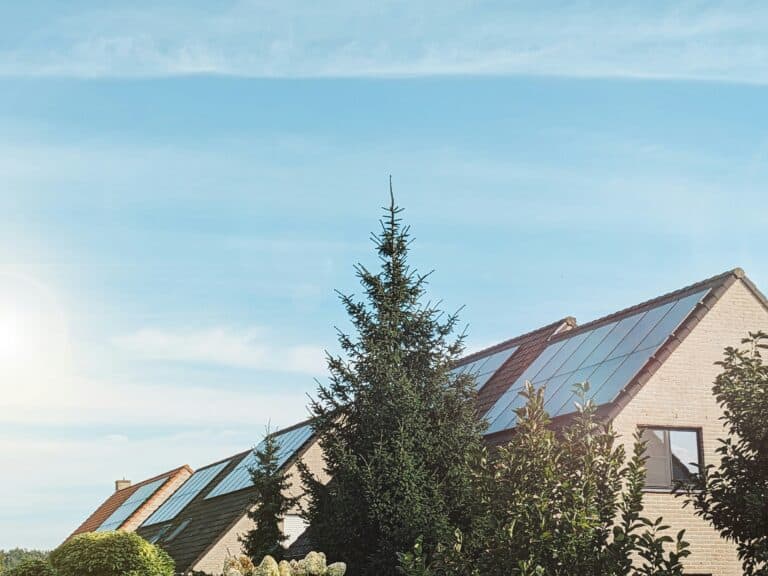

A residential solar array adds roughly two and a half to four pounds per square foot once you count panels, rails and mounting hardware. How much weight solar panels add to a roof matters less as a total figure than as a distributed load, because roofs fail from concentrated stress rather than from overall mass. Our guide on building inspections for solar covers who signs off on that calculation.
Quick Answer
Expect about three pounds per square foot for a typical pitched roof system. A twenty panel array weighs roughly eight hundred to a thousand pounds spread across four hundred square feet. Most sound roofs handle that comfortably, because building codes already require far more capacity for snow and wind.
Key Points
- Panels alone run about forty to fifty pounds each.
- Rails and hardware add roughly a third again.
- Distributed load matters more than total weight.
- Ballasted flat roof systems weigh considerably more.
- Roof age and condition matter more than the load itself.
Where the Weight Comes From
| Component | Typical weight | Notes |
|---|---|---|
| Standard 400W panel | 45 to 50 lbs | About 21 square feet each |
| Mounting rails | 1 to 2 lbs per foot | Aluminum extrusion |
| Roof attachments | 1 to 2 lbs each | One every four feet or so |
| Clamps and hardware | Under a pound each | Adds up across an array |
| Wiring and conduit | Minor | Rarely affects calculations |
| Ballast, flat roofs only | 5 to 10 lbs per sq ft | Dominates the total |
Panels dominate on a pitched roof, and ballast dominates on a flat one. That distinction changes the engineering question entirely.
Why Distributed Load Is the Number That Matters
A thousand pounds sounds heavy until you spread it. Across four hundred square feet it becomes two and a half pounds per square foot, which any code compliant roof already carries.
Compare that with snow. Building codes in northern regions require roofs to handle twenty to forty pounds per square foot of snow load, and a solar array uses a small fraction of that allowance.
Concentrated load is the real concern. Each mounting attachment transfers weight into a single rafter, and spacing decides how much lands on each point.
Good installers land attachments on rafters rather than on decking alone. Our piece on panel mounting spacing covers the layout side of that.
What Adds Weight Beyond the Panels
Racking adds roughly thirty to forty percent on top of panel weight. Aluminum rails, L feet, flashings and clamps accumulate faster than people expect.
Tilt mounts add more. Raising panels above a shallow roof requires taller legs and more bracing, and wind loading rises with them.
Microinverters and optimizers add a pound or two per panel. Our roundup of solar microinverters covers where that equipment sits.
Our list of solar panel mounting kits covers what a complete hardware set includes.
Flat Roofs Change the Math
Ballasted systems avoid roof penetrations by weighing panels down with concrete blocks. That trades holes for mass.
The total climbs sharply. Ballasted arrays commonly reach five to ten pounds per square foot, several times a pitched roof system.
Wind uplift drives the requirement. A flat mounted panel acts like a wing, so the ballast must resist lift rather than simply hold position.
Flat roofs also concentrate ballast at array edges and corners where uplift peaks. Our guide on putting solar panels flat on a roof covers the tradeoffs.
When Roof Weight Becomes a Real Problem
Age matters more than load. A roof near the end of its life should get replaced before an array goes on, because removing and reinstalling panels later costs far more than the timing saves.
Existing damage matters too. Rot in decking or rafters turns a routine load into a genuine risk, and no calculation fixes compromised structure.
Older homes sometimes use undersized framing by modern standards. Structural engineers evaluate this during permitting rather than leaving it to the installer.
Some jurisdictions require an engineer’s letter regardless. Our guide on permits for solar covers what different areas ask for.
Wind and Snow Interact With Panel Weight
Wind uplift pulls panels away from the roof rather than pressing them down. Attachment strength governs that, not panel weight.
Snow behaves differently on panels than on shingles. Smooth glass sheds snow in slabs, which concentrates load at the roof edge as it slides.
Panels also hold snow above the roof surface with an air gap. That gap changes how the roof sheds meltwater. Our piece on whether snow damages solar panels covers the panel side.
High wind regions need closer attachment spacing. Our guide on securing solar panels in high wind covers that requirement.
How Panel Weight Has Changed
Panels have grown physically while getting more efficient, so weight per panel has climbed even as weight per watt has fallen.
A three hundred watt module from several years ago weighed close to what a four hundred watt module weighs now. The newer panel produces a third more power for a similar mass.
That matters when you expand an existing array. Mixing panel generations means mixing physical sizes, and rails sized for older modules may not fit newer ones.
Frame thickness varies between manufacturers too. Two panels with identical wattage can differ by several pounds depending on frame depth and glass thickness.
Check the datasheet rather than assuming. Our guide on reading a solar panel spec sheet covers where weight and dimensions appear.
Estimating the Load on Your Own Roof
Count panels and multiply by fifty pounds. That gives you a conservative panel total for modern residential modules.
Add forty percent for racking and hardware. The result approximates the full system weight closely enough for planning.
Divide by array area rather than roof area. Twenty panels covering roughly four hundred and twenty square feet gives you the distributed figure that engineers care about. Our panel count calculator gives the count that figure depends on.
Compare against your local snow load requirement. If the array uses a small fraction of the load the roof already carries each winter, structure is unlikely to be your limiting factor. Anyone rethinking a rooftop array can look at how ground mounting compares with roof mounting in our comparison. On a vehicle the fixing method matters as much as the weight, which our RV mounting guide covers.
Ground mounts sidestep the question entirely. Our roundup of ground mount solar racking covers that route when a roof cannot take the array.
Related Reading
- Solar panel tilt mounts
- Do you need an electrician to install solar
- How long solar panels last
- Solar panel kits
Solar Panel Roof Weight FAQ
How much weight do solar panels add to a roof?
Around two and a half to four pounds per square foot for a standard pitched roof system, including panels, rails and mounting hardware. A twenty panel array totals roughly eight hundred to a thousand pounds, spread across about four hundred square feet of roof area. To run the figure for a specific array, the roof load calculator takes panel count, weight, and racking together.
How much does one solar panel weigh?
A standard residential panel in the four hundred watt range weighs about forty five to fifty pounds and covers roughly twenty one square feet. Larger commercial modules weigh more, while flexible and thin film panels weigh considerably less and mount differently.
Can my roof handle solar panels?
Most structurally sound roofs can, because codes already require far more capacity for snow and wind than an array consumes. Age and condition matter more than the load. A roof with rot, sagging, or only a few years of life left should be addressed first.
Do flat roofs need more support than pitched roofs?
Usually yes, because flat roof arrays often use ballast instead of penetrating attachments. Concrete blocks holding panels against wind uplift can push the total to five to ten pounds per square foot, several times what a pitched roof system adds.
Should I replace my roof before installing solar?
If the roof has under about ten years of life remaining, yes. Removing and reinstalling an array to reroof underneath costs thousands, and doing both at once avoids that expense entirely. A newer roof needs no action.
Does panel weight affect wind resistance?
Less than people assume. Wind uplift pulls panels upward, so attachment strength and spacing govern the outcome rather than mass. A heavier panel poorly attached performs worse than a lighter one anchored correctly into rafters.
Do I need a structural engineer to sign off?
It depends on your jurisdiction. Many require an engineer’s letter as part of permitting, particularly for older homes or unusual framing. Installers normally handle this, and the calculation is routine for a standard residential array.
Do solar panels make snow load worse?
They add their own weight and they change how snow behaves. Smooth glass sheds snow in sliding slabs rather than melting evenly, which concentrates load near the roof edge. Snow guards and thoughtful array placement manage that, and installers in snowy regions plan for it.