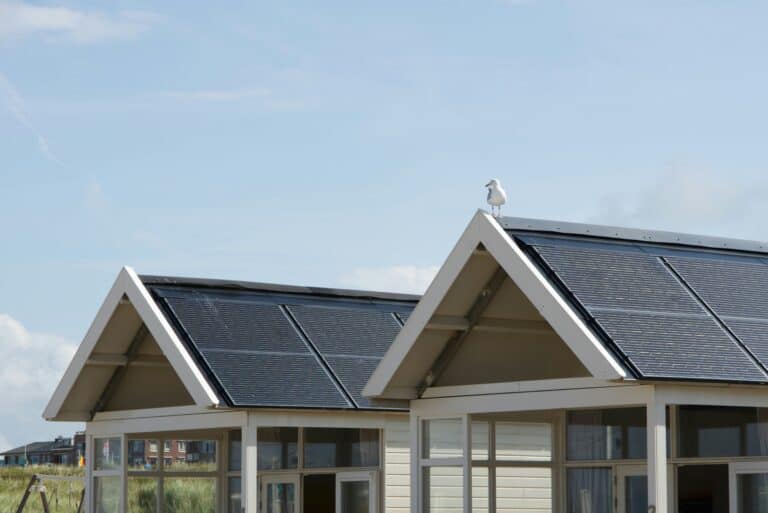

Ground mount solar wins on output and roof safety, while roof mount wins on cost and space. The ground mount vs roof mount solar answer follows two facts: available land and remaining roof life. Open yard plus an old roof points to the ground.
Roof arrays cost less because the structure already exists. Ground arrays cost more, yet they control tilt and which way panels face.
Quick Verdict
A ground mount suits open land, an aging roof, or a hunger for maximum output. A roof mount suits tight lots, sound roofs, and firm construction budgets. Panels perform the same either way, so the mounting location alone decides the final result.
Key Takeaways
- Ground racks choose tilt and bearing freely instead of inheriting the roof angle.
- Roof racks skip footings and trenching, so installed cost drops.
- Roof age matters most, since a reroof means removing the array.
- Ground rows need spacing, because a tilted row shades the row behind.
How We Compared
This comparison weighs mounting location, not brands or hardware. The criteria are energy potential, installed cost, maintenance access, property use, roof risk, and permitting friction. Figures stay out, since site conditions move them.
Ground Mount vs Roof Mount at a Glance
| Criterion | Ground mount | Roof mount |
|---|---|---|
| Energy potential | Higher, tilt is chosen | Fixed by roof planes |
| Installed cost | Higher, footings and trenching | Lower, structure exists |
| Maintenance access | Easy, at standing height | Harder, needs ladders |
| Property consumed | Yard area plus spacing | None beyond roof |
| Roof risk | None, nothing penetrates | Penetrations and reroofing count |
| Wiring run | Longer, voltage drop matters | Short, near the service |
Ground Mount, Pros and Cons
PROS:
- Tilt and bearing suit the site, not the building.
- Open air underneath keeps panels cooler.
- Cleaning and repairs happen from the ground.
CONS:
- Footings, trenching, and long conductor runs add cost.
- Row spacing eats usable yard area.
- Reachable gear makes security and vandalism real concerns.
Best for: open, unshaded land beside an old or awkward roof. Buyers comparing yard racking systems start with soil and frost depth.
Skip it if: the lot is small, the yard is shaded, or the trench route is blocked.
Roof Mount, Pros and Cons
PROS:
- The structure exists, so concrete and excavation drop out.
- Short conductor runs simplify wiring and limit voltage drop.
- Review and approval usually move faster.
CONS:
- Tilt and direction come from the roof, not choice.
- Every attachment point penetrates the weather barrier.
- Service needs ladders, and snow sits until it slides.
Best for: sound roofs with years left and little spare yard. Owners should check capacity first, since racking adds load to the framing.
Skip it if: the roof needs replacement soon or every plane faces wrong.
Which Produces More Energy From the Same Panels?
Ground mount wins here. Tilt and bearing become free choices on a yard rack, so the array points where the site actually favors. A roof array inherits whatever angle and direction the building happens to offer.
Airflow helps as well. Panels sit over open ground with room underneath, so heat sheds faster than on a rack hugging shingles. Cooler cells hold voltage better through hot afternoons.
Roof clutter costs output too. Vents, chimneys, and dormers throw shadows, and partial shade costs more than its size suggests. Ballasted racking can tilt an array on a flat roof, which raises the separate question of whether panels can lie flat.
Which Costs Less to Install?
Roof mount wins on price. The supporting structure already stands, framed and paid for, so racking attaches to existing rafters. A ground array has to build its own structure from nothing.
That means footings or driven piles, plus excavation or concrete. It also means a trench, conduit, and backfill running from the array to the building. None of that work exists on a roof job.
The wire run widens the gap further. Longer DC runs raise voltage drop, so conductors get sized up, and heavier cable costs more per foot. Labor climbs alongside material, which is why owners ask who is qualified to handle the electrical work.
Which Is Easier to Clean and Maintain?
Ground mount wins clearly. Panels, clamps, and connectors sit at standing height, so inspection takes a walk instead of a ladder. Dust rinses off with a garden hose.
Snow behaves better at ground level. A tilted yard array sheds onto open dirt, and leftover drift brushes off from below. Roof snow waits where it lands until it slides.
Ground clearance decides how well this works. Racks set too low collect drifted snow, splashed mud, and leaf litter along the bottom row. Extra height keeps that row out of the debris, though it raises wind load and post height.
Which Uses Less Usable Property?
Roof mount wins, and not narrowly. A roof array occupies square footage that already exists and serves no competing purpose. The yard stays untouched.
A ground array takes land twice over. The panels need a footprint, and the rows need gaps between them. A tilted row throws shade behind itself, so tight packing shades the next row through the low winter sun.
That is why row spacing gets planned before any digging. Steeper tilt and higher latitude both stretch that shadow, so the array claims more ground. Owners short on space sometimes turn to a structure that shades parking instead.
Which Avoids the Roof Risk Entirely?
Ground mount wins by definition, since nothing touches the roof. Every attachment is a hole through the weather barrier, and every sealed hole is a potential leak given enough years. Good flashing manages that risk without erasing it.
Roof age is the hidden variable here. Putting an array on a roof with few years left means paying to strip the system and reinstall it when the roofers arrive. That is the same labor charged twice.
Weight matters as well. Racking and panels load framing sized for a different job, so a structural load check belongs early. A yard array sidesteps all of it.
Which Is Easier to Permit and Approve?
Roof mount usually wins, though this varies by jurisdiction more than anything else here. Roof arrays are the familiar case for building departments, and familiar reviews tend to move faster. Plan sets follow a pattern reviewers already recognize.
Ground arrays can trip extra rules. Some places treat a freestanding array as an accessory structure, which pulls in setbacks, height limits, or lot coverage. Trenching may add its own inspection step.
None of that is universal. Neighboring towns differ, and homeowner association rules stack on top. Confirming the local path with a licensed installer before design starts is the only reliable approach.
Which Fits Your Situation
| If this is you | Better choice |
|---|---|
| Roof needs replacing soon | Ground mount, no double removal |
| Small or fully planted lot | Roof mount, no ground used |
| Every roof plane faces poorly | Ground mount, aiming is yours |
| Budget is the binding limit | Roof mount, no footings or trench |
| Trees shade the house, not the field | Ground mount, past the canopy |
| Property sits empty often | Roof mount, height deters tampering |
How to Choose Between Them
Start with the roof, not the array. A covering with years left and one workable plane settles it overhead.
When the roof fails that test, look at the yard. Open, drained ground with a short cable run suits a yard rack. Security, snow, and permitting settle the close calls.
The Verdict
Ground mount wins output, access, and freedom from roof risk. Roof mount wins installed cost, land use, and permitting speed. The site picks the winner.
Owners with land, an old roof, or awkward geometry build in the yard. A sound roof and firm budget point overhead.
Recommended Reading
Compare this guide to rooftop mounting kits, then review adjustable tilt hardware for low slope roofs. Owners short on yard space should weigh carport and shade structure kits.
Common Misconceptions
A ground mount always makes more power
It wins only when the site cooperates. A yard array under trees loses to a clean south facing roof. Siting decides output.
Ground arrays are safer from damage
Reachable equipment invites tampering, theft, and mower impacts. Fencing and distance from traffic belong in the plan. Height quietly protects a roof array.
Roof penetrations always leak
Correctly flashed attachments hold up for years. The risk is manageable, not inevitable. Timing the array against the next reroof matters more.
Ground Mount vs Roof Mount Solar FAQ
Is ground mount vs roof mount solar mainly a cost decision?
Cost matters, but roof condition usually decides first. An array on a roof near the end of its life creates a removal and reinstall bill later. When the roof is sound and reasonably aimed, cost takes over, and the roof option installs cheaper.
Does a ground mount really run cooler?
Open air under the panels lets heat escape more freely than it does from a rack held close to shingles. Cooler cells hold voltage better, and voltage relates directly to output. The effect stays modest but consistent across a hot season.
How much yard does a ground array need?
More than the panel footprint alone, because rows must be spaced so the front row does not shade the row behind it. Steeper tilt and higher latitude both stretch that winter shadow. Only a site specific layout sizes the area honestly.
Why does a longer wire run matter?
Distance across the yard causes voltage drop, and the usual remedy is heavier conductors. Heavier cable costs more per foot and takes longer to pull. The trench adds excavation and conduit, so these costs erode part of the production advantage a yard array earns.
What happens when the roof under an array needs replacing?
The array comes off, the roof gets replaced, and the array goes back on again. That removal and reinstall labor lands on top of the roofing bill itself. Anyone with a roof near replacement should either reroof first or move the array down.
Do ground mounts handle snow better?
They usually do, since a tilted array sheds onto open ground and leftover snow clears from below. Adequate ground clearance is essential, because a low rack lets drifts bury the bottom row. Roof snow simply waits until it slides off.
Which option is easier to get approved?
Roof arrays are generally the more routine review, since building departments see them constantly. Ground arrays may count as accessory structures, which brings setbacks and height limits into scope. Requirements vary by jurisdiction, so a licensed installer should confirm the local process.