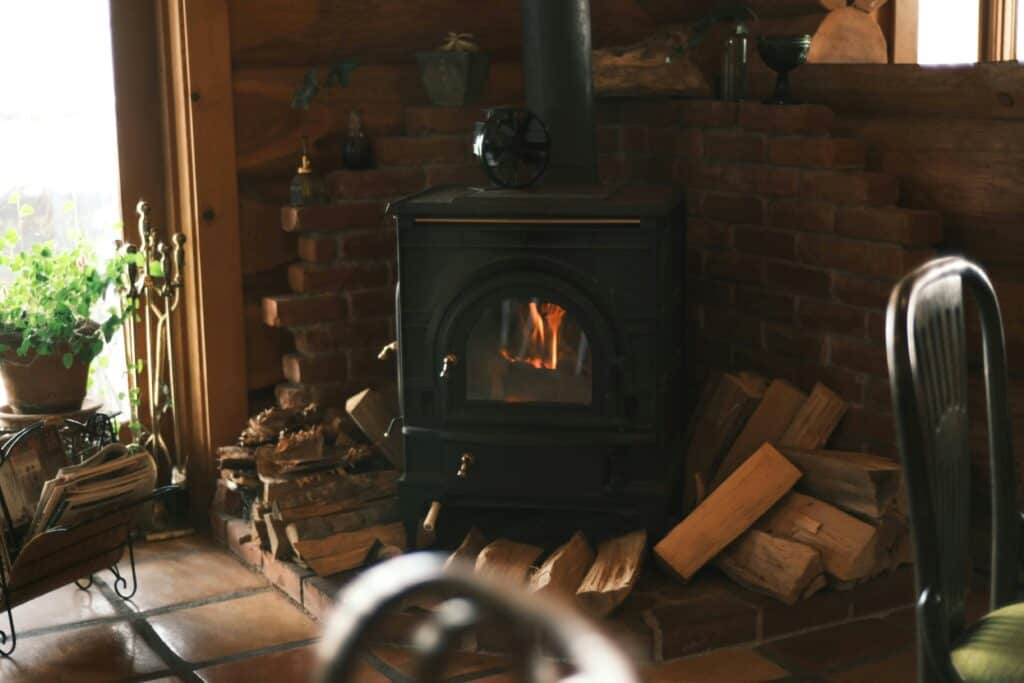
A wood stove works without electricity, which is why it stays the backbone of cabin heating long after every other system needs a battery. The best wood stoves for off-grid cabins split into six types, and the deciding factor is matching output to a small space rather than buying the biggest firebox you can afford. An oversized stove in a small cabin runs smoldering and dirty, which is worse than no stove at all.
Installation decides safety far more than the stove does. Clearances, chimney specification, and floor protection all come from the stove’s own listing and your local code, and both are worth paying an installer to get right.
Heating is where off-grid electrical budgets fall apart. Our guide to diesel heaters covers the fuel-fired alternative that needs a small amount of power.
Quick Verdict
A small steel box stove is the honest default for a one-room cabin, because output matches the space and the price stays low. Cast iron holds heat longer and costs more, cook stoves earn their space if you actually cook on them, and tiny-house stoves exist because most stoves are too big. Pellet stoves need power, and outdoor boilers suit larger properties.
Key Takeaways
- Undersizing is easier to live with than oversizing, because a small stove runs hot and clean.
- Clearances and chimney specification come from the stove’s listing and local code, not from a guide.
- A carbon monoxide alarm belongs in any cabin with a combustion appliance, without exception.
- Cast iron holds heat after the fire dies, and steel heats up faster.
- Catalytic and secondary-burn designs burn cleaner and need more attention.
- Pellet stoves need electricity, which makes them a poor fit for a cabin without reliable power.
How We Picked
We compared stove types rather than individual models, because lineups change while the designs stay stable. Each section covers one type and the cabin it suits.
We ranked types on four things: how well the output matches a small space, how long they hold heat, whether they need electricity, and how demanding the installation is.
We excluded anything sold on firebox size alone, and we have not stated clearances, output ratings, or chimney dimensions, since those are specific to the appliance and to local code.
1. Small Steel Box Stoves
Why It Stands Out
A welded steel box is the simplest stove design there is and the cheapest way to heat a small cabin. Steel heats quickly, so the room warms up soon after you light it.
Simplicity also means fewer parts to fail in a building you visit occasionally. Nothing on it depends on power.
Worth Knowing
Steel cools as fast as it heats, so the cabin goes cold not long after the fire does. Overnight heat is not what this design offers.
Thin plate warps over years of hot fires. Heating rarely belongs on an off-grid electrical budget, which is why a wood stove earns its place.
Best for: One-room cabins, weekend use, and tight budgets. Skip it if you want warmth to last through the night.
2. Cast Iron Stoves
Why It Stands Out
Cast iron absorbs heat slowly and radiates it long after the fire burns down. In a cabin you sleep in, that thermal mass is the difference between waking warm and waking cold.
Cast iron also resists warping and lasts decades, which suits a building you intend to keep.
Worth Knowing
It takes longer to heat the room from cold, so arriving at a freezing cabin means waiting. Weight is the other consideration, since these are heavy to move and set.
Panels are sealed with cement that eventually needs redoing. Anyone leaving a cabin unheated for months should also read our piece on what to do when a cabin sits empty.
Best for: Cabins you sleep in, and cold climates. Skip it for short visits where fast heat matters more.
3. Wood Cook Stoves
Why It Stands Out
A cook stove heats the cabin and gives you a cooking surface and often an oven from the same fire. Off grid, that removes a separate fuel supply for cooking.
Many also include a water jacket option, which puts hot water in the same loop.
Worth Knowing
Cook stoves are large, heavy, and expensive, and they are inefficient as pure heaters. Summer cooking also means heating a cabin you would rather keep cool.
Learning to control oven temperature by fire management takes a season. Our guide to propane appliances covers the alternative most off-grid kitchens actually use.
Best for: Full-time cabins where you cook and heat from one fire. Skip it in a small space or for occasional use.
4. Tiny-House and Marine Stoves
Why It Stands Out
These exist because almost every wood stove is too large for a very small space. Output is scaled down deliberately, so a tiny cabin does not become unbearable.
Many also carry certifications for use in small structures and boats, which matters for insurance and for clearance requirements.
Worth Knowing
Small fireboxes mean short burn times and frequent reloading, often through the night. That is the cost of correct sizing.
Wood has to be cut short to fit, which is more processing per cord. That is the trade for a stove that does not overwhelm the space.
Best for: Very small cabins, tiny houses, and van or boat builds. Skip it if the space is larger than one room.
5. Pellet Stoves
Why It Stands Out
Pellet stoves burn a consistent fuel with a thermostat and an auger, so they behave more like a furnace than a fire. Heat output stays steady without tending.
Pellets also store cleanly in bags rather than as a woodpile, which suits a property with no timber.
Worth Knowing
They need electricity to run the auger and the fan, so a power failure stops the heat. That is a serious problem in exactly the conditions you need heat most.
Pellets also have to be bought and delivered rather than cut. Anyone considering one should size the electrical load first, and our off-grid load list guide covers how.
Best for: Cabins with reliable power and no wood supply. Skip it anywhere power is intermittent.
6. Outdoor Wood Boilers and Furnaces
Why It Stands Out
An outdoor boiler burns wood in a separate building and pipes heated water to the cabin. All the mess, ash, and fire risk stay outside the living space.
Capacity is also far higher, so one unit can heat a cabin, a workshop, and domestic hot water together.
Worth Knowing
These need circulation pumps and therefore power, plus buried insulated lines and far more installation work. The cost is in a different bracket from any indoor stove.
Wood consumption is much higher too. For a small cabin this is heavy overkill, and our comparison of grid-tied versus off-grid solar covers the same over-specification trap on the electrical side.
Best for: Larger properties with multiple buildings and plenty of wood. Skip it for a single small cabin.
Wood Stoves for Off-Grid Cabins at a Glance
| Type | Needs power | Holds heat | Install demand | Best situation |
|---|---|---|---|---|
| Small steel box | No | Poorly | Moderate | One-room, weekend cabins |
| Cast iron | No | Well | Moderate | Cabins you sleep in |
| Wood cook stove | No | Well | High | Full-time cabins |
| Tiny-house and marine | No | Poorly | Moderate | Very small spaces |
| Pellet stove | Yes | Steady while running | Moderate | Reliable power, no wood |
| Outdoor boiler | Yes | Very well | Highest | Multiple buildings |
What to Look For in a Cabin Wood Stove
How small is the space really?
Most cabin heating complaints are about too much heat, not too little. A stove sized for a house makes a one-room cabin unusable and gets damped down, which is how chimneys foul.
Measure the heated volume and the insulation honestly. A well-sealed small cabin needs remarkably little.
What does the listing require for clearances?
Every listed stove specifies minimum clearances to combustibles and an approved floor protection arrangement. Those numbers belong to the appliance, and local code may be stricter.
Heat shields reduce required clearances on some models and not on others. This is the part to get a professional opinion on before anything is built.
What chimney system does it need?
The chimney is usually a larger cost than the stove, and it is what makes the installation safe. Insulated class A pipe, correct height, and correct termination are not optional extras.
Single wall pipe inside and insulated pipe through the structure is the usual arrangement. Our piece on whether solar panels can cause a fire covers the same care applied to the electrical side.
How will you get and store fuel?
A cord of wood is a lot of volume, and it needs a year to season properly under cover. Burning wet wood is the main cause of creosote buildup.
Short fireboxes need short splits, which means more cutting. Factor the labor, not only the wood.
Does the insurer need to know?
Many insurers require notification, a compliant installation, and sometimes an inspection for a solid-fuel appliance. Finding that out afterward is expensive.
Permits often apply as well. Our guide to building inspections for solar covers the same process for the other system.
Wood vs Propane for Cabin Heat
Where wood wins
It needs no electricity, no delivery schedule, and often no purchase if the property has timber. In an outage, it keeps working.
The heat is also generous and the running cost can be close to zero beyond labor.
Where propane wins
Thermostatic control, no ash, no hauling, and no fire to tend at 3am. For a cabin visited in short bursts, that convenience is worth a lot.
Propane also heats water and cooks from the same tank. Our guide to how much solar a cabin needs covers sizing the system around whichever you choose.
Common Cabin Stove Mistakes to Avoid
Buying too much stove
An oversized stove gets run choked down, which smolders, coats the chimney, and creates a fire risk. Correct sizing runs hot and clean.
Burning unseasoned wood
Wet wood gives less heat and far more creosote. A year under cover is the usual minimum.
Skipping the carbon monoxide alarm
Any combustion appliance in an occupied building needs a working CO alarm, and a cabin is no exception. Test it every visit and change the batteries on a schedule.
Improvising the install
Clearances, floor protection, and chimney specification are what keep a stove from burning the cabin down. Have it installed or inspected by someone qualified, and read our piece on whether you can legally live off grid for the wider permitting picture.
Related Reading
- Solar panels for cabins cover the electrical half of an off-grid cabin.
- Winterizing a solar system covers the season a stove exists for.
- What appliances you can run off grid covers why heating rarely makes that list.
Frequently Asked Questions
What are the best wood stoves for off-grid cabins?
A small steel box stove suits most one-room cabins, because the output matches the space and nothing on it needs power. Cast iron is the better choice where you sleep, since it holds heat after the fire dies down, and tiny-house models exist for spaces too small for either.
What size wood stove does a small cabin need?
Smaller than most people buy. Sizing depends on heated volume, insulation, and climate, so work from the manufacturer’s guidance for the specific stove rather than a rule of thumb, and err toward the smaller option.
Do wood stoves work without electricity?
Yes, which is the main reason they suit off-grid cabins. Pellet stoves are the exception, since they rely on an electric auger and fan and stop working in an outage.
How far does a wood stove need to be from a wall?
That distance comes from the specific stove’s listing and from local code, and it varies widely between models and with heat shields fitted. Never work from a general figure, since this is the requirement that keeps a cabin from catching fire.
Do you need a permit for a wood stove in a cabin?
Often, and many insurers also require notification and a compliant installation. Check with your local authority and your insurer before buying rather than after installing.
Is cast iron better than steel for a wood stove?
Cast iron holds heat longer and lasts longer, while steel heats the room faster from cold and costs less. Which is better depends on whether you sleep in the cabin or visit it for a few hours.
Can you cook on a regular wood stove?
On the top of many of them, yes, though control is rough compared with a purpose-built cook stove. A cook stove adds an oven and a proper cooking surface, at the cost of size and price.
How often does a cabin chimney need cleaning?
It depends on how much you burn and how dry the wood is, so inspect it regularly rather than working to a fixed interval. Creosote builds fastest with wet wood and with a stove run choked down.