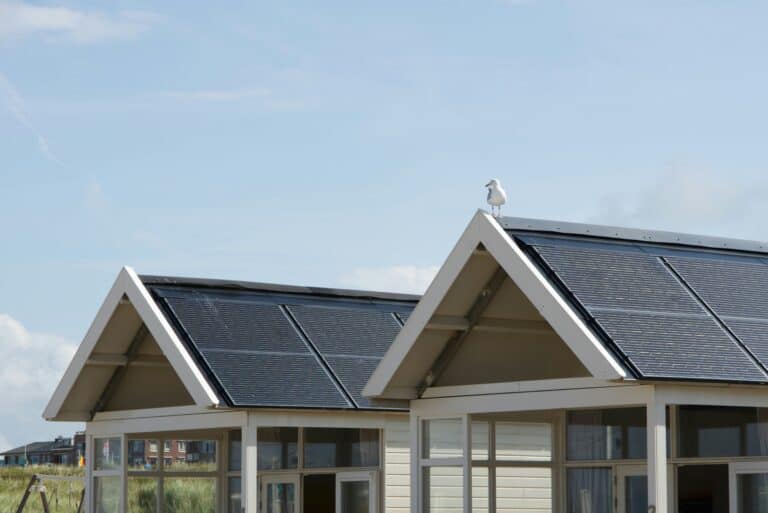

An off-grid system left alone for months faces a different problem than one in daily use. Nothing is drawing power, the panels keep generating, and the batteries sit at whatever state you left them in through whatever the weather does.
Three approaches cover almost every situation: leave it running and let the controller float the bank, disconnect the loads but keep charging, or remove the batteries entirely. Which one suits depends mostly on chemistry and climate. Our roundup of solar panels for cabins covers the system itself.
Quick Answer
In a mild climate, leave it running with loads disconnected and let the controller maintain the bank. Where it freezes hard, lithium batteries generally come out and go somewhere warmer.
Three Approaches Compared
| Approach | Best for | Watch out for |
|---|---|---|
| Leave everything running | Short absences, mild climate | Phantom loads drain the bank |
| Loads off, charging on | Most seasonal cabins | Nothing consumes the surplus |
| Fully disconnected | Long absences, any climate | Batteries self-discharge unattended |
| Batteries removed | Hard freeze, lithium banks | Labor, and where to store them |
| Partial state of charge storage | Lithium specifically | Needs setting before you leave |
| Remote monitoring left on | Anyone who wants to know | Small continuous draw |
Phantom Loads Are the Usual Culprit
A cabin with nothing switched on still draws power, and that draw is what empties a bank over a long absence.
Inverters consume power simply being energized, whether or not anything is plugged in, and that idle draw runs 24 hours a day for however long you are away.
Anything with a standby light, a clock, or a remote receiver is doing the same on a smaller scale, and a propane detector or an alarm draws continuously by design.
Over a weekend that is irrelevant. Over four months it can take a full bank to zero, and a lead acid bank sitting at zero for weeks is generally not recoverable.
Switching the inverter off rather than leaving it idle is the single largest saving available, and it costs nothing. Our roundup of power inverters covers idle consumption.
Leaving It Running With Loads Off
The controller keeps the bank topped
Float charging maintains the batteries without overcharging them.
Nothing consumes the surplus
Which is fine, since the controller simply throttles back.
It suits mild climates
Where the bank never approaches freezing temperatures.
Check the settings before leaving
A controller on the wrong chemistry profile does damage over months. Our roundup of charge controllers covers profiles.
Chemistry Decides the Right Answer
Lead acid batteries want to be stored full, because a partially charged lead acid battery sulfates and loses capacity permanently.
Leaving lead acid connected to a working solar system is therefore usually correct, since the controller holds it at float and prevents exactly that.
Lithium iron phosphate behaves the opposite way. Long-term storage at full charge accelerates degradation, and most manufacturers recommend storing at a partial state of charge rather than at 100 percent.
That creates a conflict, because a connected solar system will keep a lithium bank full all winter, which is the wrong storage state for it.
Some lithium batteries with Bluetooth allow a storage mode that holds a lower state of charge, and where that exists it is the cleanest solution. Our note on LiFePO4 versus lead acid covers the difference.
Freezing Is the Deciding Factor
Lithium batteries must not be charged below freezing, and most have a battery management system that blocks charging when cell temperature drops too low.
That protection works, and it means a lithium bank in an unheated cabin simply stops accepting charge for the coldest months.
The risk is a system where the BMS is absent or misconfigured, since charging lithium below freezing causes permanent internal damage rather than a temporary problem.
Lead acid tolerates cold far better when full, and a fully charged lead acid battery resists freezing to well below zero. A discharged one freezes near the temperature water does and can crack the case.
That is the strongest argument for leaving lead acid connected and charging through the winter rather than disconnecting it. Our note on winterizing a solar system covers the wider process.
Removing the Batteries
Pulling the bank and storing it somewhere heated removes the temperature problem entirely, and for lithium in a hard-freeze climate it is frequently the recommended approach.
Batteries in storage still self-discharge slowly, so a lithium bank stored at partial charge in autumn will be lower by spring, and a check partway through is worth doing.
Lead acid self-discharges considerably faster than lithium and generally needs periodic topping up during storage, which means access to a charger.
Weight is the practical obstacle. A large bank is a serious lift and moving it twice a year gets old quickly.
For a cabin visited once or twice over the winter anyway, removing the batteries on the last trip and returning them on the first is less disruptive than it sounds. Our roundup of LiFePO4 batteries covers what you would be carrying.
Panels Left Unattended
Panels themselves need very little. They tolerate weather by design and a season of snow and ice does them no harm.
Snow accumulation blocks generation until it slides or melts, which matters only if something still needs charging.
Where panels are ground mounted, wind loading over a winter is worth checking before you leave rather than discovering in spring.
Disconnecting panels from the controller is unnecessary in most setups and adds a step to reconnect, though it is sensible if the system is being fully shut down.
Tilting panels steeper for winter helps snow shed and improves the low sun angle, which is worth doing on the last visit if the mounts allow it. Our roundup of tilt mounts covers adjustable racking.
Remote Monitoring Is Worth the Draw
Knowing the state of your bank from home turns a guess into information, and the cost is a small continuous draw.
Bluetooth monitoring only works within range, which is useless for a cabin you are not at. Cellular or wifi monitoring is what actually reports remotely, and that requires connectivity at the site.
Where no connectivity exists, a battery monitor with a display at least gives you a reading on arrival rather than requiring a multimeter.
The value is catching a problem in February rather than discovering a dead bank in May, when the fix is a new bank rather than a visit. Our roundup of battery monitors covers the options.
Before You Leave
Switch the inverter off
Idle draw over months is what empties banks.
Confirm the charge profile
Wrong chemistry setting does slow damage unattended.
Set lithium to storage charge if possible
Full charge all winter is the wrong state for it.
Record the state you left it in
So spring readings mean something.
Chemistry drives most of these decisions, and knowing which bank you have is the starting point for all of it. Our note on choosing a solar battery covers the differences that matter here.
Common Mistakes to Avoid
Leaving the inverter energized
Continuous idle draw with nothing generating in winter empties a bank.
Storing lead acid partially charged
Sulfation is permanent, and a discharged lead acid battery can freeze and crack.
Leaving lithium at full charge all winter
Most manufacturers recommend partial state of charge for long storage.
Assuming the BMS handles everything
It blocks charging below freezing, and it does not manage storage state for you.
Recommended Reading
See our note on how many batteries you need off grid, our roundup of solar disconnect switches, our note on whether you need a battery monitor, and a roundup of propane appliances.
Cabin Solar Storage FAQ
Should I leave my cabin solar system running?
In a mild climate, yes, with loads disconnected so the controller maintains the bank. Where it freezes hard, the answer depends on battery chemistry.
What drains the batteries when nobody is there?
Phantom loads, and the inverter is usually the largest. It draws power being energized whether or not anything is plugged in, 24 hours a day.
Lead acid or lithium, does it change the answer?
Considerably. Lead acid wants to be stored full, so leaving it charging is right. Lithium degrades faster at full charge, so partial state of charge is preferred.
Can lithium batteries freeze?
They must not be charged below freezing, and most have a management system that blocks it. Discharging in cold is less damaging than charging.
Should I remove the batteries?
For lithium in a hard-freeze climate, frequently yes. Weight is the obstacle, and a bank stored warm avoids the temperature problem entirely.
Do the panels need anything?
Very little. They tolerate weather by design. Tilting steeper for winter helps snow shed and improves the low sun angle if the mounts allow it.
How do I check on it remotely?
Cellular or wifi monitoring, which needs connectivity at the site. Bluetooth only works within range, so it tells you nothing from home.
What is the single most important step?
Switching the inverter off. Idle draw across months with little winter generation is what takes a healthy bank to zero.