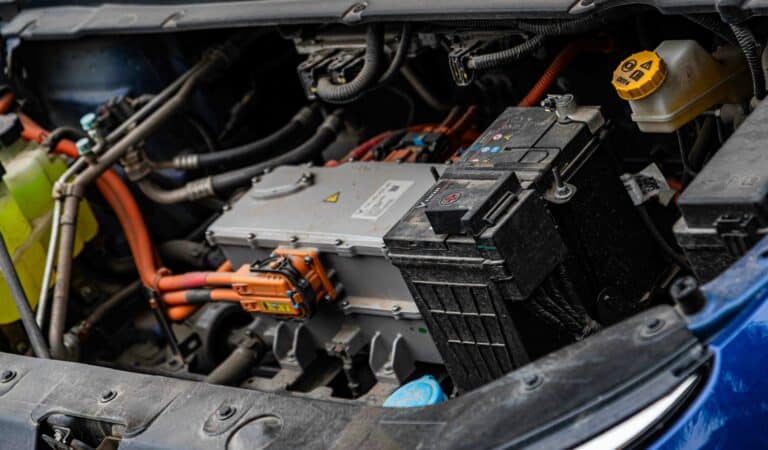

A DC-to-DC charger sits between your vehicle alternator and your house battery, taking whatever voltage the alternator produces and delivering a proper multi-stage charge instead. Without one, a lithium house bank either refuses the charge or pulls hard enough to stress the alternator.
Solar and alternator charging solve different problems on an RV. Panels work when parked in sun, and the alternator works when driving in any weather, and a DC-to-DC charger is what makes the second one usable alongside a modern battery bank.
Quick Verdict
Match amperage to your alternator rather than your battery bank. Twenty to thirty amps suits most factory alternators, and fifty amps needs an upgraded one. Choose a model with a lithium profile if your house bank is LiFePO4, and confirm it handles smart alternators before buying for a newer vehicle. Whether you need one at all depends on chemistry and alternator type, which our guide walks through.
Key Takeaways
- Alternator size limits charger amperage, not battery capacity
- LiFePO4 banks need a charger with a lithium profile
- Smart alternators need a charger that handles variable voltage
- Many units combine solar input and alternator charging
- Cable gauge matters as much as the charger rating
- An isolator is not the same thing as a DC-to-DC charger
How We Picked
Charge profile support came first. A charger without a lithium setting undercharges a LiFePO4 bank and shortens its usable capacity.
Alternator compatibility ranked next. Smart alternators vary their output voltage to save fuel, and older chargers read that as a fault and stop.
Combined solar input mattered because RVs almost always run both sources. A unit handling panels and alternator saves a separate controller and a second set of cabling.
We excluded battery isolators and voltage-sensitive relays from the main list. Those connect two batteries together and do not regulate the charge, which is a different job.
Twenty to Thirty Amp Chargers
Why It Stands Out
This range suits most factory alternators without upgrading anything. A standard vehicle alternator has its own loads to serve, and pulling thirty amps continuously for a house bank sits inside what most handle.
It also covers a realistic charge rate for a hundred to two hundred amp-hour bank during a few hours of driving.
Worth Knowing
Charging a large bank from empty takes many hours at this rate. That suits topping up rather than a full recharge.
Alternator output drops at idle, so a charger rated at thirty amps delivers less when the engine is not turning over.
Best for standard vehicles with moderate battery banks. Skip if you need a full recharge during a short drive.
Forty to Sixty Amp Chargers
Why It Stands Out
Higher amperage refills a large bank in a realistic driving day, which matters for anyone moving often and relying on the alternator as a primary source.
These usually include more sophisticated temperature compensation, since sustained high current generates heat in both the unit and the cabling.
Worth Knowing
Factory alternators are frequently not rated for this. Drawing fifty amps continuously on top of vehicle loads can overheat one, which is an expensive failure.
Cable gauge has to match. Undersized wiring at this current loses voltage and generates heat, and the charger cannot compensate.
Best for upgraded alternators and large lithium banks. Skip on a standard vehicle without checking the alternator rating first.
Combined Solar and Alternator Units
Why It Stands Out
One box handling both MPPT solar input and alternator charging removes a separate controller, a second set of cabling, and a decision about which source has priority.
Most also manage the handover automatically, drawing from the alternator while driving and from panels when parked.
Worth Knowing
The solar side is often a modest MPPT controller rather than a full-featured one. A large array may outgrow it.
A combined unit is a single point of failure. Separate components can be replaced individually.
Best for typical RV installations with a moderate panel array. Skip for large arrays, where a dedicated controller does more, and options sit in solar charge controllers.
Smart Alternator Compatible Chargers
Why It Stands Out
Vehicles from roughly the last decade often use variable-voltage alternators that reduce output under load to save fuel. A charger built for that reads the variation as normal rather than as a fault.
Many also offer an ignition trigger input, which starts charging only when the engine runs rather than guessing from voltage.
Worth Knowing
Working out whether your vehicle has a smart alternator is not always straightforward. Manufacturer documentation is the reliable source.
Ignition-triggered wiring means running an extra wire from the vehicle side, which adds installation complexity.
Best for vehicles built in the last ten years. Skip standard chargers entirely if your alternator is variable-voltage.
Heavy-Gauge Battery Cable Kits
Why It Stands Out
Voltage drop across an undersized run costs you charge current, and RV installations often place the house bank a long way from the alternator.
Prepared kits with correctly sized lugs remove the guesswork on gauge and terminal fit.
Worth Knowing
Gauge requirements scale with both current and distance. A run twice as long needs heavier cable for the same amperage.
Fusing at both ends is standard practice for a cable running between two batteries, and kits do not always include it.
Best alongside any DC-to-DC charger install. Skip undersized kits sold on price, and options sit in battery cables and lugs.
Battery Monitors for Charge Verification
Why It Stands Out
A DC-to-DC charger tells you it is working, and a shunt-based monitor tells you what the battery actually received. Those numbers differ when cabling or the alternator limits things.
Monitoring also shows whether a drive is delivering a useful charge or barely covering the fridge.
Worth Knowing
Shunt installation requires all negative current to pass through the shunt, which means rewiring the negative side rather than adding a device.
Bluetooth models are easier to read and depend on a phone, which is a consideration on a system you check daily.
Best for anyone relying on alternator charging rather than treating it as a bonus. Skip voltage-only meters, which tell you little on lithium, and options sit in battery monitors.
DC-to-DC Chargers at a Glance
| Amperage | Alternator needed | Suits bank size | Full charge time |
|---|---|---|---|
| 20A | Standard factory | Up to 100Ah | Long |
| 30A | Standard factory | 100 to 200Ah | Moderate |
| 40A | Check rating | 200 to 300Ah | Moderate |
| 50A and up | Upgraded | 300Ah and up | Short |
| Combined solar unit | Varies | Depends on model | Depends on both sources |
What to Look For in a DC-to-DC Charger
Start with the alternator rating
Amperage is limited by what the alternator can supply on top of vehicle loads, not by how much battery you have. Overdrawing is how alternators fail.
Confirm the battery chemistry profile
LiFePO4 needs a different voltage curve from lead acid. A charger without a lithium setting leaves capacity on the table permanently.
Check smart alternator support
Newer vehicles vary alternator voltage deliberately. A charger that treats that as a fault stops charging exactly when you need it.
Size the cable for the run
Distance and current together determine gauge. A charger rated at forty amps delivers less through cable sized for twenty.
Where Alternator Charging Fits Alongside Solar
The two sources complement each other rather than competing, and understanding when each delivers explains why most serious RV setups run both.
Solar produces when parked in sun, which is most of the time for anyone staying put. It delivers steadily across a day and produces nothing after dark or under heavy cloud.
The alternator produces when driving, in any weather, at night, and in winter. For anyone moving between sites every few days, that covers exactly the conditions solar handles worst.
Travel style decides which carries more weight. Someone parked for a week at a time leans on panels, and someone driving daily gets more from the alternator, and the setup that copes with both is the one that does not strand you.
Shore power is the third input where available, and inverter chargers handle that side, covered in RV inverter chargers.
DC-to-DC Charger Against a Battery Isolator
DC-to-DC charger
Regulates voltage and applies a proper multi-stage charge, which is what lithium banks require. It also protects the alternator by limiting current draw.
Battery isolator
Connects the two batteries when the engine runs and does no regulation. Adequate for lead acid, and it undercharges lithium and lets the bank pull whatever it wants from the alternator. Options sit in battery isolators.
What Trips People Up
Sizing to the battery bank
A large bank does not justify a large charger if the alternator cannot supply it. The alternator is the constraint.
Assuming an isolator is enough
Isolators worked fine with lead acid. A lithium bank needs regulated multi-stage charging, which an isolator does not provide.
Undersizing the cable
Voltage drop across a long thin run costs current the charger is trying to deliver. The rating on the box assumes correct cabling.
Expecting a full recharge from a short drive
Even at forty amps, refilling a depleted three hundred amp-hour bank takes hours of driving. Charging expectations sit in how long it takes to charge a solar battery.
Recommended Reading
- RV solar panels
- RV inverter chargers
- choosing a battery bank
- chemistry differences
- cabling and lugs
- sizing the system
Related: solar vent fans for rv roofs.
Frequently Asked Questions
What does a DC-to-DC charger do?
It takes voltage from a vehicle alternator and delivers a regulated multi-stage charge to a house battery. That protects the alternator from excessive draw and charges lithium banks properly.
Do I need one for a lithium house battery?
In practice yes. LiFePO4 banks accept charge aggressively, which can overload an alternator, and they need a specific voltage curve that a simple connection does not provide.
What amperage should I choose?
Match it to your alternator rather than your battery bank. Twenty to thirty amps suits most factory alternators, and fifty amps generally requires an upgraded one.
Is a battery isolator the same thing?
No. An isolator connects two batteries when the engine runs without regulating anything. That worked with lead acid and undercharges lithium while leaving the alternator unprotected.
What is a smart alternator?
One that varies output voltage to reduce engine load and save fuel, common on vehicles from the last decade. Chargers not built for it can read the variation as a fault and stop.
Can one unit handle solar and alternator charging?
Many do, combining an MPPT controller with DC-to-DC charging. The solar side is often modest, so a large array may still warrant a dedicated controller.
Why is cable gauge so important?
Voltage drop across a long or thin run reduces the current that reaches the battery. A charger rated at forty amps cannot deliver that through cable sized for twenty.