
A job-site power station has different demands than a camping unit or a home backup setup. The best portable power stations for construction sites need to run high-draw corded tools (circular saws, miter saws, table saws) without tripping the inverter, survive being dropped off a truck bed, and recharge fast enough to be useful on a long workday. Five Amazon picks below with 2,000Wh-plus capacity, surge ratings that handle real tool startup loads, and the build quality that actually holds up to job-site use.
Quick Verdict:
- Best for contractors running corded tools where no grid power is available: a 3,000Wh-plus LFP station with 3,000W continuous AC output runs most jobsite tools through a full workday on one charge.
- Who should skip this: contractors with reliable grid access and a small generator; for occasional use, a $400 inverter generator costs less and burns gasoline only when needed.
Why Job-Site Power Stations Are a Different Spec
A camping power station prioritizes weight, multiple output ports, and quiet operation. A job-site station prioritizes raw AC output, surge capacity, and durability.
The differences show up in spec sheets if you know what to look for. A 1,500W continuous inverter handles a CPAP and a fridge, but trips when you start a circular saw.
A 3,000W inverter with 6,000W surge handles the same circular saw without flinching. Same total energy capacity, different application.
Build quality matters more on job sites than anywhere else. Concrete dust, drywall mud, occasional rain, and the inevitable drop from a tailgate add up over years of use.
The five picks below cover the capacity and durability tiers contractors actually need. Premium high-output benchmark, modular expandable, mid-tier value, warranty-backed durability, and contractor-brand integration.
What to Look for in a Job-Site Power Station
Continuous AC Output Sized to Your Tools
Add up the running watts of the tools you’ll use simultaneously. A typical circular saw draws 1,200-1,500W; a miter saw draws 1,500-2,000W; a table saw can hit 2,500W.
For single-tool use, 2,000W continuous is enough. For multi-tool setups (saw plus shop vac plus radio), 3,000W or higher is the right target.
Surge Rating That Handles Tool Startup
The tool startup current is 3-7x the running current for short bursts. A 1,500W saw can demand 4,500-7,000W during startup; the station’s surge rating needs to cover that, or the inverter shuts down.
Look for stations with 2x or higher surge rating compared to continuous output. 3,000W continuous with 6,000W surge is the safer spec than 3,000W continuous with 3,600W surge.
LFP Chemistry for Daily Use
Job-site stations get heavy daily use, which makes battery chemistry critical. LFP (lithium iron phosphate) lasts 3,000-6,000 cycles compared to 800-1,500 for NMC.
For a contractor using the station daily, that’s the difference between 8-15 years of life and 2-4 years. The price premium for LFP pays back fast in this use case.
Fast Recharge for Mid-Day Top-up
The station needs to recharge fast enough to be useful during lunch or between trips back to the truck. 80% recharge in 1-2 hours from wall power is the realistic target.
Solar input matters too, especially for off-grid job sites. 500W or higher solar input lets a few panels keep the station topped up through the workday.
Build Quality and IP Rating
True IP-rated job-site stations are rare; most consumer power stations don’t carry IP ratings. Look for reinforced corners, robust handles, recessed displays, and chassis materials that survive being dropped.
Anker, EcoFlow, and Bluetti have improved construction quality meaningfully in recent generations. Generic stations often fail mechanically before the battery degrades.
1. EcoFlow Delta Pro, Best Premium Job-Site Station
Best premium contractor station | Price: ~$2,800
The EcoFlow Delta Pro is the contractor benchmark. 3,600Wh LFP capacity, 3,600W continuous AC output, 7,200W surge via X-Boost mode, and a chassis built around two heavy-duty wheel housings and a pull-handle that actually survives daily transport.
The 3,000W class of tools runs comfortably on this unit. Multi-tool setups (table saw plus shop vac plus radio) stay within the continuous AC rating without tripping the inverter.
The 1,800W max solar input recharges the unit in 3-4 hours of direct sun, which is realistic for desert job-site conditions. Wall recharge hits 80% in 1.7 hours.
Key Features
- 3,600Wh LFP battery (3,500+ cycles)
- 3,600W continuous AC, 7,200W surge with X-Boost
- 1,800W max solar input
- Wheels and pull-handle for transport
- Expandable to 25kWh with additional batteries
PROS:
- Strongest continuous AC output in this list
- Wheeled chassis for one-person transport
- Expandable capacity for longer projects
- Strong solar input ceiling
CONS:
- Premium pricing
- Heavy at 99 lbs
- X-Boost reduces voltage during surge events
- App requires account creation
Best for: contractors who need premium output and capacity for multi-tool job sites without grid access.
2. Bluetti AC300 + B300, Best Modular Pick
Best modular contractor station | Price: ~$3,000 (with one B300 battery)
The Bluetti AC300 separates the inverter from the battery, which is unusual in the consumer power station category. The AC300 is the inverter chassis; the B300 is a 3,072Wh battery module.
This modularity is the differentiator. Buy more B300 batteries to extend capacity (up to 12,288Wh with four batteries) without replacing the inverter.
The 3,000W continuous AC output handles most job-site tool combinations. The 6,000W surge rating covers tool startup events.
Key Features
- 3,072Wh LFP battery in B300 module (3,500+ cycles)
- 3,000W continuous AC, 6,000W surge
- Modular: add up to 4 B300 batteries
- 2,400W max solar input
- UPS mode for sensitive equipment
PROS:
- Modular expansion for longer projects
- UPS mode protects job-site electronics
- Strong solar input rating
- Inverter and battery upgrades are possible separately
CONS:
- Two-piece system adds setup complexity
- Premium pricing for full bundle
- Heavier total weight than integrated alternatives
- Bluetti app is less refined than EcoFlow’s
Best for: contractors planning to expand capacity over time as project scale grows.
3. Jackery Explorer 2000 Plus, Best Mid-Tier Pick
Best mid-tier contractor station | Price: ~$1,600
The Jackery Explorer 2000 Plus drops the price below $2,000 while keeping the spec sheet contractor-relevant. 2,042Wh LFP capacity, 3,000W continuous AC, 6,000W surge, and built-in wheels with pull handle.
The capacity is smaller than the EcoFlow Delta Pro, but the continuous AC output matches. For contractors who don’t need full-day capacity at multi-tool load, this hits the right balance.
Jackery’s brand backing and customer support track record are reliable. The unit is meaningfully less expensive than the premium tier without sacrificing the build quality that matters on a job site.
Key Features
- 2,042Wh LFP battery (4,000+ cycles)
- 3,000W continuous AC, 6,000W surge
- 1,400W max solar input
- Wheeled chassis with pull handle
- Expandable to 12,288Wh with add-on batteries
PROS:
- Strongest continuous AC for the price tier
- Wheels and pull handle for one-person transport
- Expandable capacity for growing project demands
- Jackery’s customer service reliability
CONS:
- Lower capacity than the premium tier
- Smaller surge headroom for the heaviest tools
- Expansion batteries push cost toward the premium tier
- App requires account creation
Best for: contractors running mid-scale job sites where a 2,000Wh single-tool capacity is enough for a workday.
4. Anker SOLIX F2000, Best Warranty-Backed Pick
Best warranty-backed contractor station | Price: ~$1,400
The Anker SOLIX F2000 carries the longest warranty in this list at 5 years, which matters for a unit that will see daily abuse on a job site. 2,048Wh LFP capacity, 2,400W continuous AC with SurgePad mode handling up to 3,200W briefly.
The build quality is genuinely better than budget alternatives. Recessed display, robust corner protection, reinforced handle, and an internal chassis that protects the inverter components from drop damage.
The trade-off is the lower surge rating than the EcoFlow or Bluetti. SurgePad handles tool startup events, but the rated headroom is smaller; heavy multi-tool setups need a station with higher surge capacity.
Key Features
- 2,048Wh LFP battery (3,000+ cycles)
- 2,400W continuous AC, 3,600W surge, SurgePad up to 3,200W
- 1,000W max solar input
- 5-year warranty (longest in this list)
- HyperFlash wall recharge under 90 minutes
PROS:
- Best-in-class 5-year warranty
- Strong build quality
- Fast wall recharge
- Anker’s customer service track record
CONS:
- Lower surge rating than competitors
- 2,400W continuous limits heavy multi-tool use
- App requires account creation
- Premium accessories increase cost
Best for: contractors prioritizing long-term warranty backing for daily-use durability.
5. DeWalt PowerStack Portable Power Station, Best Contractor-Brand Pick
Best contractor-brand power station | Price: ~$1,200
DeWalt’s PowerStack power station integrates with the broader DeWalt tool ecosystem. The chassis matches the brand’s yellow-and-black aesthetic and uses the same rugged construction standards as their tools.
For contractors already in the DeWalt ecosystem, the integration matters. Same battery platform compatibility with some DeWalt outdoor power equipment, same warranty processes, and the same brand-recognized durability standards.
The trade-off is the lower capacity (around 1,800Wh on the larger PowerStack station) compared to dedicated power station brands. For single-tool job sites, the DeWalt provides enough capacity; for multi-tool setups, it’s tight.
Key Features
- 1,800Wh capacity (varies by model)
- 1,800W continuous AC
- Compatible with select DeWalt tool batteries
- Reinforced contractor-grade chassis
- DeWalt warranty backing
PROS:
- DeWalt brand integration and parts availability
- Contractor-grade chassis construction
- Familiar warranty process for DeWalt users
- Genuine job-site aesthetic
CONS:
- Lower capacity than dedicated power station brands
- Lower continuous AC output (1,800W)
- Premium pricing for the capacity tier
- Smaller solar input ceiling than dedicated power stations
Best for: contractors already in the DeWalt ecosystem who want brand consistency across their job-site equipment.
Which Job-Site Power Station Fits Your Setup
| Your situation | EcoFlow Delta Pro | Bluetti AC300+B300 | Jackery 2000 Plus | Anker SOLIX F2000 | DeWalt PowerStack |
|---|---|---|---|---|---|
| Multi-tool job site (saw + vac + radio simultaneously) | Best fit, 3,600W handles it | Best fit, 3,000W handles most | Workable, at capacity limit | Skip, 2,400W under-rated | Skip, 1,800W under-rated |
| Single high-draw tool (table saw or chop saw) | Best fit, overkill but capable | Best fit, capacity matches | Best fit, capacity matches | Workable, at surge limit | Workable, at continuous limit |
| Full workday on single charge | Best fit, capacity covers it | Best fit, capacity covers it | Workable, depends on tool use | Workable, depends on tool use | Skip, capacity too small |
| Daily use (5+ days/week heavy load) | Best fit, LFP for daily duty | Best fit, LFP for daily duty | Best fit, LFP for daily duty | Best fit, LFP plus warranty | Workable, chassis built for it |
| Off-grid solar recharge during workday | Best fit, 1,800W solar input | Best fit, 2,400W solar input | Workable, 1,400W solar input | Workable, 1,000W solar input | Skip, solar input limited |
| Restless or anxious about equipment downtime | Best fit, capacity buffer | Best fit, expandable | Workable, depends on backup | Best fit, warranty backing | Workable, brand reliability |
| Already in DeWalt tool ecosystem | Workable, different brand | Workable, different brand | Workable, different brand | Workable, different brand | Best fit, ecosystem integration |
| Tight budget, occasional job-site use | Skip, premium tier | Skip, premium tier | Best fit, mid-tier value | Best fit, mid-tier with warranty | Workable, depends on capacity needs |
Prices above are estimates and shift with sales and seasonal promotions.
How to Match the Right Power Station to Your Job-Site Use Case
Start with the tools you actually use simultaneously. List the running watts of each, sum them, and add 25% headroom for surge events.
A circular saw, a shop vac plus a radio total about 1,800-2,200W running. With surge headroom, you need a 2,500W-plus continuous inverter; 3,000W gives you a comfortable margin.
Match capacity to workday duration. A typical contractor running tools intermittently for 8 hours uses 1,500-2,500Wh of energy.
For a full day of intermittent use, 2,000Wh of capacity covers it; for sustained tool use or multi-day jobs, 3,000Wh or higher with solar recharge is the right target.
Consider transport. A 99-lb wheeled station moves easily from truck to site; a 60-lb non-wheeled station requires lifting and is awkward over rough ground.
For frequent transport, wheels and a pull handle matter more than spec sheets suggest. Solar input matters if you work off-grid.
The order I’d recommend for most contractors: EcoFlow Delta Pro for premium high-capacity setups, Bluetti AC300+B300 for contractors planning capacity expansion over time, Jackery Explorer 2000 Plus for mid-scale daily use, Anker SOLIX F2000 for warranty-prioritized buyers, DeWalt PowerStack for DeWalt-ecosystem contractors wanting brand consistency.
For broader off-grid planning, see our roundup of the best portable power stations for power outages and the best solar panels for portable power stations to pair with your job-site setup.
Frequently Asked Questions
Can a power station run a circular saw or table saw?
Yes, the picks in this list all handle a single circular saw or compact table saw. Running watts of 1,200-1,500W plus surge events stay within these stations’ inverter ratings.
Heavy industrial table saws drawing 2,500W or more push the limits of consumer power stations. Check the saw’s nameplate rating against the station’s continuous AC output before buying.
How long does a power station last running tools?
Depends on the tool and the station capacity. A 2,000Wh station running a 1,500W saw at full load lasts about 60-75 minutes of continuous cutting.
Most contractors’ use is intermittent (15-30 minutes of actual saw time across an 8-hour day). For intermittent use, a 2,000Wh station typically covers a full workday.
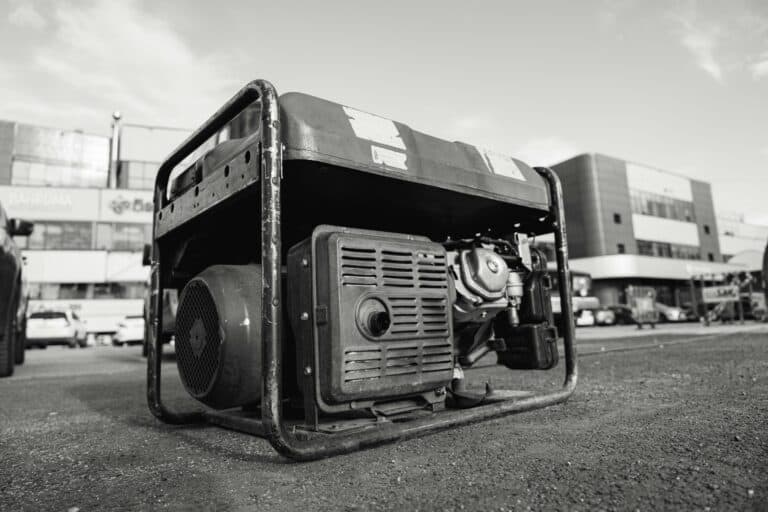
Are gas generators better for job sites than power stations?
For sustained heavy load over multiple days, yes. A gas generator with refuel access can run indefinitely; a power station is limited to its battery capacity.
For most short-term job sites, indoor work (where exhaust is a problem) or sites with neighbor noise concerns, power stations are the better choice. Many contractors use both depending on the job.
Can I charge a power station from my truck while driving?
Yes, with limitations. Most stations support 12V car port charging at 100-200W input, which is slow but works during long drives.
Faster vehicle charging requires either an inverter (running 110V AC to the station’s standard input) or specialized 12V high-amp adapters. For meaningful in-vehicle recharging, expect 4-8 hours of driving.
Are power stations safe to use indoors?
Yes, with proper ventilation. Power stations produce no exhaust gases (unlike gas generators) and can be used inside homes, garages, or enclosed job sites safely.
Heat from the inverter is the consideration; under heavy load, the unit gets warm and needs airflow around the vents. Don’t enclose it in a tight cabinet during heavy use.
How much solar do I need to recharge daily?
For a 2,000Wh station, plan on 400-600W of solar panels for full daily recharge in good sun conditions. A 3,000Wh station needs 600-800W of panels.
Real-world solar production is 60-75% of rated panel wattage due to angle, temperature, and atmospheric conditions. Add panel headroom above the calculation for reliable recharge.
What’s the difference between LFP and NMC chemistry?
LFP (lithium iron phosphate) lasts 3,000-6,000 cycles, tolerates heat better, and is the right choice for daily job-site use. NMC (nickel manganese cobalt) is lighter and has higher energy density, but lasts only 800-1,500 cycles.
For occasional weekend use, NMC works fine. For daily contractor use, LFP is the only practical choice.
Can I use one power station for both the job site and home backup?
Yes, that’s actually a common contractor use case. A 2,000Wh+ LFP station with strong continuous AC output handles both tool loads on the job site and essential household loads during a power outage.
This dual-use justification helps the budget math for buying a higher-quality station; you’re getting two use cases from one purchase.
Recommended Reading