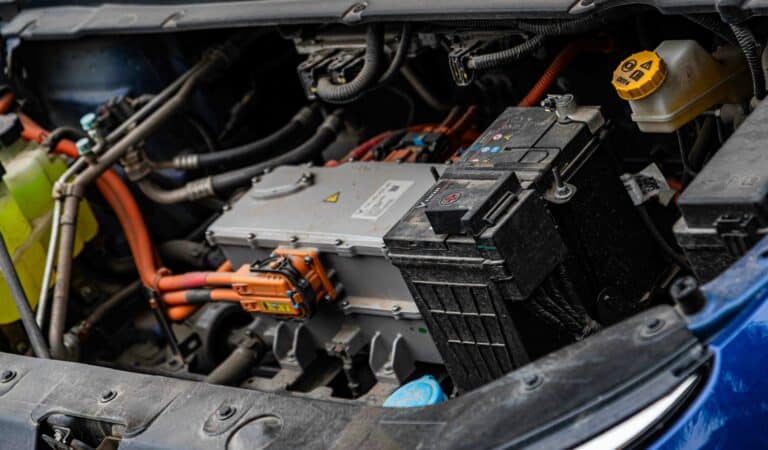

A battery temperature sensor lets a charge controller adjust its charging voltage to match how warm or cold the battery actually is, which matters because the correct voltage changes with temperature. Charge a cold lead acid bank at its room-temperature setpoint and it undercharges; charge a hot one at the same figure and it overcharges. The controller cannot know either without a sensor on the battery, and most systems ship without one fitted. Our guide to choosing a charge controller covers the device the sensor connects to.
The Short Version
A manufacturer-matched sensor for your specific controller is the reliable choice. Lead acid banks benefit most, since their charging voltage varies considerably with temperature. Lithium systems need temperature sensing for a different reason, which is preventing charging below freezing.
Key Points
- Correct charging voltage changes with battery temperature.
- Sensors are usually controller-specific rather than universal.
- Lead acid needs compensation; lithium needs a low-temperature cutoff.
- The sensor must be on the battery, not near the controller.
- Many controllers have an internal sensor that measures the wrong thing.
How We Picked
Sensors are grouped by how they attach and which system they serve, since compatibility with your specific controller or battery management system determines whether a product works at all. Placement is weighted throughout, because a correctly specified sensor mounted in the wrong place reports a useless number.
Selection criteria reflect connection type, mounting method, and the system each is designed for. Descriptions come from product documentation rather than from installations we have wired.
1. A Controller-Matched Remote Sensor, Best Overall
Why It Stands Out
A sensor made by your charge controller’s manufacturer plugs into the port that controller has, reports in the format it expects, and lets the unit apply temperature compensation automatically.
Automatic compensation is the whole point. The controller raises charging voltage in the cold and lowers it in heat without anyone adjusting settings seasonally.
Worth Knowing
These are rarely interchangeable between brands, and even connector-compatible sensors from another manufacturer may report on a different scale. Buy the part number the manual specifies.
Cable length is usually fixed and sets how far the battery can be from the controller. Measure the run before ordering rather than after. Our roundup of solar charge controllers covers which units support this at all.
This suits any system with a compatible controller. Skip it only if your controller has no sensor port.
2. A Ring Terminal Sensor, Best Mounting
Why It Stands Out
Sensors built into a ring terminal bolt directly onto a battery post, which puts the measuring element in contact with the battery rather than near it. That is the difference between measuring the battery and measuring the air around it.
Post mounting also means the sensor cannot drift out of position, unlike anything taped to a case that can lift over a few seasons of heat and cold.
Worth Knowing
Adding a ring terminal to a post means disturbing an existing connection, which needs the system isolated first and the terminal retightened properly afterward.
A loose terminal is both an electrical problem and a bad temperature reading, so this is worth doing carefully rather than quickly. Our roundup of battery cables and lugs covers working on terminals.
This suits accessible battery posts. Skip it if the terminals are difficult to reach safely.
3. An Adhesive Case Sensor, Best for Sealed Batteries
Why It Stands Out
Stick-on sensors attach to the side of a battery case without touching any terminal, which suits sealed units and installations where disturbing connections is unwelcome.
They are also the easiest to fit and to move if the bank layout changes, which matters in a van or a system you expect to expand.
Worth Knowing
Case temperature lags internal temperature, so readings respond more slowly than a post-mounted sensor. On a bank that swings quickly between charge and rest, that lag is real.
Adhesive fails on dusty or cold surfaces. Clean the spot properly and let it cure before relying on it.
This suits sealed batteries and quick fitting. Skip it where fast response matters.
4. A BMS With Integrated Sensing, Best for Lithium
Why It Stands Out
Lithium batteries need temperature sensing for a different reason. Charging a LiFePO4 cell below freezing causes lasting damage, and a battery management system with integrated sensing prevents that by refusing the charge rather than compensating the voltage.
Most quality drop-in lithium batteries include this internally, which means the protection is present without any external sensor.
Worth Knowing
Not every drop-in lithium battery has low-temperature charge protection, and the cheaper ones sometimes do not. Confirm this before assuming the battery will look after itself in winter.
A BMS protects the battery and does not warm it. In a genuinely cold location a heater is the answer. Our roundup of battery heaters covers that.
This suits any lithium system. Skip external sensors if your BMS already handles it.
5. A Standalone Temperature Monitor, Best for Visibility
Why It Stands Out
A separate display showing battery temperature tells you what conditions the bank is actually experiencing, which is information a compensating controller uses silently without ever showing you.
Monitors with high and low alarms also warn you before a problem develops rather than after, which is worth having on a bank that spends winter in an unheated space.
Worth Knowing
This reports rather than controls. A monitor showing a freezing battery does nothing to stop a charge, so it supplements a compensating controller or a BMS rather than replacing either.
Alarm thresholds need setting sensibly, since one that triggers constantly gets ignored. Our roundup of battery monitors covers the state-of-charge side.
This suits anyone wanting the number visible. Skip it if the controller already handles compensation.
6. A Multi-Probe Sensor Kit, Best for Larger Banks
Why It Stands Out
Batteries in a bank do not all sit at the same temperature. The one against an outside wall runs colder than the one in the middle, and a multi-probe kit shows that difference rather than assuming uniformity.
Knowing which cell runs coldest is also useful when deciding where insulation or a heater would do most good.
Worth Knowing
Most charge controllers accept a single sensor input, so extra probes usually feed a monitor rather than the controller itself. Check what your equipment can actually use.
More probes also mean more cable runs in a battery compartment, which needs routing away from terminals. Our note on battery ventilation covers the compartment environment.
This suits larger banks and uneven conditions. Skip it for a single battery.
Temperature Sensors at a Glance
| Type | Mounting | Feeds | Best for |
|---|---|---|---|
| Controller-matched remote | Post or case | Charge controller | Most systems |
| Ring terminal | Battery post | Controller | Fastest response |
| Adhesive case | Battery side | Controller or monitor | Sealed batteries |
| BMS integrated | Inside the battery | The BMS itself | Lithium systems |
| Standalone monitor | Varies | A display | Visibility and alarms |
| Multi-probe kit | Several points | Monitor | Larger banks |
What to Look For in a Temperature Sensor
What does your controller accept?
Check the manual for the sensor port and the specified part. These are rarely universal, and a sensor that physically plugs in may still report on a scale the controller misreads.
Where will it mount?
On the battery, not near it. A sensor measuring compartment air rather than the battery itself defeats the purpose, and this is the most common installation error.
Lead acid or lithium?
Lead acid benefits from voltage compensation across the whole temperature range. Lithium needs a low-temperature charge cutoff, which is a different function usually handled by the BMS.
How far is the run?
Sensor cables are supplied at a fixed length and are not casually extendable, since they carry a small signal. Measure the route before ordering.
Compensation or Cutoff?
What lead acid needs
Voltage compensation. The correct charging voltage rises as the battery gets colder and falls as it warms, and a controller with a battery sensor makes that adjustment continuously.
What lithium needs
A cutoff. Charging LiFePO4 below freezing damages the cells regardless of voltage, so the requirement is to stop the charge rather than adjust it. A BMS with low-temperature protection handles this. Our guide to controllers for lithium batteries covers the pairing.
Common Sensor Mistakes to Avoid
Relying on the controller’s internal sensor
An internal sensor measures the controller, which may be in a different place at a different temperature from the battery. That reading is not a substitute for one on the bank.
Mounting it in the air
A sensor dangling in a battery compartment reports air temperature. It has to be in contact with a post or a case to report the battery.
Assuming lithium needs the same thing
Lead acid wants voltage compensation and lithium wants a low-temperature cutoff. Fitting the wrong solution leaves the actual risk unaddressed.
Extending the sensor cable
These carry a small analog signal, and splices introduce errors that show up as wrong compensation rather than as an obvious fault. Our note on why batteries degrade covers what incorrect charging costs over time.
Related Reading
See our roundup of battery management systems, notes on discharge depth, our battery box picks, and a guide to choosing a solar battery.
Battery Temperature Sensor FAQ
Do I actually need a temperature sensor?
For a lead acid bank in a location with real seasonal swing, it makes a meaningful difference to charging accuracy and battery life. In a temperature-stable indoor installation the benefit is smaller. For lithium, the equivalent requirement is low-temperature charge protection rather than compensation.
Why does temperature change the charging voltage?
Battery chemistry responds to temperature, so the voltage that fully charges a bank at room temperature undercharges it when cold and overcharges it when hot. Temperature compensation adjusts the setpoint continuously so the battery receives the right charge in either condition.
Can I use any sensor with any controller?
Generally no. Sensors are matched to specific controllers, and even where a connector fits, the reporting scale may differ. Check the manual for the specified part number rather than buying on connector shape.
Where should the sensor go?
On the battery itself, either bolted to a post or adhered to the case. A sensor measuring compartment air rather than the battery reports the wrong number, and that is the most common installation mistake.
Does lithium need a temperature sensor?
It needs low-temperature charge protection, which is a different function. Charging LiFePO4 below freezing causes lasting damage, and most quality drop-in batteries include a BMS that blocks the charge. Confirm yours has it rather than assuming.
Is the controller’s built-in sensor enough?
Only if the controller sits in the same thermal environment as the battery, which is often not the case. An internal sensor measures the controller’s own temperature, and a controller on a warm wall with a battery on a cold floor will compensate incorrectly.
Can I extend the sensor cable?
Better not to. These carry a small signal and splices introduce reading errors, which produce wrong compensation rather than an obvious failure. Check whether a longer cable is available for your controller instead.
What temperature is too cold to charge?
For lithium, below freezing is the threshold to respect, and the exact figure depends on the manufacturer. Lead acid can be charged colder with proper compensation. Check the specification for your specific battery rather than applying a general rule.
Recommended Reading
See our note on battery shunts and current sensors.