
A portable power station can run most small to medium devices, including phones, laptops, lights, fans, TVs, CPAP machines, mini fridges, routers, and many power tools, with how many and for how long depending on the station’s watt-hour capacity and output wattage. Knowing what a portable power station can run comes down to matching your devices to its capacity. For picking the right unit, see how to size a portable power station, and read on for what these units power. Related reading: our guide to how long power stations last.
Quick Answer
A power station runs anything whose wattage stays under its output rating, for as long as its watt-hour capacity lasts. Small units easily handle phones, laptops, lights, and fans. Larger units run refrigerators, TVs, CPAP machines, and power tools. High-draw appliances like air conditioners, electric heaters, and dryers are the main things most portable units struggle with.
Key Takeaways
- Output wattage decides what you can run at once.
- Watt-hour capacity decides how long it runs.
- Small units handle phones, laptops, lights, and fans.
- Larger units run fridges, TVs, CPAP, and tools.
- High-wattage heating and cooling are the main limits.
How Power Station Capacity Works
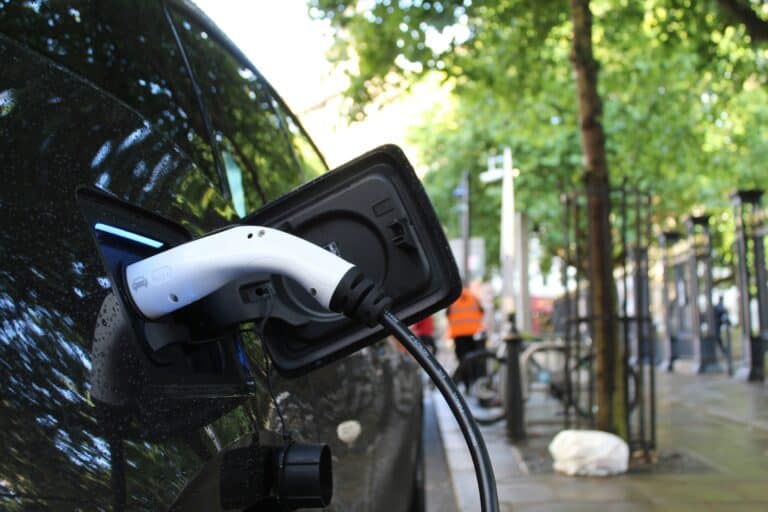
Two numbers decide what a power station can do. Output wattage, measured in watts, is how much power it can deliver at any moment, so a device only runs if its wattage stays under that limit. Watt-hour capacity, measured in watt-hours, is the total energy stored, which decides how long it can run your devices. A quick way to estimate runtime is to divide the capacity by the device’s wattage: a 500-watt-hour station running a 50-watt device lasts roughly 10 hours before real-world losses. Understanding both numbers, covered in our guide on how many watt-hours you need, is the key to knowing what any station can handle. One load that surprises people is a car, and charging an EV from a power station is possible in a narrow set of cases.
Devices and Their Power Needs
| Device | Typical wattage | Runs on a power station? |
|---|---|---|
| Phone charging | 5 to 20 W | Easily, any size |
| Laptop | 30 to 90 W | Easily |
| LED lights | 5 to 30 W | Easily |
| CPAP machine | 30 to 90 W | Yes, mid-size unit |
| Mini fridge | 50 to 100 W | Yes, mid-size unit |
| Full-size fridge | 100 to 200 W running | Yes, larger unit |
| Space heater | 1000 to 1500 W | Rarely, briefly at best |
What a Small Power Station Can Run
Compact units, roughly in the 200 to 500 watt-hour range, are built for personal electronics and light use. They comfortably charge phones and tablets many times over, run a laptop for hours, power LED lights and a small fan, and keep a router or a few devices going during a short outage. Many can also run a CPAP machine overnight, which makes them popular for travel and medical backup. What they are not built for is anything with a heating element or a motor drawing hundreds of watts. For personal power and short outages, a small station covers the essentials well.
What a Larger Power Station Can Run
Bigger units, from around 1000 watt-hours up, open the door to household and jobsite use. They can run a full-size refrigerator, power a TV and entertainment setup, keep medical devices going, run many corded power tools, and handle several devices at once. This is the range people reach for during longer outages or off-grid stays, and pairing one with solar lets you recharge and extend runtime, as covered in charging a power station with solar panels. If you want to run a fridge specifically, see whether a power station can run a refrigerator.
How to Estimate Runtime
Estimating runtime keeps expectations realistic. Take the station’s watt-hour capacity and divide by the running wattage of your device, then trim the result by roughly 10 to 15 percent for conversion losses. A 1000-watt-hour station running a 100-watt device gives about 8 to 9 usable hours. For devices that cycle on and off, like refrigerators, actual runtime is longer than the raw math suggests because they only draw power part of the time. When running several devices, add their wattages together and make sure the total stays under the output rating.
What a Power Station Can’t Run Well
The main limits are high-wattage heating and cooling. Air conditioners, electric space heaters, hair dryers, and clothes dryers pull well over 1000 watts continuously, which drains most portable units in minutes or exceeds their output entirely. Large power tools with heavy startup surges can also trip smaller stations. This does not mean these units are weak, it means they are designed for electronics, lights, medical devices, and appliances in the low-to-medium wattage range rather than whole-home heating and cooling. For that scale, see our whole-home battery backup guide.
Running Watts vs Surge Watts
Two wattage figures matter when deciding what a station can run. Running watts are the steady power a device needs once it is going, while surge or peak watts are the brief spike some devices, especially those with motors or compressors, demand at startup. A refrigerator or power tool might run at a modest wattage but surge to two or three times that for a fraction of a second. A power station lists both a continuous output and a higher surge rating, and a device only works reliably if the station covers both its running draw and its startup surge. Checking the surge rating, not just the continuous output, is what prevents a unit from shutting off the instant a motor kicks on.
Recommended Reading
- how to size a power station, match a unit to your needs.
- how many watt-hours you need, estimate your capacity.
- running a refrigerator, a common use case.
- power stations for outages, outage-ready picks.
- power station vs generator, another backup option.
- what a solar generator can power
- sizing a solar generator
- choosing a portable power station
Related: you expand a portable power station later.
The Bottom Line
A portable power station runs whatever fits under its output wattage, for as long as its watt-hour capacity holds out. That covers the vast majority of everyday electronics, lights, medical devices, and many appliances and tools, with high-wattage heating and cooling being the main exceptions. Match the station’s output and capacity to the devices you actually plan to power, account for startup surges on anything with a motor, and you will have a clear, realistic picture of what your unit can handle before you ever need it.
Related reading: maintaining your power station.
What Can a Power Station Run FAQ
Can a portable power station run a TV?
Yes. Most TVs draw between 50 and 150 watts, well within the range of a mid-size or larger power station. A 500-watt-hour unit can run a typical LED TV for several hours, and a larger station runs one plus other devices for much longer.
Can a power station run a CPAP machine?
Yes, and it is a common use. Most CPAP machines draw 30 to 90 watts, so a mid-size station can run one overnight, especially with the humidifier and heated hose turned off to save energy. Larger units run a CPAP for multiple nights.
Can a portable power station run power tools?
Many corded tools, yes, if their wattage stays under the output rating. Larger stations handle drills, saws, and similar tools, though some with heavy startup surges need a unit with extra surge capacity. Very high-draw tools may exceed smaller stations entirely.
How long will a power station run my devices?
Divide the watt-hour capacity by the device’s wattage, then reduce by 10 to 15 percent for losses. A 1000-watt-hour unit runs a 100-watt device for roughly 8 to 9 hours. Cycling devices like fridges last longer since they draw power only part of the time.
Can a power station run an air conditioner?
Usually not well. Most air conditioners draw over 1000 watts continuously, which drains portable units quickly or exceeds their output. Small 12-volt or low-wattage units may run briefly on a large station, but whole-room air conditioning is beyond most portable power stations.
Can a power station run multiple devices at once?
Yes, as long as their combined wattage stays under the output rating. Add up each device’s running wattage and keep the total below the limit. Running several devices draws down the capacity faster, so total runtime shortens accordingly.
Can a power station run a space heater?
Rarely for long. Space heaters draw 1000 to 1500 watts continuously, which drains most portable units within minutes or exceeds their output entirely. Heating elements are among the hardest loads for a portable power station to sustain.
How many devices can I run at once?
As many as fit under the output rating combined. Add up the running wattage of everything you want to power simultaneously and keep the total below the station’s continuous output, remembering that more devices drain the capacity faster.